
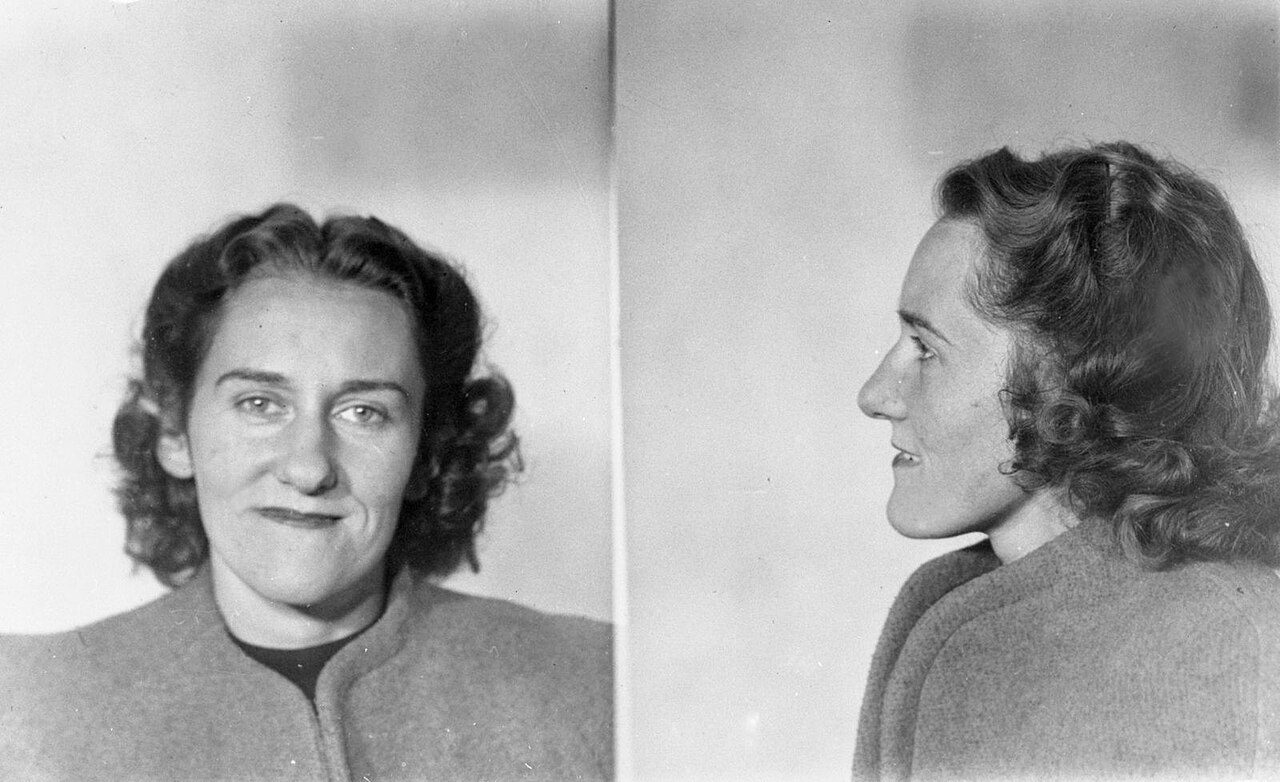

"We actively ran and controlled the German espionage system in this country." John Masterman, an Oxford historian who chaired the committee in charge of Britain's double agents, wrote that in 1945. MI5 still quotes it as the verdict on what it calls its main success of the Second World War1,2.
SNOW and the first lessons
The system began with one awkward agent. Before the war MI5 learned, partly through a former fighter pilot it was running against German intelligence, about a Welsh-born electrical engineer in contact with the Germans. It code-named him SNOW. Shortly after war broke out in September 1939, SNOW became the first German agent MI5 turned1.
SNOW, whose real name was Arthur Owens, proved hard to read. In early 1941 MI5 sent another agent, Walter Dicketts (CELERY), to Lisbon to meet SNOW's German controller. Each man came back throwing doubt on the other. MI5 could not settle who was lying, interned Owens, and shut down the whole network built around him. The case taught MI5 how the Abwehr handled its agents6.
Catching and turning
From mid-1940 the Abwehr sent agents to Britain by parachute, by boat and through neutral countries posing as refugees. Fewer than 25 arrived between September and November 1940. Most were poorly trained, and MI5 picked up almost all of them6.
Two things made this possible. Before the war MI5 had studied how German intelligence kept in touch with its agents. During the war, codebreakers at Bletchley Park (GC&CS) read Abwehr messages, first its hand ciphers and later its Enigma traffic. The decrypts often gave warning of an agent's arrival, and later showed whether the Germans still trusted the agents MI5 was running1,6.
Captured agents went to Camp 020 at Latchmere House in Richmond for interrogation under Lieutenant Colonel Robin Stephens. Those judged usable were offered the chance to become double agents. MI5's section B1A, under T. A. Robertson, ran the cases6,2.
The agents sent their reports mainly by secret writing in letters, by radio, and in some cases by microphotography or in person in neutral Lisbon and Madrid2,6. Every report needed enough true information to keep the Germans' confidence. Before the 1942 landings in North Africa, one of GARBO's notional sub-agents reported a convoy leaving the Clyde in Mediterranean camouflage. The letter was postmarked before the landings but arranged to reach the Germans too late to be of use. They thanked him anyway3.
The Twenty Committee
From January 1941 the information the double agents passed was coordinated by the Twenty Committee, named for the Roman numeral XX, a double cross1. Masterman chaired it. Its members came from the service intelligence branches, MI5 and MI6, and it decided what each agent could tell the Germans7,1. The committee's secretary, Charles Cholmondeley, later co-devised Operation Mincemeat7.
The cast
MI5 records about 120 double agents over the war1. A few illustrate the range.
- MUTT and JEFF, two Norwegians, came ashore in northeast Scotland in April 1941 and gave themselves up. Their radios told the Germans of an invasion threat to Norway, and MI5 staged a real explosion at a power station in Bury St Edmunds to support their claimed sabotage. The Germans made four parachute drops of supplies to them2.
- TATE, the Dane Wulf Schmidt, parachuted in during September 1940. He stayed in radio contact with Germany until May 19456.
- TRICYCLE, the Yugoslav Duško Popov, ran his own sub-network, including BALLOON and GELATINE. One MI5 file remarks on how alarmingly accurate BALLOON's information was2.
- GARBO, the Catalan Juan Pujol García, had invented a network of agents in Britain for the Germans before MI5 took him on in 1942. With his case officer Tomás Harris he built it up to 27 imaginary sub-agents3,1.
From counter-espionage to deception
At first MI5 used the system mainly to catch spies and to learn what the Germans wanted to know. Its value for deception came later2,6. By 1944 the agents were trusted enough to carry the central story of Operation Fortitude, that the Normandy landings were a feint before a larger attack on the Pas-de-Calais. Berlin awarded GARBO the Iron Cross in July 19441,3.
MI5 also credits the system with successes in U-boat and V-weapon deception2. During the V-1 attacks of 1944, agents including TATE and ZIGZAG were used to overstate hits in north and west London and understate hits to the south and east. The aim was to make the German launch crews shorten their range6.
Writing it down, and letting it out
Masterman wrote his report on B1A's double agents in 1945; it is now the MI5 file KV 4/54. For more than twenty-five years it stayed secret. A Prime Minister's Office file covering 1971 and 1972 deals with the "question of publication," and the book appeared in 19725. MI5 released the case files of individual agents later: Harris's GARBO files in January 1999, and a further group, including MUTT, JEFF and BALLOON, in November 20023,2.
Checking the record
Dates and outcome compared in two independent sources: they agree.
- Official history
- SNOW turned shortly after the outbreak of war in 1939; Twenty Committee coordinating from January 1941. About 120 German agents turned; MI5 ran and controlled the German espionage system in Britain and used it to deceive Germany about D-Day.
- Wikipedia
- Abwehr campaign from 1940; Twenty Committee under Masterman; TATE in contact with Germany until May 1945. Post-war records showed every German agent sent to Britain was caught or surrendered, with the possible exception of one who killed himself; the network carried the Fortitude deception.
The two agree on dates and outcome. MI5's own page gives the figure of 120 agents; Wikipedia adds the single possible exception, which MI5's page does not mention.
Sources
- Official history MI5 in World War II (archived copy), Security Service (MI5) (2023).
- Official history 25 November 2002 releases: Double Cross agents (archived copy), Security Service (MI5) (2002-11-25).
- Official history Agent GARBO (archived copy), Security Service (MI5) (2018).
- Other Mr J C Masterman's report on the operation of B1A in connection with special agents during the Second World War, the Double Cross system (KV 4/5), catalogue entry, The National Archives, Kew (1945).
- Other 'The double-cross system in the war of 1939–1945' by Sir John Masterman: question of publication (PREM 15/1203), catalogue entry, The National Archives, Kew (1971).
- Wikipedia Double-Cross System, Wikipedia.
- Other Secret Agents, Secret Armies: Operation Mincemeat, The National WWII Museum (2022-06-20).
- Wikipedia English Wikipedia article (used for cross-checking).
Elsewhere in the files
- Agency Abwehr
- Agency Office of Strategic Services (OSS)
- Agency Security Service (MI5)
- Operation Operation Fortitude
- Operation Operation Mincemeat
- Operation Operation Monastery
- Operation The Duquesne spy ring
- Operation Ultra and the breaking of Enigma
- Person Anthony Blunt
- Person Duško Popov (TRICYCLE)
- Person James Jesus Angleton
- Person Juan Pujol García (GARBO)
- Person Wilhelm Canaris
- Tradecraft Double agents
- Tradecraft Microdots
- Tradecraft Secret writing
Read next
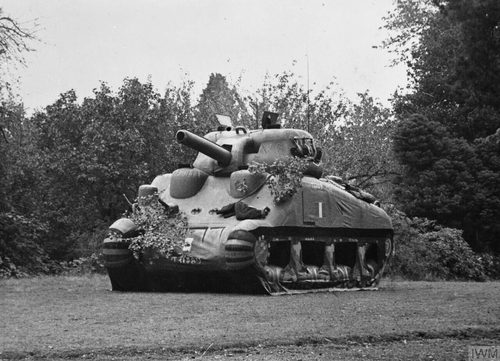 January – September 1944
Operation Fortitude
The Allied deception that invented armies in Scotland and southeast England in 1944 to make Germany expect landings in Norway and the Pas-de-Calais, and to see Normandy as a feint.
 4 February – 14 May 1943
Operation Mincemeat
In 1943 British intelligence floated a dead man dressed as a Royal Marines officer ashore in Spain with forged letters pointing at Greece and Sardinia, to hide the coming invasion of Sicily.
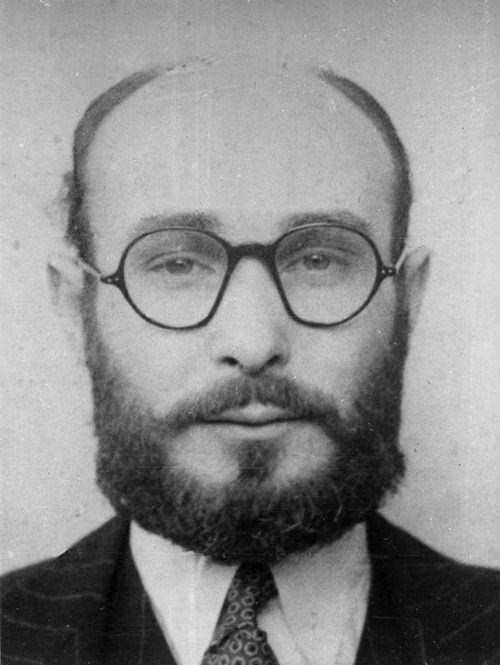 1912–1988
Juan Pujol García (GARBO)
A Catalan former poultry farmer who invented a spy network for the Abwehr, became MI5's double agent GARBO, and helped persuade Hitler that Normandy was a feint.
 1912–1981
Duško Popov (TRICYCLE)
Yugoslav lawyer recruited by the Abwehr in 1940 who became MI5's double agent TRICYCLE, carried a German questionnaire about Pearl Harbor to the FBI, and fed D-Day deception.
1920s–1990s
Double agents
Agents who seem to serve one service while controlled by another. From the OGPU's Trust to MI5's Double Cross system and the FBI's Duquesne case, the best of them turned an enemy network into a channel for deception.
 Germany · 1920–1944
Abwehr
The German armed forces' intelligence service from 1920 to 1944: spies, saboteurs and counterintelligence under Admiral Canaris, outplayed by the FBI and MI5 and finally absorbed by the SS.