
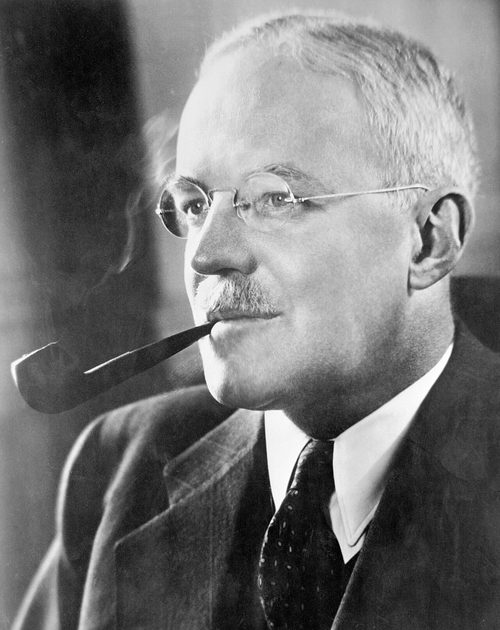
Portrait: Wilhelm Canaris as a Korvettenkapitän, between 1924 and 1931. Unknown author. Wikimedia Commons, Public domain.

For nine years Wilhelm Canaris ran the intelligence service of a regime he first admired and later worked against. Both halves of that story are on the record.
A naval career with an intelligence turn
Canaris was born on 1 January 1887 in Aplerbeck, now part of Dortmund, the son of an industrialist. He joined the Imperial Navy in 1905. In 1914 he was serving as an intelligence officer aboard the light cruiser SMS Dresden, the only ship of Admiral von Spee's squadron to escape the Battle of the Falkland Islands. When Dresden was cornered and scuttled off the Chilean coast in March 1915, her crew was interned. Canaris escaped in August 1915 and, using his fluent Spanish, made his way back to Germany by October.4
He was then sent to Madrid to report on Allied shipping and organize supplies for U-boats in the Mediterranean, and he ended the war commanding a submarine. In the 1920s he worked on the navy's secret efforts to rebuild a U-boat capability in breach of Versailles. In 1932 he took command of the old battleship Schlesien, and he welcomed Hitler's appointment as chancellor the following January.4
Chief of the Abwehr
On 1 January 1935 Canaris took over the Abwehr, then a small office. He expanded it quickly, and in December 1936 he agreed a division of counterintelligence work with Reinhard Heydrich of the SS security service, beginning a long rivalry. When the Armed Forces High Command was created in 1938, the Abwehr became its foreign and counterintelligence office, and Canaris reported to Field Marshal Wilhelm Keitel.4,5
His agents abroad had a poor record. The FBI turned an Abwehr recruit into a double agent and used him to break up the Duquesne ring in 1941. The saboteurs of Operation Pastorius were caught within two weeks in 1942, and MI5's Double-Cross System ran captured Abwehr agents against their controllers. A 2023 review in the CIA's Studies in Intelligence calls German military intelligence under Canaris "generally ineffectual and often bested by Allied counterintelligence."2,4
The witness at Nuremberg
The fullest account of Canaris from inside comes from his subordinate Erwin Lahousen, head of the Abwehr's sabotage division, who testified before the International Military Tribunal on 30 November 1945. Lahousen said Canaris kept a diary, to which he contributed. He described a meeting in Hitler's headquarters train during the invasion of Poland in September 1939, at which Canaris warned Keitel against the planned shootings of the Polish intelligentsia, nobility and clergy. Lahousen quoted him from his notes:1
"One day the world will also hold the Wehrmacht, under whose eyes these events occurred, responsible for such methods."
Lahousen also testified that Canaris told his division chiefs that Keitel wanted the Abwehr to arrange the killing of the French general Maxime Weygand, and later of General Henri Giraud, and that the Abwehr leaders refused. Canaris allowed Hans Oster, head of his central division, to become a hub of the military conspiracy against Hitler.1,4
Fall and execution
The Abwehr's failures and the defection of its officers in Istanbul in early 1944 gave Himmler his opening. Hitler dismissed Canaris and abolished the Abwehr as a separate service in February 1944. After the bomb plot of 20 July 1944, his successor Georg Hansen, under interrogation, named him as an instigator, and Canaris was arrested on 23 July.4,5
No direct proof tied him to the plot until the Gestapo found papers in a safe at the army headquarters at Zossen in September 1944, and in April 1945 the rest of his diaries. Hitler then ordered the surviving members of the Abwehr circle killed. An SS summary court at Flossenbürg concentration camp condemned Canaris. He was hanged on 9 April 1945, the same morning as Hans Oster, Dietrich Bonhoeffer, Karl Sack, Ludwig Gehre, Friedrich von Rabenau and Theodor Strünck.3,4
Key dates
- August 1915 Escapes internment in Chile after the scuttling of SMS Dresden.
- 1 January 1935 Becomes chief of the Abwehr.
- 12 September 1939 Protests to Keitel about planned mass killings in Poland, as Lahousen later testifies.
- February 1944 Dismissed when Hitler abolishes the Abwehr as an independent service.
- 23 July 1944 Arrested after the failed 20 July plot.
- 9 April 1945 Hanged at Flossenbürg concentration camp after an SS summary court.
Sources
- Court record Trial of the Major War Criminals before the International Military Tribunal, Vol. 2, Proceedings of 30 November 1945 (testimony of Erwin Lahousen), International Military Tribunal, Nuremberg (Avalon Project, Yale Law School) (1945-11-30).
- CIA Review: Hitler's Nest of Vipers: The Rise of the Abwehr (Studies in Intelligence 67, no. 2), Central Intelligence Agency, Center for the Study of Intelligence (2023-06).
- Other Viaggio della Memoria ... on the 81st anniversary of the murder of Dietrich Bonhoeffer and the military resistance at the Flossenbürg Concentration Camp Memorial, Stiftung Bayerische Gedenkstätten (Bavarian Memorial Foundation) (2026-04-10).
- Wikipedia Wilhelm Canaris, Wikipedia.
- Wikipedia Abwehr, Wikipedia.
- Wikipedia English Wikipedia article (used for cross-checking).
Elsewhere in the files
- Agency Abwehr
- Document The OSS interrogation of Richard Kauder, alias Klatt (August 1945)
- Document The Rote Drei: CIA's study of the 'Lucy' radio traffic (c. 1969)
- Operation Operation Mincemeat
- Operation Operation Monastery
- Operation Operation Pastorius
- Operation The Duquesne spy ring
- Operation The Lucy spy ring
- Person Reinhard Gehlen
Read next
 Germany · 1920–1944
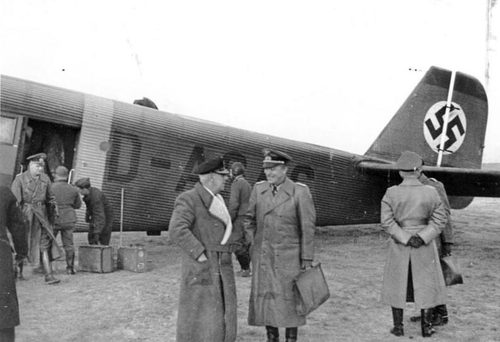
Abwehr
The German armed forces' intelligence service from 1920 to 1944: spies, saboteurs and counterintelligence under Admiral Canaris, outplayed by the FBI and MI5 and finally absorbed by the SS.
 8 February 1940 – 2 January 1942
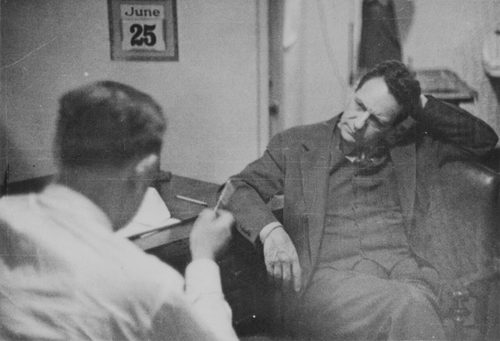
The Duquesne spy ring
Thirty-three German agents convicted in 1941–42 after the FBI turned an Abwehr recruit, William Sebold, ran his radio link to Hamburg for 16 months and filmed spies in a wired Manhattan office.
 13 June – 8 August 1942
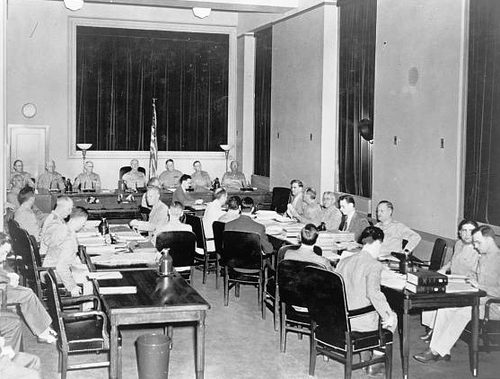
Operation Pastorius
In June 1942 U-boats landed eight Abwehr saboteurs on Long Island and in Florida. One turned himself in, all were caught within two weeks, and the Supreme Court upheld their trial by military commission.
 September 1939 – May 1945
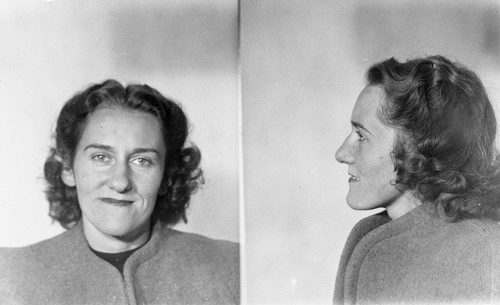
The Double-Cross System
How MI5 caught or recruited Germany's wartime spies in Britain and ran them as double agents, steered by the Twenty Committee, until their reports could carry the D-Day deception.
 1893–1969
Allen Dulles
OSS spymaster in wartime Switzerland and Director of Central Intelligence from 1953 to 1961, Allen Dulles presided over the CIA's era of coups and covert wars until the Bay of Pigs ended his tenure.