
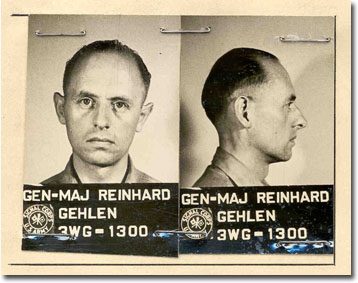

For most of his career Reinhard Gehlen refused to be photographed. A CIA officer reviewing his memoirs in 1972 thought this one reason the legend of "the spy of the century" had grown so far beyond the man: a competent staff officer and a skilled political operator, he wrote, but "never a good clandestine operator, nor ... a particularly good administrator"1.
Staff officer
Gehlen was born in Erfurt on 3 April 1902, the son of an army officer, and grew up in Breslau. He joined the Reichswehr in 1920, went to the General Staff in the 1930s, and at the outbreak of war moved to the staff of the army chief, Franz Halder, where he worked on the planning of the invasion of the Soviet Union6.
On 1 April 1942 he took over Foreign Armies East (Fremde Heere Ost), the section of the Army General Staff responsible for assessing the Red Army. He brought in linguists, geographers and junior officers and turned it into a capable order-of-battle analysis service; even critics agreed, the CIA reviewer noted, that he did that job well. His increasingly gloomy and accurate estimates angered Hitler, who dismissed him in April 1945, shortly after his promotion to major general1,6.
Changing sides
By his own account Gehlen decided in the last phase of the war to keep his staff and files together and turn them over to the Americans. In April 1945 he obtained the approval of General Winter of the Armed Forces High Command's operations staff, and in June, in a US Army camp, of Admiral Karl Dönitz1.
He surrendered to the US Army's Counter Intelligence Corps in Bavaria on 22 May 1945, and that summer offered to continue the same work for the United States6,3. His officers recovered the files they had buried. Brigadier General Edwin Sibert, the US Army's senior intelligence officer in the European theater, backed the plan, and on 20 September 1945 Gehlen and three associates were flown to the United States6,1. The National Archives later described him as "Hitler's most senior military intelligence officer on the eastern front"2.
The Organization
From June 1946 he ran a German-staffed intelligence service for the US Army in the American zone. In 1949 the CIA took over as its sponsor, after much internal debate. A CIA official judged that Gehlen was "chiefly motivated by a desire for personal success," would not be "an American or Allied puppet," but was sincerely interested in cooperation with the Western Allies3,4. See Gehlen Organization and BND.
He recruited former Wehrmacht, SS and SD officers, a policy the CIA's later history and the government's historical panel treated as a grave weakness: it compromised the West morally and opened the way for Soviet penetration, most damagingly by Heinz Felfe, who was arrested in 19614,3,1.
President of the BND
The CIA reviewer considered Gehlen's "towering achievement" political: the idea of a national German intelligence service was his, and he pushed it through against rivals in Bonn and abroad. The Bundesnachrichtendienst was founded on 1 April 1956 with Gehlen as president, attached to the Chancellery of Konrad Adenauer1,5.
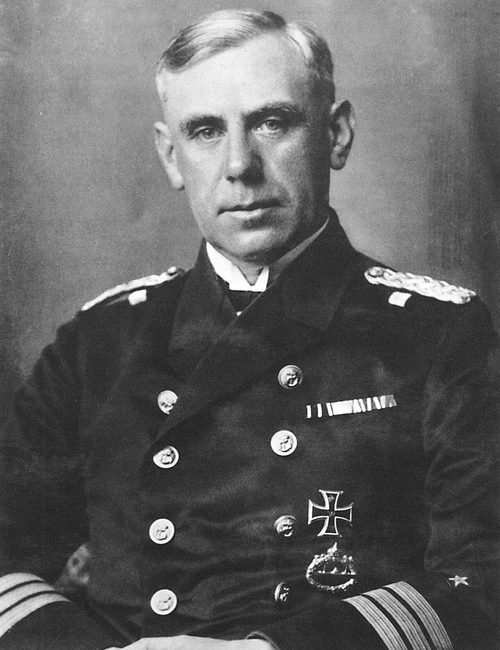
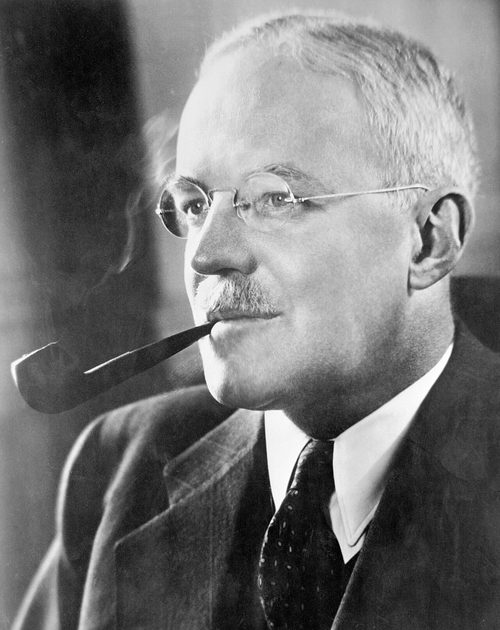
He retired in April 1968 after some 22 years at the head of German foreign intelligence1. His memoirs, Der Dienst, appeared in 1971 and in English as The Service in 1972. In them he named Allen Dulles and Admiral Wilhelm Canaris as the best intelligence chiefs he had met. The CIA review found the book discreet about American partners and too rosy about the BND's successes in political intelligence, which it called "either wishful thinking or self-delusion"1.
Gehlen died on 8 June 19796.
Key dates
- 1920 Joins the Reichswehr.
- 1 April 1942 Becomes head of Foreign Armies East, the army's intelligence section on the Soviet front.
- April 1945 Dismissed by Hitler shortly after promotion to major general.
- 22 May 1945 Surrenders to the US Army Counter Intelligence Corps in Bavaria.
- 20 September 1945 Flown with three associates to the United States.
- June 1946 Begins running the Gehlen Organization for the US Army.
- 1 April 1956 Becomes first president of the Bundesnachrichtendienst.
- April 1968 Retires as president of the BND.
Sources
- CIA Book review: The Service: The Memoirs of General Reinhard Gehlen (Studies in Intelligence 16, no. 3), archived, Central Intelligence Agency, Center for the Study of Intelligence (1972).
- National Archives CIA acknowledges intelligence relationship with General Reinhard Gehlen (press release), National Archives and Records Administration (2000-09-20).
- National Archives Disclosure: Newsletter of the Nazi War Crimes and Japanese Imperial Government Records Interagency Working Group, November 2002, National Archives and Records Administration (2002-11).
- National Security Archive The CIA and Nazi War Criminals (Electronic Briefing Book No. 146), National Security Archive (2005-02-04).
- Other Vor 60 Jahren: Gründung des BND, Bundeszentrale für politische Bildung (2016-03).
- Wikipedia Reinhard Gehlen, Wikipedia.
- Wikipedia English Wikipedia article (used for cross-checking).
Elsewhere in the files
Read next
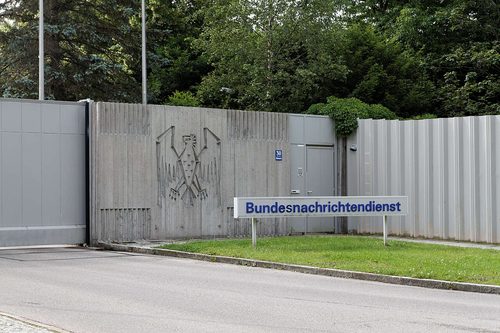 West Germany · 1946
Gehlen Organization and BND
West Germany's foreign intelligence service grew out of a network run for the US Army and the CIA by Hitler's Eastern Front intelligence chief. It hired former SS men, and the KGB penetrated it deeply.
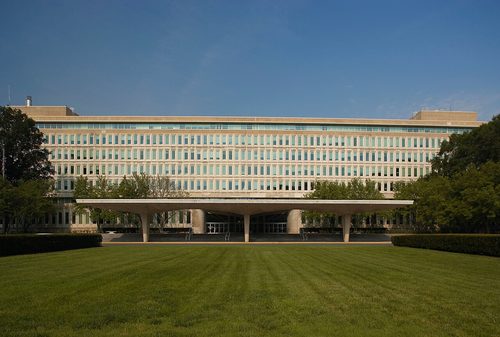 United States · 1947
Central Intelligence Agency (CIA)
The US civilian intelligence service, created by the National Security Act of 1947 to coordinate foreign intelligence, which within a year also became Washington's instrument for covert action.
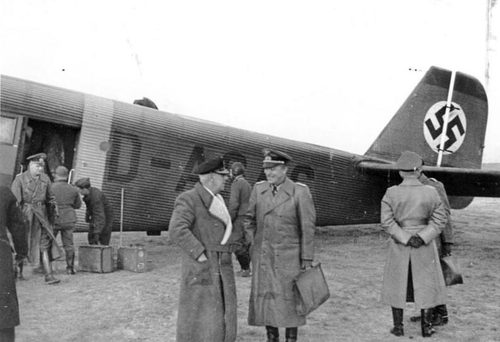 Germany · 1920–1944
Abwehr
The German armed forces' intelligence service from 1920 to 1944: spies, saboteurs and counterintelligence under Admiral Canaris, outplayed by the FBI and MI5 and finally absorbed by the SS.
 1887–1945
Wilhelm Canaris
Admiral who ran the Abwehr, Germany's military intelligence service, from 1935 to 1944. Early supporter of Hitler, later a protector of the military opposition, hanged at Flossenbürg in April 1945.
 20 July 1945 – 1962
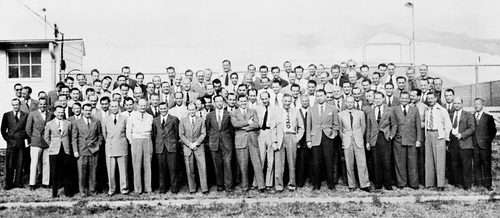
Operation Paperclip
The US program, first called Overcast, that brought more than 1,500 German scientists and engineers to America after 1945, among them Wernher von Braun's rocket team and men with Nazi pasts.
 1893–1969
Allen Dulles
OSS spymaster in wartime Switzerland and Director of Central Intelligence from 1953 to 1961, Allen Dulles presided over the CIA's era of coups and covert wars until the Bay of Pigs ended his tenure.