
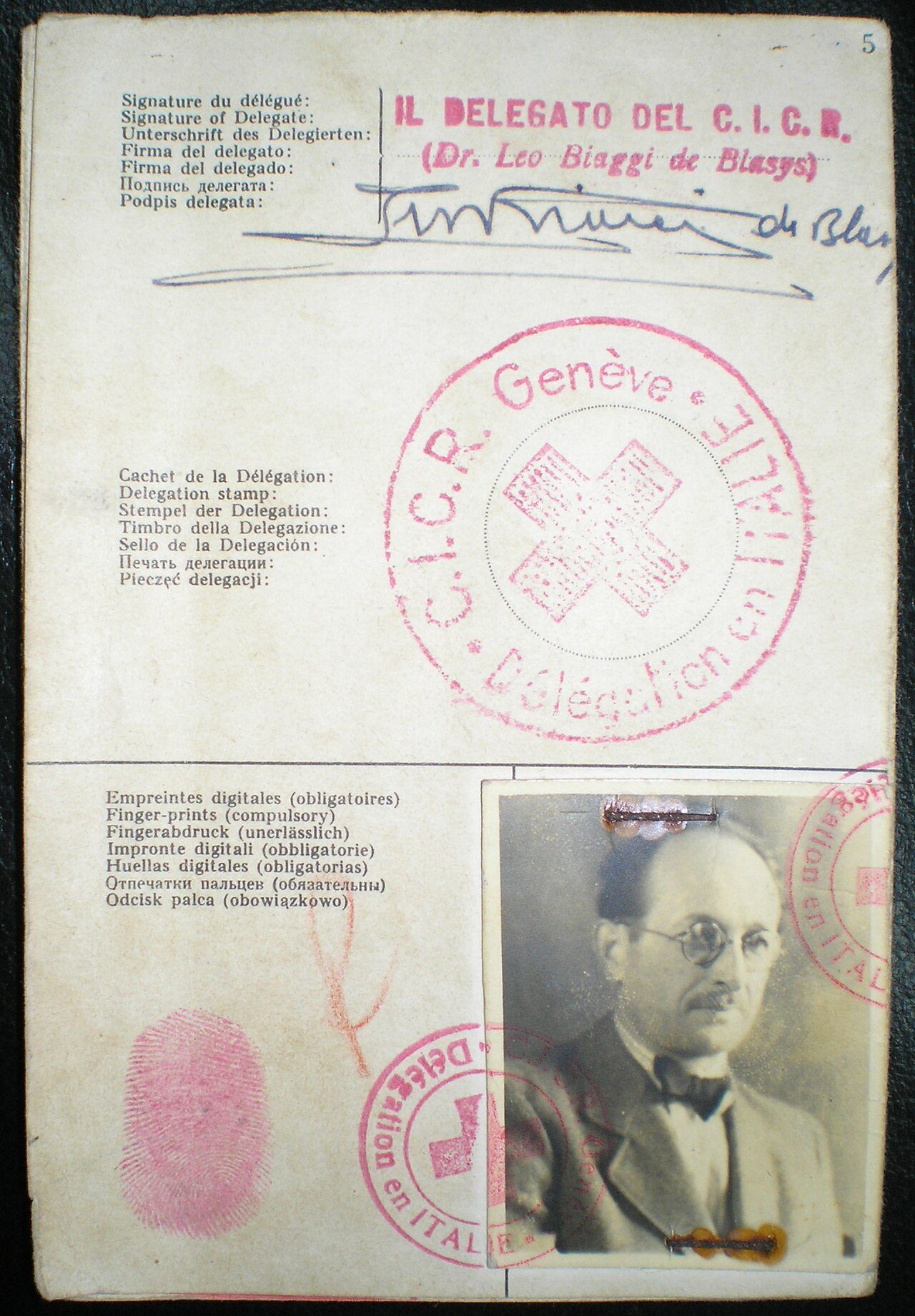
At about eight in the evening on 11 May 1960, a man got off a late bus on Garibaldi Street in San Fernando, an industrial suburb north of Buenos Aires, and walked toward his house. He called himself Ricardo Klement and worked at a Mercedes-Benz plant. Within a minute he was on the floor of a car under a blanket. He was Adolf Eichmann, who had run the Gestapo office that organized the deportation of Europe's Jews to the death camps6,4.
The fugitive
Eichmann was held in American camps at the end of the war under a false name and escaped from a work detail when he learned he had been identified. He lived quietly in the British zone of Germany until 1950, then used old SS contacts and a Red Cross travel document in the name of Klement to reach Argentina. His family joined him two years later2,4,6.
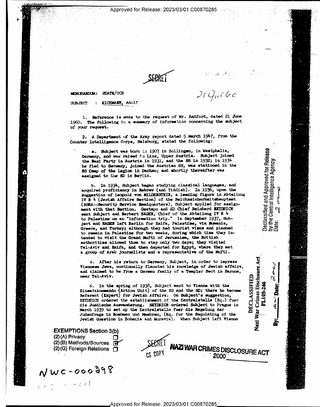
The released CIA file on him, reviewed by the National Archives historian Robert Wolfe, shows that American intelligence did little to find him. Most of the file is rumor gathered from former colleagues. In 1953 a CIA memorandum answered an outside request to search for him by noting that the agency was "not in the business of apprehending war criminals"1,2.
The tip and the hunt
The decisive lead came from Argentina itself. Lothar Hermann, a blind German Jewish émigré and former lawyer, realized that a young man courting his daughter was boasting about a father who had served the Reich, and that the family name was Eichmann. The information reached Fritz Bauer, the Attorney General of the West German state of Hesse. Bauer did not trust his own country's police to act on it and passed it to Israel. Isser Harel, head of the Mossad, dated the tip to September 19576,8.
Early checks went nowhere. Agents found the family's first house in a poor district and doubted a senior SS officer would live there. The trail went cold until late 1959, when the family was traced to a new house on Garibaldi Street. In March 1960 a Shin Bet investigator, Zvi Aharoni, watched the house on what turned out to be Eichmann's silver wedding anniversary, and in April he secretly photographed Klement. Prime Minister David Ben-Gurion approved an abduction rather than an extradition request, which the Israelis expected Argentina to refuse and which might simply warn Eichmann off6.
Eleven days in May
Harel took personal command and flew to Buenos Aires. Rafi Eitan led the team on the ground. The Israelis rented safe houses and cars and timed the operation so that Eichmann could leave on the El Al aircraft bringing an official delegation to Argentina's 150th independence celebrations. Peter Malkin made the grab when Eichmann stepped off the bus, half an hour later than usual6,3.
Eichmann was held for nine days in a rented villa, handcuffed and under constant guard. He confirmed his identity, including his SS membership numbers. On 20 May he was sedated, dressed in an El Al crew uniform and walked through the airport on papers in another man's name. The aircraft left around midnight. On 22 May Ben-Gurion told the Knesset that Eichmann was in Israel and would stand trial6.
Eitan's memoir, reviewed by a CIA officer in 2023, adds an operator's view: the reviewer describes Harel running everything from a café table and putting twice as many people in the field as the job needed, while keeping a clear respect for what Harel had built3.
Diplomacy and trial
Israel's first public line was that Jewish volunteers had acted on their own. Argentina did not accept it. On 15 June 1960 its UN ambassador asked for an urgent Security Council meeting on the "illicit and clandestine transfer" of Eichmann5. On 23 June the Council passed Resolution 138, 8 to 0 with the Soviet Union and Poland abstaining, asking Israel to make appropriate reparation. In August the two governments issued a joint statement closing the dispute7. Robert Wolfe's summary of the CIA file records American concern over the Security Council case and describes an American-mediated compromise1.
The trial opened before a special tribunal of the Jerusalem District Court on 11 April 1961, on 15 counts under Israel's 1950 Nazis and Nazi Collaborators (Punishment) Law. Eichmann testified from a glass booth and said he had only carried out orders. The court convicted him on 11–12 December and sentenced him to death on 15 December 1961. He was hanged at Ramla just after midnight on 1 June 1962; his ashes were scattered at sea outside Israeli waters4,6.
What the American files show
Under the Nazi War Crimes Disclosure Act the CIA released its Eichmann files in 2006. They contain confused reports placing him in Egypt, Syria, Argentina or even Jerusalem, and show the agency keen afterward to learn how the Israelis had caught him. Wolfe notes that when Israeli prosecutors later asked for leads to captured German records, CIA officers passed them on without attribution1,2,6.
Israel acknowledged officially in 2005 that Mossad officers, not volunteers, carried out the operation, and published the full list of participants in 20076.
The documents
Declassified records of this operation, with the scans and their full text hosted here.

Checking the record
Dates and outcome compared in two independent sources: they differ.
- Other
- Seized in May 1960 (USHMM gives 20 May); trial opened 11 April 1961; convicted 11–12 December and sentenced 15 December 1961; hanged 1 June 1962. Taken from Argentina by Mossad officers, tried before a special tribunal of the Jerusalem District Court on 15 counts, convicted and executed.
- Wikipedia
- Seized 11 May 1960; flown out on 20 May; Ben-Gurion announced the capture to the Knesset on 22 May; hanged on the night of 31 May to 1 June 1962. Abducted by a Mossad team, tried and sentenced to death; Argentina protested to the UN Security Council.
The outcome agrees, but the USHMM entry dates the seizure to 20 May 1960, the day of the flight. Harel's account, the Wikipedia article and other histories put the seizure on 11 May and the departure on 20 May; this page follows them.
Sources
- National Archives RG 263 Detailed Report, Adolf Eichmann (Robert Wolfe), National Archives and Records Administration, Nazi War Crimes Interagency Working Group.
- National Archives Hitler's Shadow: Nazi War Criminals, U.S. Intelligence, and the Cold War (Breitman and Goda), National Archives and Records Administration (2010).
- CIA Review: Capturing Eichmann: The Memoir of a Mossad Spymaster (Studies in Intelligence 67, no. 1), Central Intelligence Agency, Center for the Study of Intelligence (2023-03).
- Other Eichmann Trial, United States Holocaust Memorial Museum, Holocaust Encyclopedia.
- Other Letter dated 15 June 1960 from the representative of Argentina addressed to the President of the Security Council (S/4336), United Nations Digital Library (1960-06-15).
- Wikipedia Capture of Adolf Eichmann, Wikipedia.
- Wikipedia United Nations Security Council Resolution 138, Wikipedia.
- Other Isser Harel (obituary), The Guardian (2003-02-20).
- Wikipedia English Wikipedia article (used for cross-checking).
Elsewhere in the files
Read next
 Israel · 1949
Mossad
Israel's foreign intelligence and covert action service, founded in 1949 and answerable only to the prime minister. Its early record runs from the capture of Eichmann to the Lillehammer killing of an innocent man.
 1912–2003
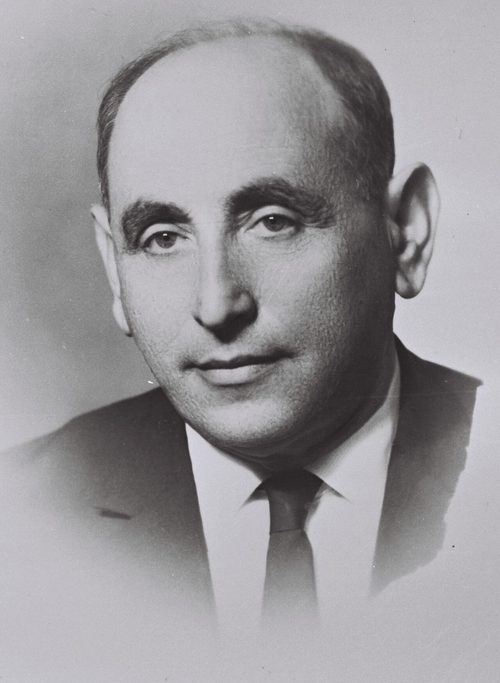
Isser Harel
First head of Israel's Shin Bet and director of the Mossad from 1952 to 1963, the only man to command both services at once. He ran the 1960 capture of Adolf Eichmann and resigned in a dispute with Ben-Gurion.
 West Germany · 1946
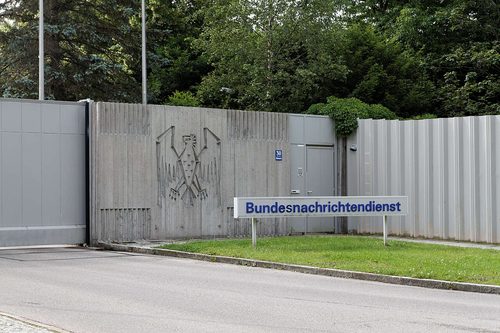
Gehlen Organization and BND
West Germany's foreign intelligence service grew out of a network run for the US Army and the CIA by Hitler's Eastern Front intelligence chief. It hired former SS men, and the KGB penetrated it deeply.
 1902–1979
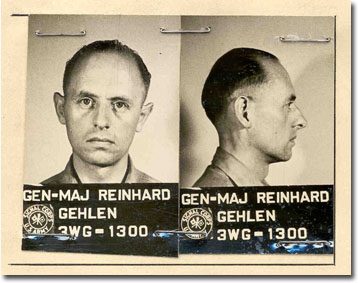
Reinhard Gehlen
Hitler's chief of army intelligence on the Eastern Front, who sold his files and staff to the Americans in 1945, ran a spy network for the US Army and the CIA, and became the first president of West Germany's BND.
 20 July 1945 – 1962
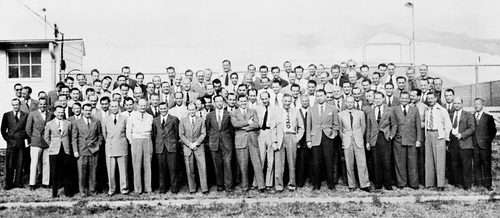
Operation Paperclip
The US program, first called Overcast, that brought more than 1,500 German scientists and engineers to America after 1945, among them Wernher von Braun's rocket team and men with Nazi pasts.