
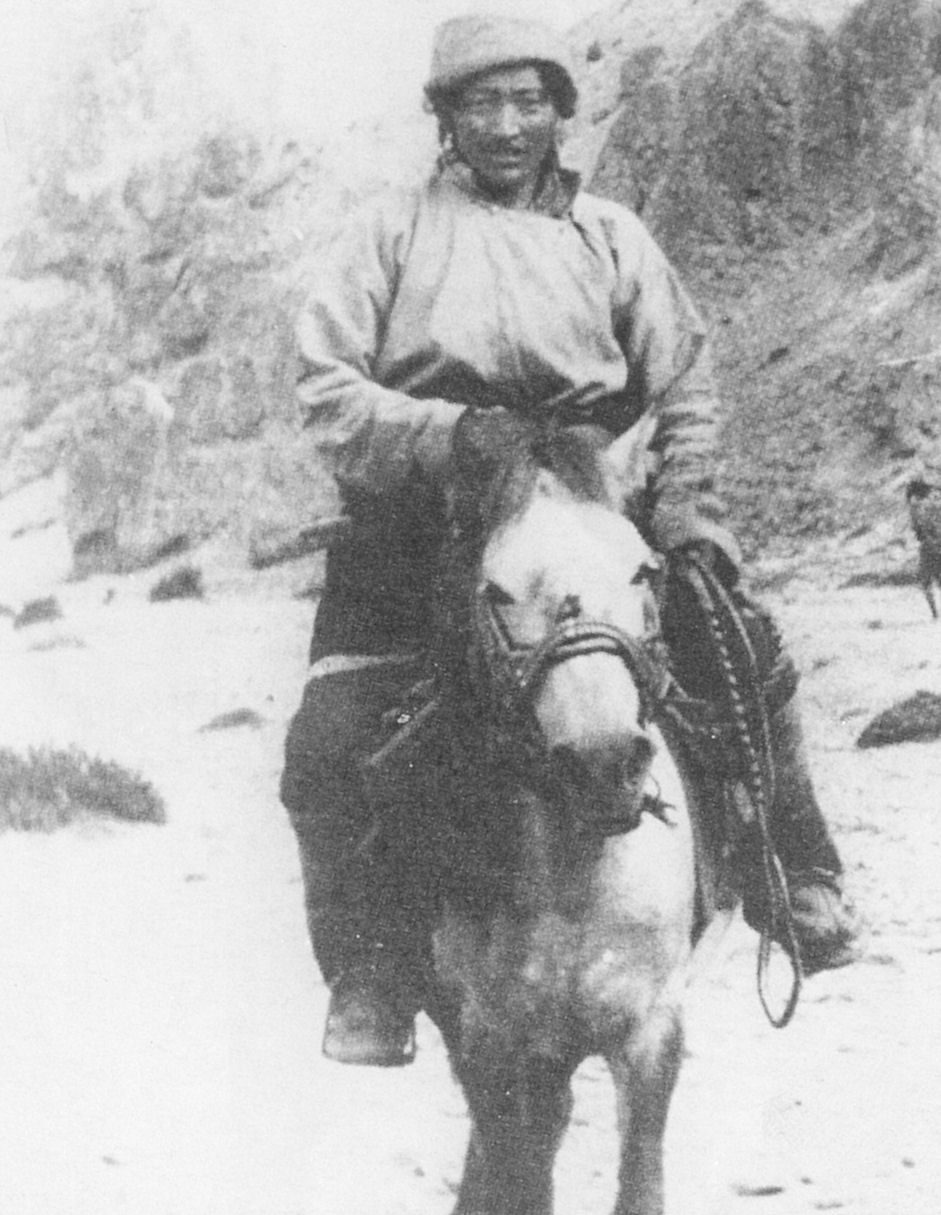

China's People's Liberation Army entered Tibet in 1950, and the next year Tibetan representatives signed an agreement accepting Chinese sovereignty in return for promises of local autonomy. By 1956 revolt had spread among the Khampa tribes of eastern Tibet. The CIA's program to support it, run through members of the Dalai Lama's family, began in 1956–57 and lasted into the 1970s4,8. In a 1968 review the CIA said the program rested on "U.S. Government commitments made to the Dalai Lama in 1951 and 1956"4.
Training and air drops
The cover names tell the outline. ST CIRCUS was the training of Tibetan recruits, first on the Pacific island of Saipan and then at Camp Hale near Leadville, Colorado, chosen because its altitude of about 10,000 feet resembled the Himalayas. ST BARNUM was the air supply of agents and arms into Tibet8. Recruits learned weapons, guerrilla tactics and the hand-cranked radios that kept teams in touch with their handlers8.
The rising of March 1959 in Lhasa changed the picture. The Dalai Lama fled and crossed into India on 31 March8. A month later Director of Central Intelligence Allen Dulles told the National Security Council that the Chinese were making "an all-out effort to mop up the rebels and seal off the southern border," and that organized resistance "had disintegrated"1.
On 4 February 1960 Dulles asked President Eisenhower to approve continuing the program. Eisenhower wondered whether the result would not be "more brutal repressive reprisals." Desmond FitzGerald of the CIA answered that "there could be no greater brutality than had been experienced in Tibet in the past," and Secretary of State Christian Herter supported going on. The President approved2.
The Mustang force
By the early 1960s the program's center had moved to a guerrilla base in the Mustang area of Nepal, just across the Tibetan border. A CIA review for the Special Group in January 1964 described a force of about 2,000 men, 800 of whom had been armed by an airdrop in January 1961, and set out the year's budget3:
- support of 2,100 guerrillas in Nepal, $500,000;
- a subsidy to the Dalai Lama, $180,000;
- the covert training site in Colorado, $400,000;
- "black" air transport of trainees from Colorado to India, $185,000;
- Tibet Houses in New York and Geneva, intended to act as unofficial missions for the Dalai Lama, and other items, for a total of $1,735,000.
The same review recorded that 133 Tibetans had been brought to the United States for training, that 20 young officials were to be educated at Cornell, and that plans called for about 20 resident agents and two road-watch teams inside Tibet3.
Diminishing returns
The results were thin. By January 1968 the CIA reported that "there are no radio teams remaining inside Tibet," that the Cultural Revolution had not loosened Chinese control, and that "a large number of underground assets have been uncovered and neutralized"4. In 1969 it judged the 1,800-man Mustang force "well above the optimum size" and proposed cutting it to 300 combat-ready men, with resettlement payments for the rest5.
The Nixon administration agreed. According to the State Department's historians, the President, Henry Kissinger, the State Department and the CIA all came to see the Tibetan operation as "an unsuccessful irritant" to the People's Republic, unlikely to change its policy "except by hampering rapprochement with the United States." In 1971 the 40 Committee approved the reduction to 300 men7. Political support for the Dalai Lama continued on a smaller scale, at $363,000 proposed for fiscal year 19716. Nixon's visit to Beijing in February 1972 marked the end of the program's purpose8.
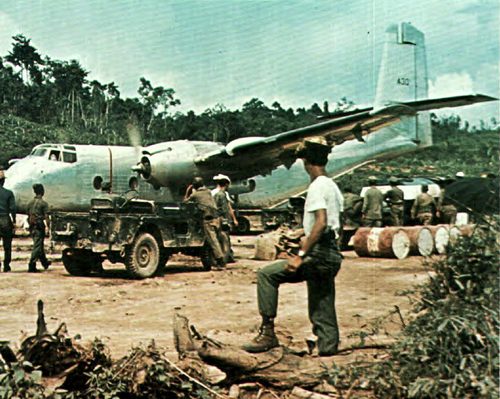
The CIA was running a much larger paramilitary war in Laos in the same years (The secret war in Laos). Like the earlier émigré drops into the Soviet Union (Operation Redsox), the Tibetan teams showed how hard it was to keep agents alive and reporting inside a closed communist state4.
The documents
Declassified records of this operation.
Checking the record
Dates and outcome compared in two independent sources: they agree.
- FRUS
- Operation began in the second Eisenhower administration (1957–61); reduced in 1971 Judged 'an unsuccessful irritant' to China; force cut from about 1,800 to 300 men.
- Wikipedia
- Spanning almost twenty years; ended after Nixon's 1972 visit to China Program ended with US–China rapprochement; annual cost over $1.7 million by 1964.
Both tie the end of the program to rapprochement with China. FRUS records a reduction decided in 1971 rather than a clean end in 1972. Wikipedia says training at Camp Hale ended in 1961, but the CIA's 1964 review still budgets $400,000 for the Colorado training site and 133 trainees; this page follows FRUS.
Sources
- FRUS FRUS, 1958–1960, volume XIX, China, Document 375: Editorial Note on the NSC meeting of 30 April 1959, US Department of State, Office of the Historian (1996).
- FRUS FRUS, 1958–1960, volume XIX, China, Document 400: Memorandum for the Record, Discussion with the President on Tibet, 4 February 1960, US Department of State, Office of the Historian (1960-02-04).
- FRUS FRUS, 1964–1968, volume XXX, China, Document 337: Memorandum for the Special Group, Review of Tibetan Operations, 9 January 1964, US Department of State, Office of the Historian (1964-01-09).
- FRUS FRUS, 1964–1968, volume XXX, China, Document 342: Memorandum for the 303 Committee, Status Report on Tibetan Operations, 26 January 1968, US Department of State, Office of the Historian (1968-01-26).
- FRUS FRUS, 1969–1976, volume XVII, China, 1969–1972, Document 273: Editorial Note on the CIA's 1969 report on Tibetan operations, US Department of State, Office of the Historian (2006).
- FRUS FRUS, 1969–1976, volume XVII, Document 278: Memorandum for the 40 Committee, Status Report on Support to the Dalai Lama and Tibetan Operations, 11 January 1971, US Department of State, Office of the Historian (1971-01-11).
- FRUS FRUS, 1969–1976, volume XVII, Document 274: Editorial Note on the Tibet program under Nixon, US Department of State, Office of the Historian (2006).
- Wikipedia CIA Tibetan program, Wikipedia.
- Wikipedia English Wikipedia article (used for cross-checking).
Elsewhere in the files
Read next
 17 January 1961 – February 1973
The secret war in Laos
From 1961 to 1973 the CIA armed and directed an irregular army, built around Hmong fighters led by Vang Pao, against the Pathet Lao and North Vietnam in a country officially neutral.
 United States · 1947
Central Intelligence Agency (CIA)
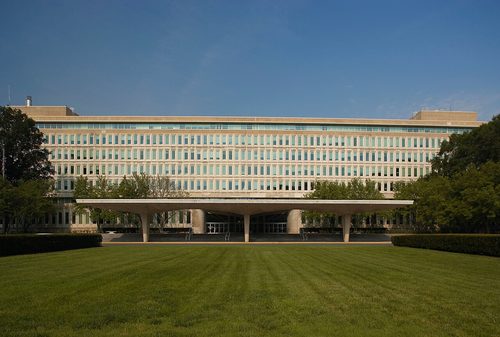
The US civilian intelligence service, created by the National Security Act of 1947 to coordinate foreign intelligence, which within a year also became Washington's instrument for covert action.
 1893–1969
Allen Dulles
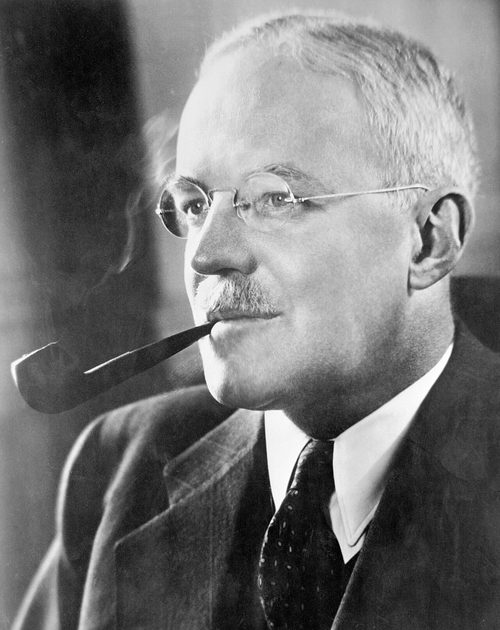
OSS spymaster in wartime Switzerland and Director of Central Intelligence from 1953 to 1961, Allen Dulles presided over the CIA's era of coups and covert wars until the Bay of Pigs ended his tenure.
1949 – 1954
Operation Redsox
REDSOX was the CIA's early Cold War program for parachuting and smuggling émigré agents into the Soviet Union. It produced little intelligence and cost many agents their lives.