
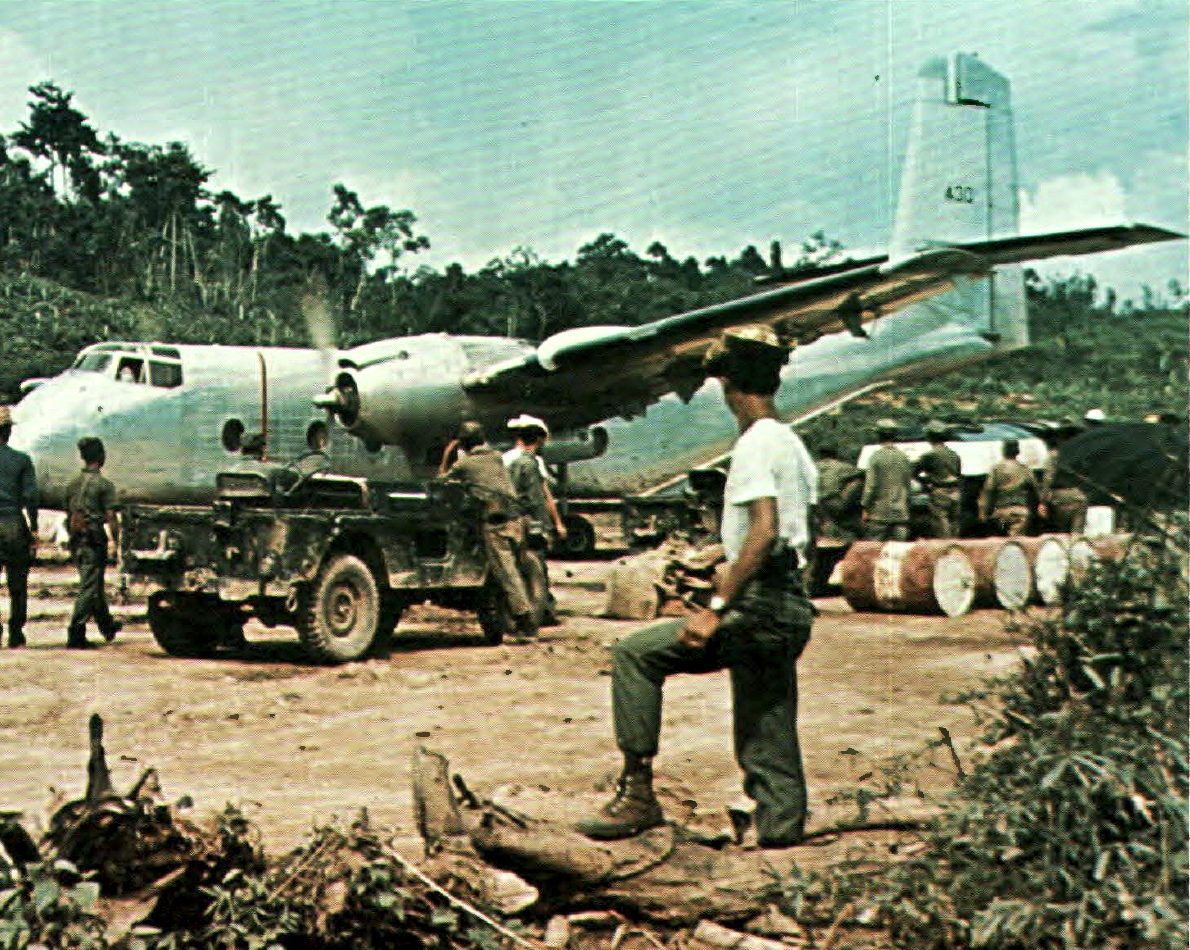
Laos in 1960 was a small, landlocked kingdom on the route North Vietnam would use to supply the war in the South. Its civil war, which began in 1959, set the Royal Lao Government against the communist Pathet Lao, backed by Hanoi, with a neutralist faction in between7. The United States could not send troops without wrecking the diplomatic effort to neutralize the country. The CIA's answer was a guerrilla army raised among the Hmong, the hill people then called Meo, in the mountains of northeastern Laos5,6.
Momentum
The program, later known as Operation Momentum, was planned by CIA officer James William Lair and run with the help of the Thai police's Police Aerial Reinforcement Unit. The first training course began on 17 January 1961. It was short, about three days, and supplies came in by parachute. By May there were some 5,000 trained men, and by August about 9,0005. Their leader was a Hmong officer in the Royal Lao Army, Vang Pao. The CIA's proprietary airline, Air America, moved men and supplies to mountain airstrips6,7.
In July 1962 the International Agreement on the Neutrality of Laos was signed in Geneva, and foreign military personnel were supposed to leave. North Vietnam's forces largely stayed, and CIA support for the Hmong resumed in 19635. On 20 April 1963 President Kennedy approved telling the neutralist prime minister, Souvanna Phouma, that the United States was ready to help, "including airdropping arms and supplies prepositioned in Thailand and action by Meo guerrillas"1. The fiction of neutrality shaped everything that followed: the war had to be run quietly, with the ambassador in Vientiane controlling military operations6.
A war run by an embassy
By the mid-1960s the CIA's operation had grown into its largest paramilitary effort, with bases in the north at Long Tieng, Vang Pao's headquarters, and in the south at Pakse and Savannakhet aimed at the Ho Chi Minh Trail3,6. In 1966 William Colby, chief of the CIA's Far East Division, reported to Director Richard Helms that he found the situation "exhilarating." Hmong units, retreating since a North Vietnamese offensive in late 1965, had regained "90% of the area lost" with US Air Force support guided by CIA intelligence. Colby described the approach as "small scale U.S. and unobtrusive (except to the enemy) efforts," and proposed beginning "the process of developing the cloak, and later the reality, of legality" for the paramilitary forces3.
The State Department historians who compiled the 1964–1968 Laos volume listed "the Central Intelligence Agency's support and direction of Meo (H'mong) and other tribal anti-North Vietnamese guerrillas" among its main themes, together with the air campaign against the Trail and the loss to North Vietnamese forces of the US-manned navigation site at Phou Pha Thi2.
Attrition
As the war in Vietnam grew, Laos became a sideshow to it, and the Hmong guerrillas were increasingly used as light infantry to hold ground. That cost them men they could not replace5. The administration turned increasingly to Thai volunteer battalions to hold northern Laos. In September 1972 Kissinger reported to Nixon that "Vang Pao's irregulars, are weaker than in previous years," that Thai volunteer battalions were carrying much of the fighting, and that Congress had imposed a $375 million ceiling on spending in Laos4.
How much Congress knew is itself debated. Helms later said the appropriations subcommittees were regularly briefed on the war's funding and that Senator Stuart Symington and others visited Laos and seemed to approve; Symington's subcommittee nonetheless pressed the administration in 1969 hearings on secret commitments in Laos and Thailand, and by 1972 Congress had capped US spending in Laos4,6,8.
The end
The CIA's paramilitary effort ended with the 1973 settlement that followed the Paris accords on Vietnam6. In May 1975, as the Pathet Lao closed in, an American airlift took about 2,500 Hmong from Long Tieng to Thailand; most were left behind, and by the end of the year some 54,000 Hmong were in refugee camps in Thailand. On 2 December 1975 the monarchy was abolished and the Lao People's Democratic Republic proclaimed5,7.
The CIA's own later accounts describe its air and paramilitary operations in Laos as the largest it had undertaken6.
The documents
Declassified records of this operation, with the scans and their full text hosted here.

Checking the record
Dates and outcome compared in two independent sources: they agree.
- FRUS
- Colby's report of August 1966 describes CIA-supported guerrilla operations in north and south Laos under the 1963 action plan Holding action in Laos alongside the air war; by 1972 Vang Pao's irregulars were 'weaker than in previous years' (source 4).
- Wikipedia
- Training began 17 January 1961; operations dampened by the July 1962 Geneva agreement; US support until 1973 Hmong guerrillas suffered irreplaceable losses; 2,500 evacuated to Thailand in May 1975, most left behind.
The sources agree on the arc of the program. Wikipedia supplies the start date and casualty estimates, which FRUS does not document; those are marked as estimates here.
Sources
- FRUS FRUS, 1961–1963, volume XXIV, Laos Crisis, Document 461: National Security Council Record of Action No. 2465, 20 April 1963, US Department of State, Office of the Historian (1963-04-20).
- FRUS FRUS, 1964–1968, volume XXVIII, Laos: Preface, US Department of State, Office of the Historian (1998).
- FRUS FRUS, 1964–1968, volume XXVIII, Laos, Document 246: Report by the Chief of the Far East Division (Colby) to DCI Helms, 16 August 1966, US Department of State, Office of the Historian (1966-08-16).
- FRUS FRUS, 1969–1976, volume XX, Southeast Asia, Document 178: Kissinger to Nixon, Thai Volunteers and FY-73 Legislative Ceiling, 25 September 1972, US Department of State, Office of the Historian (1972-09-25).
- Wikipedia Operation Momentum, Wikipedia.
- Wikipedia CIA activities in Laos, Wikipedia.
- Wikipedia Laotian Civil War, Wikipedia.
- FRUS FRUS, 1969–1976, volume XX, Southeast Asia, Document 36: Editorial Note on the Symington subcommittee hearings, November 1969, US Department of State, Office of the Historian (2006).
- Wikipedia English Wikipedia article (used for cross-checking).
Elsewhere in the files
Read next
 June 1967 – 1972
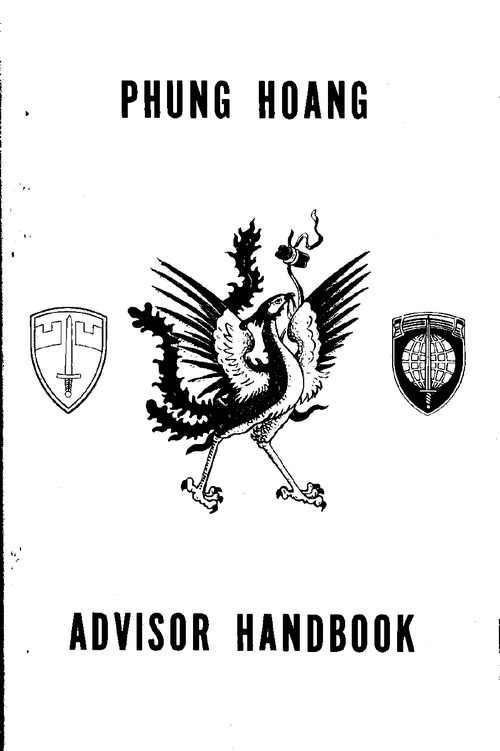
The Phoenix Program
Phoenix (Phung Hoang) was the US–South Vietnamese effort of 1967–72 to identify and 'neutralize' the Viet Cong's clandestine political apparatus. It became the most contested program of the war.
 1957 – 1972
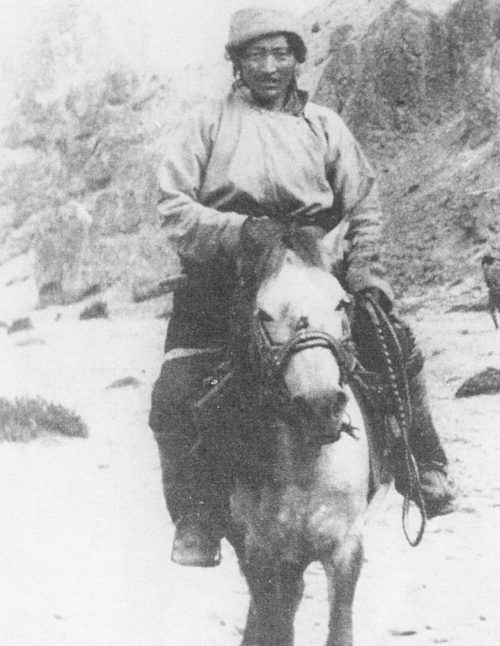
ST CIRCUS: the CIA in Tibet
From the late 1950s to the early 1970s the CIA trained Tibetan guerrillas in Colorado, supplied a resistance army in Nepal and subsidized the Dalai Lama. Rapprochement with China ended it.
 1920–1996
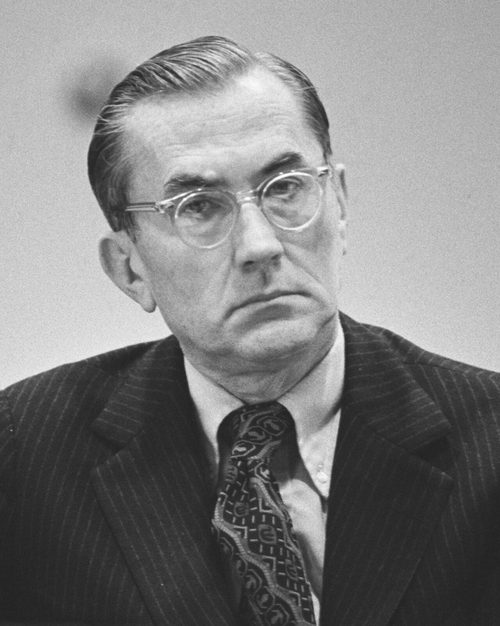
William Colby
OSS parachutist, CIA station chief in Saigon and head of the Phoenix program, Colby became Director of Central Intelligence in 1973 and chose to open the Agency's files to the investigations of 1975.
 United States · 1947
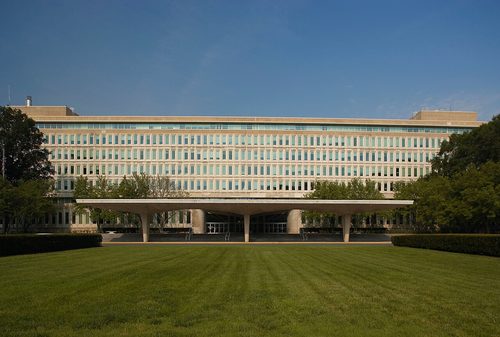
Central Intelligence Agency (CIA)
The US civilian intelligence service, created by the National Security Act of 1947 to coordinate foreign intelligence, which within a year also became Washington's instrument for covert action.