
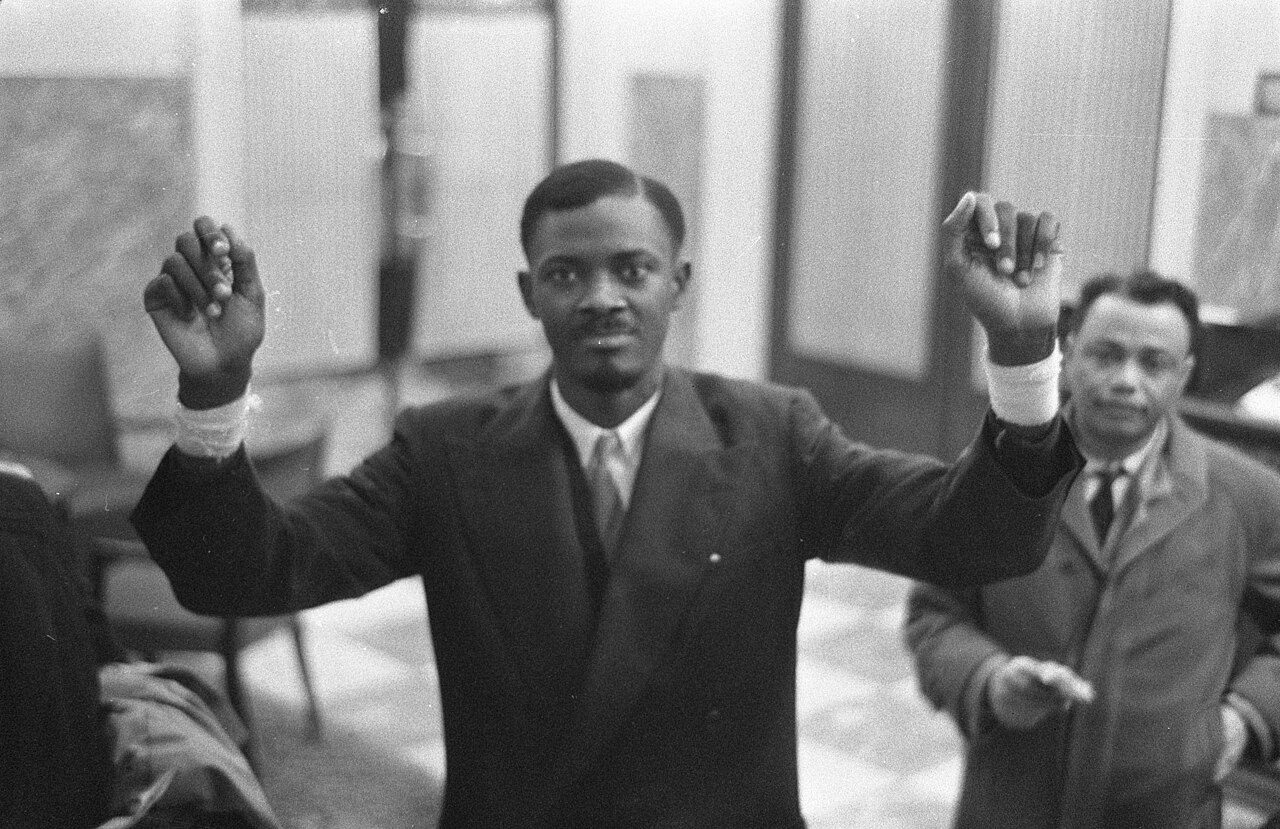

The Belgian Congo became independent on 30 June 1960, with Joseph Kasavubu as president and Patrice Lumumba as prime minister. Within weeks the army mutinied, Belgium flew in paratroopers, and the mineral-rich province of Katanga declared its secession. The United Nations sent a peacekeeping force. Lumumba threatened to invite Soviet troops to hasten the Belgian withdrawal, and by early September Soviet aircraft, trucks and technicians were arriving in the province where his support was strongest1,8.
In Washington the Eisenhower administration came to see Lumumba as a Soviet foothold in the heart of Africa. On 18 August 1960 the CIA station in Léopoldville cabled that the Congo was "experiencing classic communist effort takeover government" and that there might be "little time left in which take action to avoid another Cuba"1.
"An urgent and prime objective"
The same day the National Security Council discussed the Congo. Director of Central Intelligence Allen Dulles said Lumumba was in Soviet pay3. What President Eisenhower said next is the most disputed moment in the record. In 1975 an NSC staff member, Robert Johnson, told the Church Committee that the President had said something that struck him as an order to assassinate Lumumba, followed by "a stunned silence for about 15 seconds." Other officials at the meeting remembered no such order3.
A week later, on 25 August, the President's national security assistant, Gordon Gray, told the covert-action Special Group that Eisenhower had "expressed extremely strong feelings on the necessity for very straightforward action." The group agreed not to rule out "consideration" of "any particular kind of activity which might contribute to getting rid of Lumumba." The next day Dulles cabled the station chief, Lawrence Devlin, that "in high quarters" Lumumba's "removal must be an urgent and prime objective" and "a high priority of our covert action"1.
The poison
Richard Bissell, the CIA's Deputy Director for Plans, asked the Africa Division chief, Bronson Tweedy, to explore assassinating Lumumba, and asked a CIA scientist, called "Joseph Scheider" in the Church report, to prepare to "assassinate or incapacitate" an African leader1. In late September "Scheider" arrived in Léopoldville with lethal biological material and, Devlin testified, "rubber gloves, a mask and a syringe." The toxin was to be put into something Lumumba would swallow, such as food or a toothbrush. Devlin told headquarters on 28 September that his first option was to place an agent inside Lumumba's entourage5. Tweedy replied that concealing the US role came first5.
The plan went nowhere. Kasavubu announced Lumumba's dismissal on 5 September, and in mid-September the army chief of staff, Colonel Joseph Mobutu, took control. Lumumba sought the protection of UN troops and from early October was confined to his residence, guarded by both UN and Congolese soldiers1,6,8. The station had met Mobutu on 7 September and was soon giving him and others money, with the ambassador's approval4. The scientist said he made the toxin harmless and threw it in the Congo River before leaving on 5 October; Devlin recalled disposing of it later, after Lumumba's arrest1. The CIA also sent two foreign agents with criminal backgrounds, known as QJWIN and WIROGUE, to the Congo that autumn; the committee found no evidence that they had any part in his death1,2.
Capture and death
On the night of 27 November Lumumba slipped out of his house and headed for his political base at Stanleyville. Mobutu's troops caught him in Kasai province on 1 December and imprisoned him at Thysville. Devlin had cabled that the station was working with the Congolese government "to get roads blocked and troops alerted," but CIA officers testified that they had no part in his escape and little in his recapture6.
On 17 January 1961 the central government flew Lumumba to Élisabethville in Katanga, the province most hostile to him. Katangan authorities announced his death weeks later; a United Nations investigation concluded he was killed on the day he arrived1. He was executed near Élisabethville by Katangan troops, with Belgian officers assisting7,8.
What followed
The CIA's continuing involvement in the Congo through 1968 is documented in the same FRUS volume. Mobutu seized full power in November 1965 and ruled the country, renamed Zaire in 1971, until he was overthrown in 19978. The Church Committee's account of the Lumumba plot was published in November 1975 (Alleged Assassination Plots Involving Foreign Leaders (1975)); see also the parallel story of the The plots against Fidel Castro.
The documents
Declassified records of this operation, with the scans and their full text hosted here.
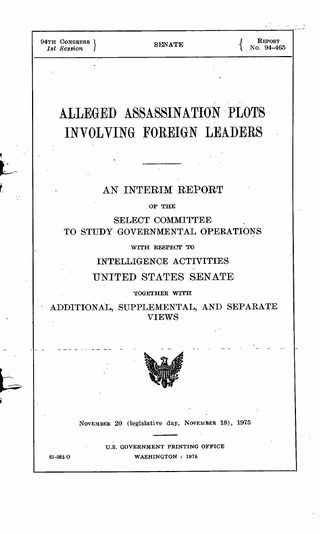 20 November 1975 · 85 p.Alleged Assassination Plots Involving Foreign Leaders (1975)Senate Select Committee to Study Governmental Operations with Respect to Intelligence Activities (Frank Church, chairman)The Church Committee's interim report of 20 November 1975 found that US officials plotted to kill Castro and Lumumba and backed plotters in three other countries where leaders died. Ford opposed publication.
- 27 August 1960Allen Dulles's cable on Lumumba: 'an urgent and prime objective' (August 1960)Central Intelligence Agency headquarters (drafted by Director of Central Intelligence Allen W. Dulles, sent under the pseudonym Ascham)The CIA director's cable to the Leopoldville station of late August 1960 declaring Patrice Lumumba's removal 'an urgent and prime objective' and widening the station's authority, the cable the Church Committee placed at the start of the assassination plot.
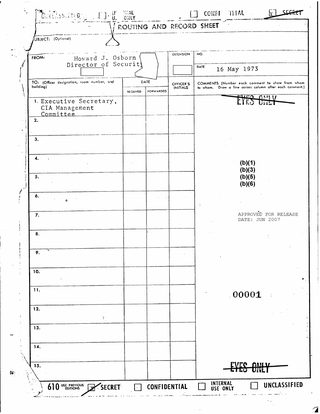 May 1973 · 148 p.The "Family Jewels" (1973)CIA offices and senior officials, reporting to the Director of Central Intelligence under James R. Schlesinger's directive of 9 May 1973The CIA's own 1973 inventory of activities that might have broken its charter, from mail opening and wiretaps on reporters to plots against Castro. Kept secret for 34 years, it was released in June 2007.
Checking the record
Dates and outcome compared in two independent sources: they agree.
- Congress
- Plot conceived in the latter half of 1960; Lumumba transferred to Katanga 17 January 1961 and killed that day according to the UN investigation Poisons never administered; 'no evidence that the United States was in any way involved in Lumumba's death at the hands of his Congolese enemies.'
- Wikipedia
- Lumumba killed 17 January 1961 Tortured and executed by Katangan authorities with Belgian participation; CIA had earlier plotted to poison him.
Both give 17 January 1961 and Katangan responsibility. Wikipedia stresses Belgian participation, documented by the 2001 Belgian inquiry; the Church report predates that inquiry. This page follows the Church findings on US involvement and notes the Belgian conclusions.
Sources
- Congress Alleged Assassination Plots Involving Foreign Leaders (S. Rep. 94-465), Part III.A: Congo (chapter scan), Church Committee; copy hosted by the Assassination Archives and Research Center (1975-11-20).
- Congress Alleged Assassination Plots, Part IV: Findings and Conclusions (chapter scan), Church Committee; copy hosted by the Assassination Archives and Research Center (1975-11-20).
- FRUS FRUS, 1964–1968, volume XXIII, Congo, 1960–1968, Document 11: Editorial Note on the NSC meeting of 18 August 1960, US Department of State, Office of the Historian (2013).
- FRUS FRUS, 1964–1968, volume XXIII, Document 19: Editorial Note on the Station's contact with Mobutu, September 1960, US Department of State, Office of the Historian (2013).
- FRUS FRUS, 1964–1968, volume XXIII, Document 28: Editorial Note on the Station's 'possibilities' and the poison, September 1960, US Department of State, Office of the Historian (2013).
- FRUS FRUS, 1964–1968, volume XXIII, Document 45: Editorial Note on Lumumba's escape and capture, November–December 1960, US Department of State, Office of the Historian (2013).
- Wikipedia Patrice Lumumba, Wikipedia.
- Wikipedia Congo Crisis, Wikipedia.
Elsewhere in the files
- Agency Central Intelligence Agency (CIA)
- Document Alleged Assassination Plots Involving Foreign Leaders (1975)
- Document Allen Dulles's cable on Lumumba: 'an urgent and prime objective' (August 1960)
- Document The "Family Jewels" (1973)
- Operation The plots against Fidel Castro
- Operation Track II and Chile, 1970
- Person Allen Dulles
Read next
 August 1960 – 1965
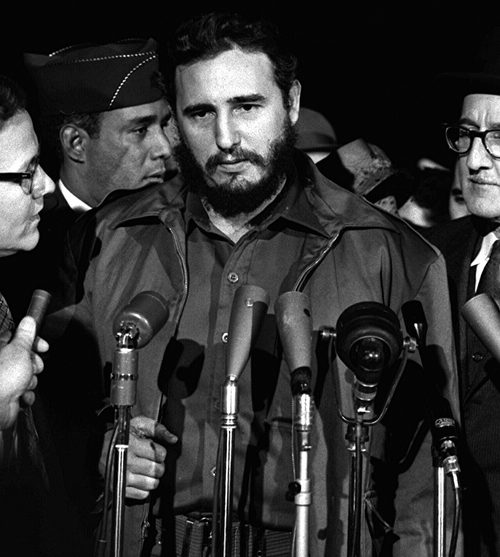
The plots against Fidel Castro
Between 1960 and 1965 the CIA pursued at least eight plots to kill Fidel Castro, using poison pills, gangsters and a Cuban insider. None succeeded, and who authorized them was never settled.
20 November 1975
Alleged Assassination Plots Involving Foreign Leaders (1975)
The Church Committee's interim report of 20 November 1975 found that US officials plotted to kill Castro and Lumumba and backed plotters in three other countries where leaders died. Ford opposed publication.
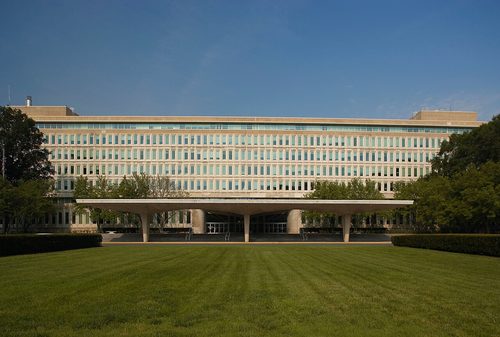 United States · 1947
Central Intelligence Agency (CIA)
The US civilian intelligence service, created by the National Security Act of 1947 to coordinate foreign intelligence, which within a year also became Washington's instrument for covert action.
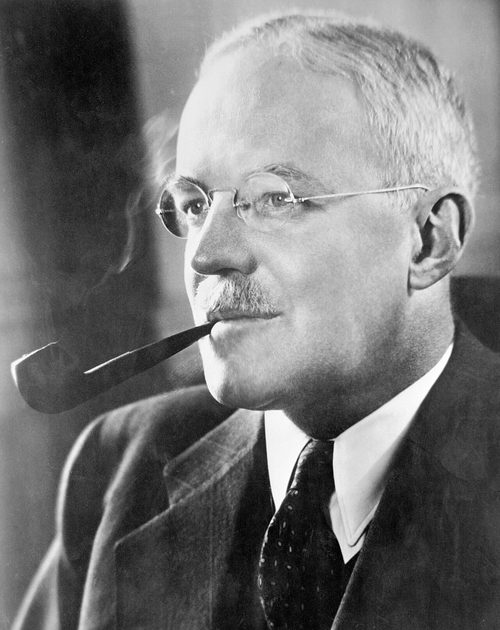 1893–1969
Allen Dulles
OSS spymaster in wartime Switzerland and Director of Central Intelligence from 1953 to 1961, Allen Dulles presided over the CIA's era of coups and covert wars until the Bay of Pigs ended his tenure.
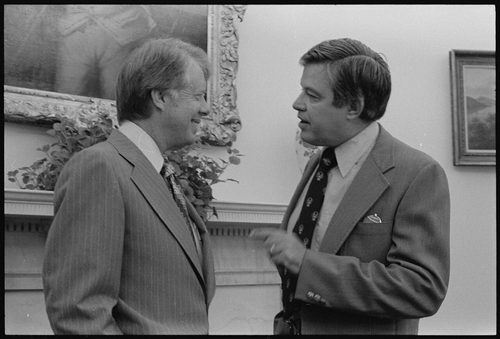 1924–1984
Frank Church
Idaho senator who chaired the 1975–76 Senate investigation of the CIA, FBI and NSA. His committee exposed assassination plots, COINTELPRO and Shamrock, and led to permanent intelligence oversight.