
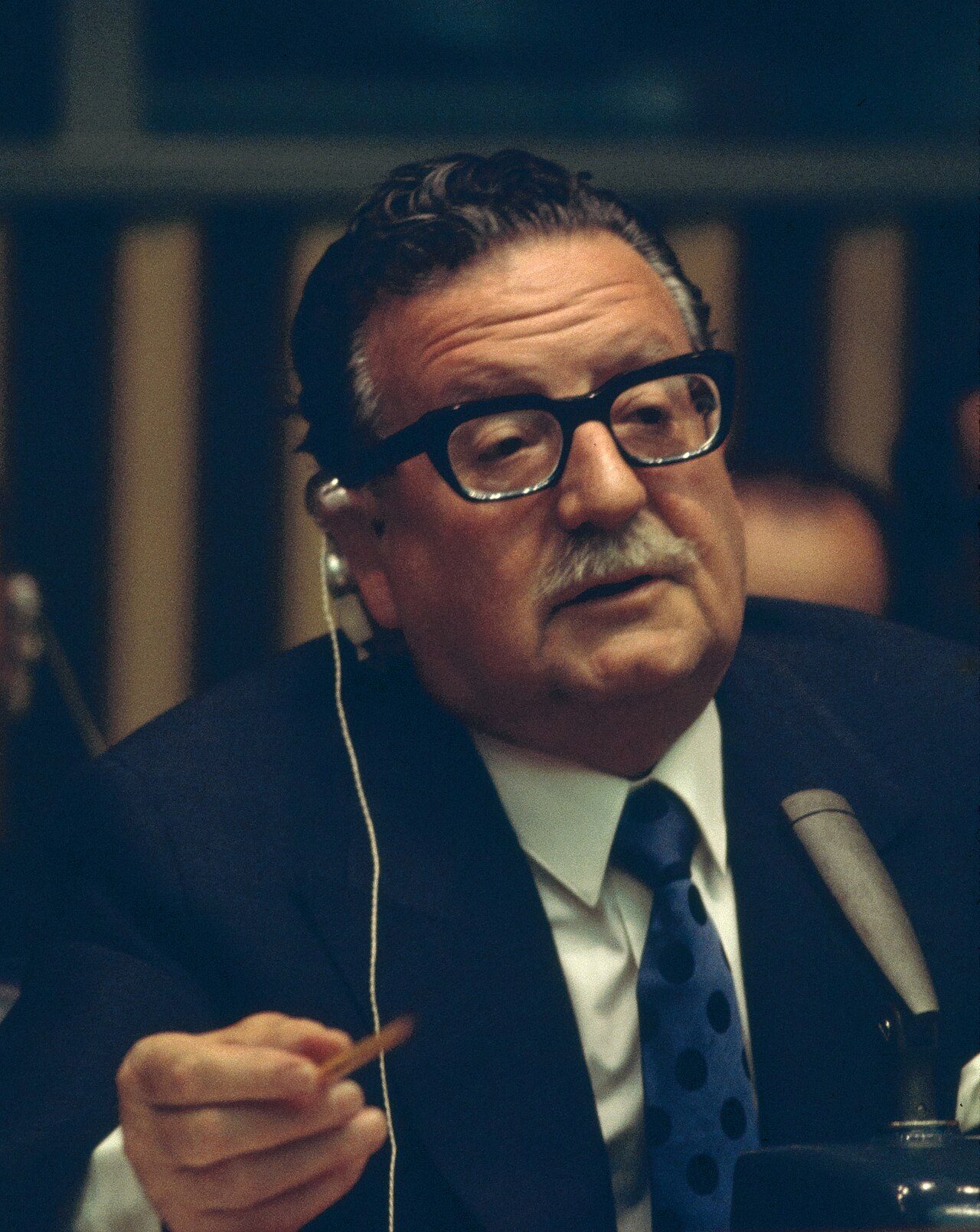

On 4 September 1970 Salvador Allende, a Socialist senator running for the fourth time at the head of the Popular Unity coalition, won Chile's presidential election with 36.3 percent of the vote, about 39,000 votes ahead of the conservative Jorge Alessandri. With no absolute majority, the choice passed to a joint session of Congress, due on 24 October. By long custom Congress confirmed the front-runner5.
The Nixon administration had funded "spoiling operations" against Allende before the vote. After it, the effort split in two. "Track I," handled through the 40 Committee and the embassy, tried political maneuvers to keep Allende out through Congress. "Track II" was a CIA effort to provoke a military coup, kept from the State Department, the Defense Department, the 40 Committee and the US ambassador5,7.
"Make the economy scream"
Track II began at a twenty-minute White House meeting on 15 September 1970. President Nixon met his national security adviser, Henry Kissinger, Attorney General John Mitchell and the Director of Central Intelligence, Richard Helms. Helms's handwritten notes survive1:
1 in 10 chance perhaps, but save Chile! worth spending not concerned risks involved no involvement of embassy $10,000,000 available, more if necessary full-time job—best men we have game plan make the economy scream 48 hours for plan of action
Helms told the Church Committee he came away with the impression that the President "wanted something done, and he didn't much care how." The CIA was to report on Track II to Kissinger or his deputy, Alexander Haig5.
Looking for officers
The army's commander-in-chief, General René Schneider, held that the constitution required the army to accept whoever Congress chose. Every group of plotters the CIA found therefore treated Schneider's removal as the first step5,7. Between 5 and 20 October the CIA made 21 contacts with Chilean military and police officers and assured those inclined to a coup of support "at the highest levels of the U.S. Government"5. The US Army attaché was placed under the station's direction and told, in a message on 14 October, to offer "material support short of armed intervention"2.
The CIA dealt with three groups. One was dropped early for its extremism. Another centered on a retired general, Roberto Viaux, whom the CIA first contacted on 9 October and who asked for weapons, tear gas and a life insurance policy. A third was led by serving officers, including General Camilo Valenzuela, commander of the Santiago garrison5,7.
15 October: "Preserve your assets"
At a meeting on 15 October, Kissinger, Haig and the CIA's Deputy Director for Plans, Thomas Karamessines, agreed that Viaux had no more than "one chance in twenty" and that the CIA should warn him off: "Preserve your assets. We will stay in touch. The time will come when you together with all your other friends can do something"3. The next day CIA headquarters cabled the station that "it is firm and continuing policy that Allende be overthrown by a coup," that efforts would continue "vigorously beyond" 24 October, and that the station should wish the other plotters "optimum good fortune"4.
22 October
A group of officers the CIA was actively supporting tried to seize Schneider on 19 October and failed; a second attempt on 20 October also failed. In the early hours of 22 October, knowing of both failures, the CIA passed three submachine guns, ammunition and tear gas grenades to the group that had failed on 19 October, which still planned a kidnapping5,7. Later that day Schneider was shot in a kidnap attempt on his way to work. He died on 25 October5,8.
The Church Committee found that the shooting was "apparently conducted by conspirators other than those to whom the CIA had provided weapons." A Chilean military court convicted associates of Viaux of the attack and sentenced Viaux to twenty years as its "intellectual author"; Valenzuela received three years' exile for the wider conspiracy. The court found Schneider was killed with handguns5. In 2000 the US intelligence community reported that the Viaux group had acted "independently of the CIA at that time," that the guns given to Valenzuela's group were later returned unused, and that in November 1970 the CIA paid $35,000 to a member of the Viaux group, to keep the earlier contact secret and "for humanitarian reasons"7.
Aftermath
The killing turned Chilean opinion against the plotters. On 24 October Congress confirmed Allende by 153 votes to 357. The Church Committee concluded that US officials "offered encouragement to the Chilean dissidents who plotted the kidnapping," knew that kidnapping was planned, and did not desire or encourage Schneider's death, though it called his death a "foreseeable risk" of the kidnapping6. The CIA went on funding Allende's opponents until the military coup of 11 September 1973, which the Hinchey Report says the agency did not instigate7.
The documents
Declassified records of this operation, with the scans and their full text hosted here.
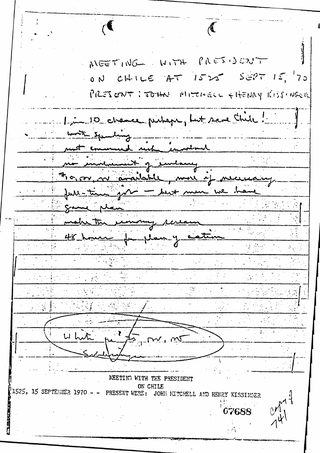 15 September 1970 · 2 p."Make the economy scream": Helms's notes of 15 September 1970Richard Helms, Director of Central Intelligence (handwritten notes, with a typed transcription)One page of handwritten notes, with a typed copy, that CIA Director Richard Helms took in the Oval Office when Nixon ordered the agency to stop Salvador Allende taking office in Chile: the founding record of Track II.
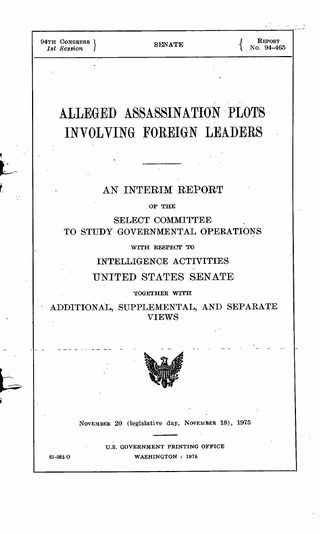 20 November 1975 · 85 p.Alleged Assassination Plots Involving Foreign Leaders (1975)Senate Select Committee to Study Governmental Operations with Respect to Intelligence Activities (Frank Church, chairman)The Church Committee's interim report of 20 November 1975 found that US officials plotted to kill Castro and Lumumba and backed plotters in three other countries where leaders died. Ford opposed publication.
Checking the record
Dates and outcome compared in two independent sources: they agree.
- CIA
- CIA contact with Viaux from 9 October 1970; Viaux group's abduction attempt on 22 October killed Schneider; Congress confirmed Allende on 24 October Track II failed after Schneider's death; CIA later passed $35,000 to the Viaux group.
- Wikipedia
- Shot 22 October 1970, died 25 October 1970 Killed in a botched kidnapping; his death rallied support behind Allende's confirmation.
Dates and outcome agree. US documents disagree on Allende's inauguration date: FRUS papers of October 1970 say 4 November, the Hinchey Report says 3 November; this page does not depend on it.
Sources
- FRUS FRUS, 1969–1976, volume XXI, Chile, 1969–1973, Document 93: Editorial Note on the White House meeting of 15 September 1970, US Department of State, Office of the Historian (2014).
- FRUS FRUS, 1969–1976, volume XXI, Document 151: Editorial Note on instructions to the Army Attaché, October 1970, US Department of State, Office of the Historian (2014).
- FRUS FRUS, 1969–1976, volume XXI, Document 152: Memorandum of Conversation (Kissinger, Karamessines, Haig), 15 October 1970, US Department of State, Office of the Historian (1970-10-15).
- FRUS FRUS, 1969–1976, volume XXI, Document 154: Telegram from CIA headquarters to the Station in Chile, 16 October 1970, US Department of State, Office of the Historian (1970-10-16).
- Congress Alleged Assassination Plots Involving Foreign Leaders (S. Rep. 94-465), Part III.F: Schneider (chapter scan), Church Committee; copy hosted by the Assassination Archives and Research Center (1975-11-20).
- Congress Alleged Assassination Plots, Part IV: Findings and Conclusions (chapter scan), Church Committee; copy hosted by the Assassination Archives and Research Center (1975-11-20).
- CIA CIA Activities in Chile (Hinchey Report), US Intelligence Community / National Intelligence Council; text hosted by the Federation of American Scientists (2000-09-18).
- Wikipedia René Schneider, Wikipedia.
Elsewhere in the files
Read next
 United States · 1947
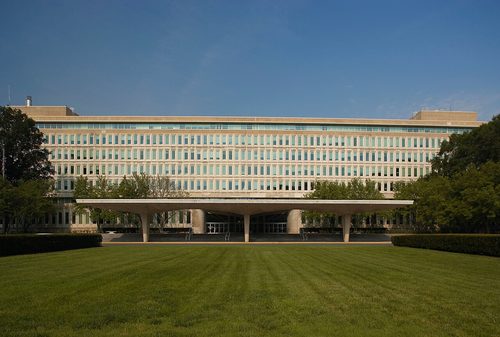
Central Intelligence Agency (CIA)
The US civilian intelligence service, created by the National Security Act of 1947 to coordinate foreign intelligence, which within a year also became Washington's instrument for covert action.
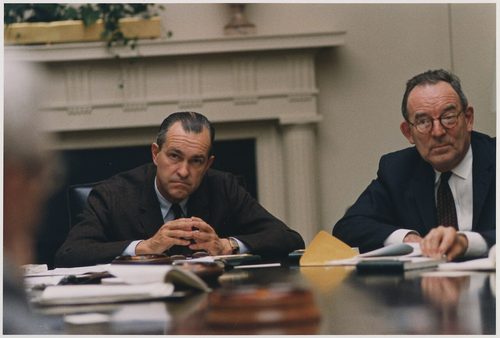 1913–2002
Richard Helms
A career clandestine officer who rose from OSS to Director of Central Intelligence (1966–73), Richard Helms ran the CIA through Vietnam and Chile and later became the only DCI convicted over testimony to Congress.
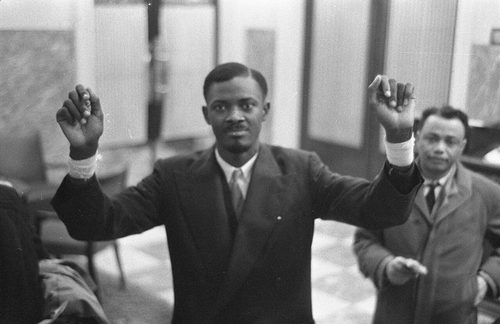 18 August 1960 – 17 January 1961
The CIA and the Congo crisis, 1960–61
In 1960 the CIA plotted to poison Patrice Lumumba and backed Joseph Mobutu. Lumumba was killed by Katangan authorities in January 1961; the Church Committee found no evidence the US took part in his death.
20 November 1975
Alleged Assassination Plots Involving Foreign Leaders (1975)
The Church Committee's interim report of 20 November 1975 found that US officials plotted to kill Castro and Lumumba and backed plotters in three other countries where leaders died. Ford opposed publication.
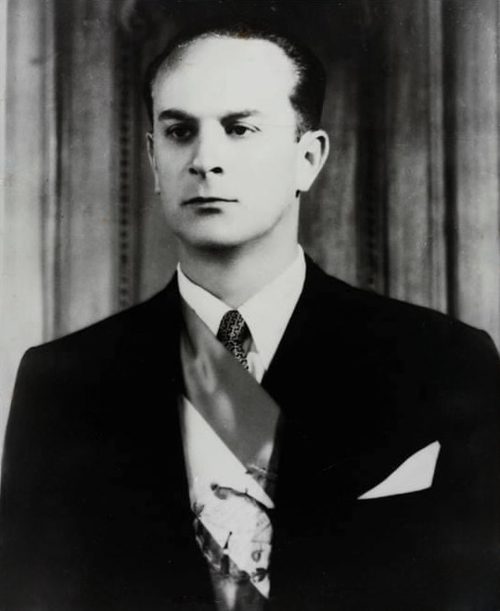 12 August 1953 – 27 June 1954
Operation PBSuccess
The CIA's 1953–54 campaign of propaganda, pressure and a small proxy invasion that forced Guatemala's elected president Jacobo Árbenz to resign on 27 June 1954.