
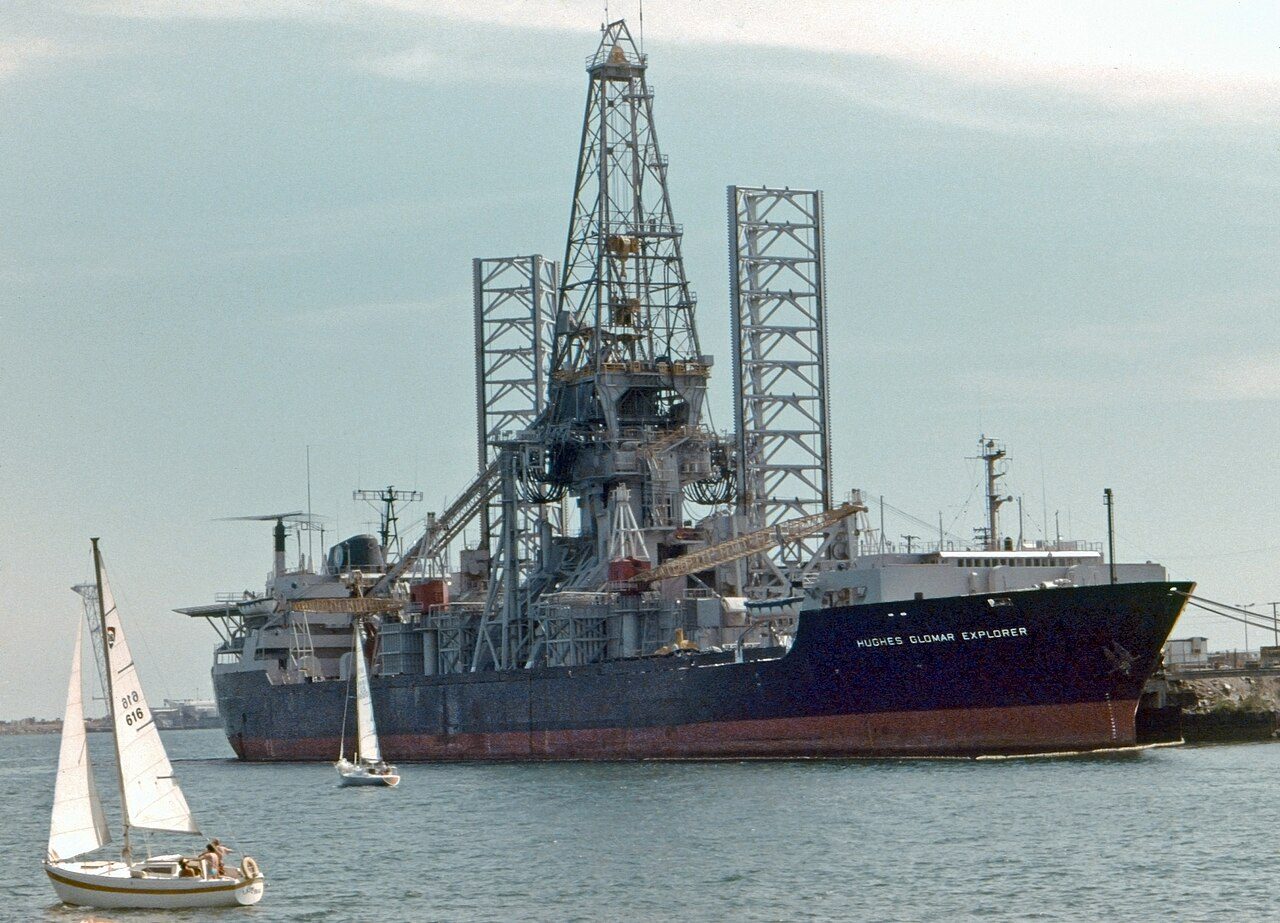
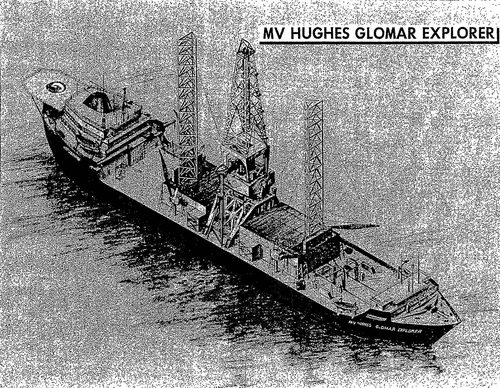
The target lay 16,500 feet down in the North Pacific: the forward part of a Soviet Golf II-class ballistic-missile submarine, carried in CIA paperwork by its pendant number, 722, and known to history as K-129. Project Azorian was the CIA's six-year effort to bring it up without the Soviet Union noticing. The ship built for the job, the Hughes Glomar Explorer, became better known than the operation, and its name passed into American law4,5.
A submarine nobody else could find
K-129 sailed from Kamchatka on a routine patrol in late February 1968 carrying three nuclear-armed ballistic missiles, and was lost with all hands in March after an internal explosion. The Soviet Navy searched for weeks in the wrong place. The United States, alerted by the unusual Soviet activity and helped by its seabed acoustic arrays, found the wreck in August 19681,8.
In August 1970 Richard Helms, as chairman of the US Intelligence Board, made recovery the board's "highest priority." The wish list was long: cryptographic equipment, a nuclear warhead, a missile, navigation and fire-control systems, sonar, and documents1. A CIA Special Projects Staff had been set up in the Directorate of Science and Technology on 1 July 1969, and Helms placed everything about the effort in a security compartment called JENNIFER. That compartment name, not Azorian, was what the press later reported as the operation's name5.
Building a mining ship that did not mine
CIA engineers concluded in 1970 that the only feasible method was a huge mechanical claw, lowered on a string of steel pipe and raised by a heavy-lift system on a surface ship4. The keel was laid at the Sun Shipbuilding yard in Chester, Pennsylvania, on 16 November 19715. The ship had a derrick like an oil rig's and a "moon pool," a well in the hull large enough to swallow the target, so the recovery could take place out of sight of passing ships and satellites4,1.
The cover story came from Howard Hughes. His Summa Corporation posed as the sponsor of a commercial venture to mine manganese nodules from the ocean floor, and Global Marine built and ran the vessel1. Senior officials were not confident. According to the CIA's internal history, the program nearly died over cost overruns in 1971, and in 1972 the Deputy Secretary of Defense, the Joint Chiefs and the Defense Intelligence Agency all recommended ending it. Nixon ordered it continued on 11 December 19725.
The 40 Committee decides
By May 1974 the ship had finished its trials. William Colby, now Director of Central Intelligence, told the 40 Committee that the Intelligence Board still judged the target of "unique intelligence value," especially its cryptographic material3. The committee met on 5 June 1974, and the record of that meeting shows unusual candor. Deputy Secretary of Defense William Clements doubted the value of a six-year-old submarine. Assistant Secretary Albert Hall noted that the Soviets were "now two generations beyond the target missile." Under Secretary of State Joseph Sisco put the chance of a leak at 100 to 12. When Kissinger asked what could go wrong, Colby and Clements answered together:
"Lots of things."
That exchange is from2. Nixon authorized the mission on 7 June 19741.
The lift, July to August 1974
The Glomar Explorer sailed from Long Beach and reached the site on 4 July 1974. For about two weeks Soviet vessels watched at close range, and the mission director had crates stacked on the helicopter deck in case they tried to land a party4,5. Lifting began on 1 August. Partway up, the target broke apart and much of it fell back to the bottom. The rest was secured in the moon pool on 8 August4,5.
The recovered section held the bodies of six Soviet submariners, who were buried at sea with a formal military service. In 1992 CIA Director Robert Gates gave Boris Yeltsin a film of the ceremony4. The CIA's internal history also records that the crew had to deal with plutonium contamination from damaged nuclear weapons in the recovered section5.
Exposure and the "Glomar response"
The secret unraveled from an unlikely direction. In June 1974 burglars broke into a Hughes office in Los Angeles and took papers, one of which linked Hughes to the CIA and the ship. The hunt for it drew in the FBI and the Los Angeles police, and reporters heard4. Colby persuaded several news organizations to hold the story, but the Los Angeles Times published an account in early February 1975, Jack Anderson broadcast the story on 18 March, and Seymour Hersh's detailed report ran in the New York Times on 19 March4,5,1.
Ford had approved a second mission on 6 February 1975. Once the story broke, Defense Secretary James Schlesinger wanted to acknowledge the "bare facts"; Colby, recalling how admitting the U-2 flight had inflamed the 1960 crisis, argued against it and prevailed5. On 28 March Colby advised that a second mission was inadvisable; the 40 Committee recommended termination on 5 June and Ford approved on 16 June 19751.
When a journalist used the Freedom of Information Act to seek CIA records on its contacts with the press, the agency answered that its involvement could "neither be confirmed nor denied." In 1976 the D.C. Circuit did not rule such a reply out, but it sent the case back and required the CIA to justify its position in public as fully as it could before any secret affidavits were weighed6. In 1981 the same court upheld the CIA's refusal7. The "Glomar response" has been a fixture of FOIA law ever since.
What the record shows now
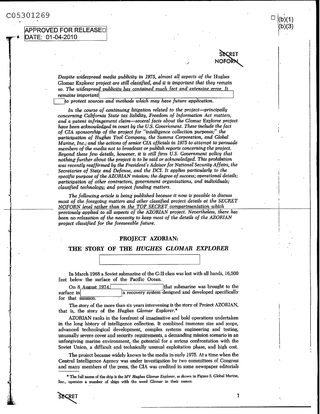
For 35 years the government said almost nothing. In February 2010 the CIA released, with heavy redactions, a 1985 Studies in Intelligence history written by a participant, the source for much of the detail above; see "Project AZORIAN: The Story of the Hughes Glomar Explorer"5. The State Department's Foreign Relations series followed in 2014 with a chapter of 40 Committee and White House papers1. The cost overruns, the precise portion recovered and the intelligence results are still withheld5.
The documents
Declassified records of this operation, with the scans and their full text hosted here.

Checking the record
Dates and outcome compared in two independent sources: they agree.
- FRUS
- Submarine sank March 1968 and was located August 1968; Nixon authorized recovery 7 June 1974; mission began about 15 June 1974; second mission cancelled by Ford 16 June 1975. Recovery only partially successful; cover blown in early 1975; program terminated; ship mothballed 30 August 1976.
- Wikipedia
- K-129 sank about 8 March 1968; Glomar Explorer left Long Beach 20 June 1974, reached the site 4 July 1974. A portion of K-129 recovered; mechanical failure of the capture vehicle let about two-thirds of the raised section fall back.
Dates and outcome agree in substance. FRUS's 'on or about June 15' is the planned start; this page follows the CIA Museum and Wikipedia for the ship's arrival on site on 4 July. The CIA Museum dates the Los Angeles Times story 7 February 1975, while the National Security Archive's archival note says it ran on 8 February; the page says 'early February'.
Sources
- FRUS Foreign Relations of the United States, 1969–1976, Volume XXXV, National Security Policy, 1973–1976, Document 183: Editorial Note, US Department of State, Office of the Historian (2014).
- FRUS FRUS 1969–1976, vol. XXXV, Document 188: Memorandum for the Record, 40 Committee Meeting, 5 June 1974, US Department of State, Office of the Historian (1974-07-01).
- FRUS FRUS 1969–1976, vol. XXXV, Document 185: Colby to Kissinger, Intelligence Value of Project AZORIAN, US Department of State, Office of the Historian (1974-05-23).
- CIA Project AZORIAN, Central Intelligence Agency, CIA Museum.
- National Security Archive Project Azorian: The CIA's Declassified History of the Glomar Explorer (Electronic Briefing Book No. 305), National Security Archive (2010-02-12).
- Court record Phillippi v. Central Intelligence Agency, 546 F.2d 1009 (D.C. Cir. 1976), Caselaw Access Project (Harvard Law School) (1976-11-16).
- Court record Phillippi v. Central Intelligence Agency, 655 F.2d 1325 (D.C. Cir. 1981), Caselaw Access Project (Harvard Law School) (1981-06-25).
- Wikipedia Project Azorian, Wikipedia.
- Wikipedia English Wikipedia article (used for cross-checking).
Elsewhere in the files
Read next
 October 1971 – 1981
Operation Ivy Bells
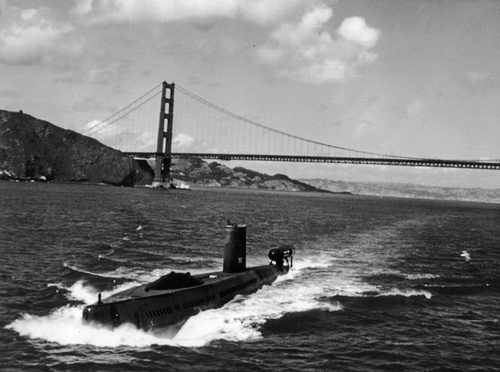
From 1971 US Navy divers working from submarines tapped a Soviet military cable on the floor of the Sea of Okhotsk. Former NSA analyst Ronald Pelton sold the secret to the KGB, and the Soviets removed the tap in 1981.
 1959 – 1972
Operation Holystone
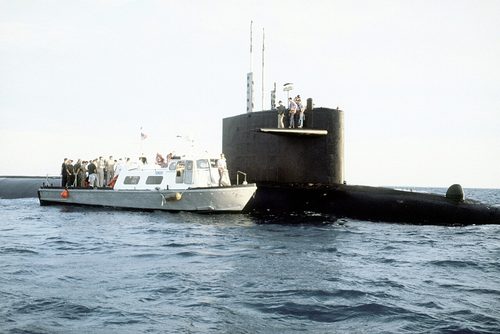
Holystone was a US Navy code name for close-in submarine spying on the Soviet Navy. The New York Times exposed it in May 1975, and Ford White House papers show how officials argued over the leak.
 1985
"Project AZORIAN: The Story of the Hughes Glomar Explorer"
A 50-page in-house CIA history of the 1974 attempt to raise the Soviet submarine K-129, written by an unnamed participant for Studies in Intelligence and released, heavily redacted, in 2010.
 May 1973
The "Family Jewels" (1973)
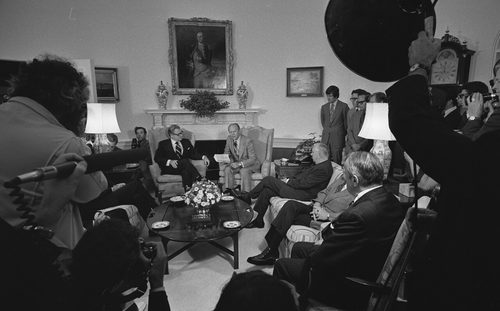
The CIA's own 1973 inventory of activities that might have broken its charter, from mail opening and wiretaps on reporters to plots against Castro. Kept secret for 34 years, it was released in June 2007.
 United States · 1947
Central Intelligence Agency (CIA)
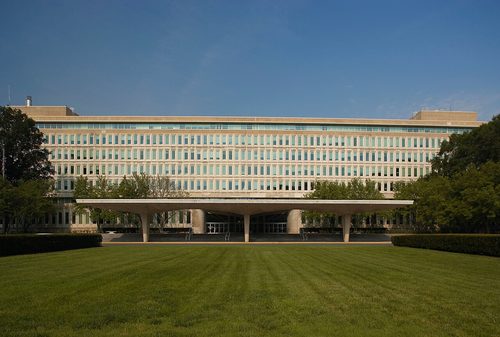
The US civilian intelligence service, created by the National Security Act of 1947 to coordinate foreign intelligence, which within a year also became Washington's instrument for covert action.
 1914–1990s
Signals intelligence
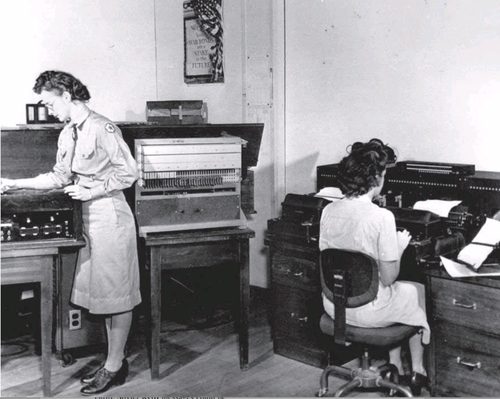
Intelligence from intercepted communications and electronic emissions, from Room 40 and the Zimmermann telegram to Ultra, Venona, the Berlin tunnel and NSA's domestic programs exposed by the Church Committee.