
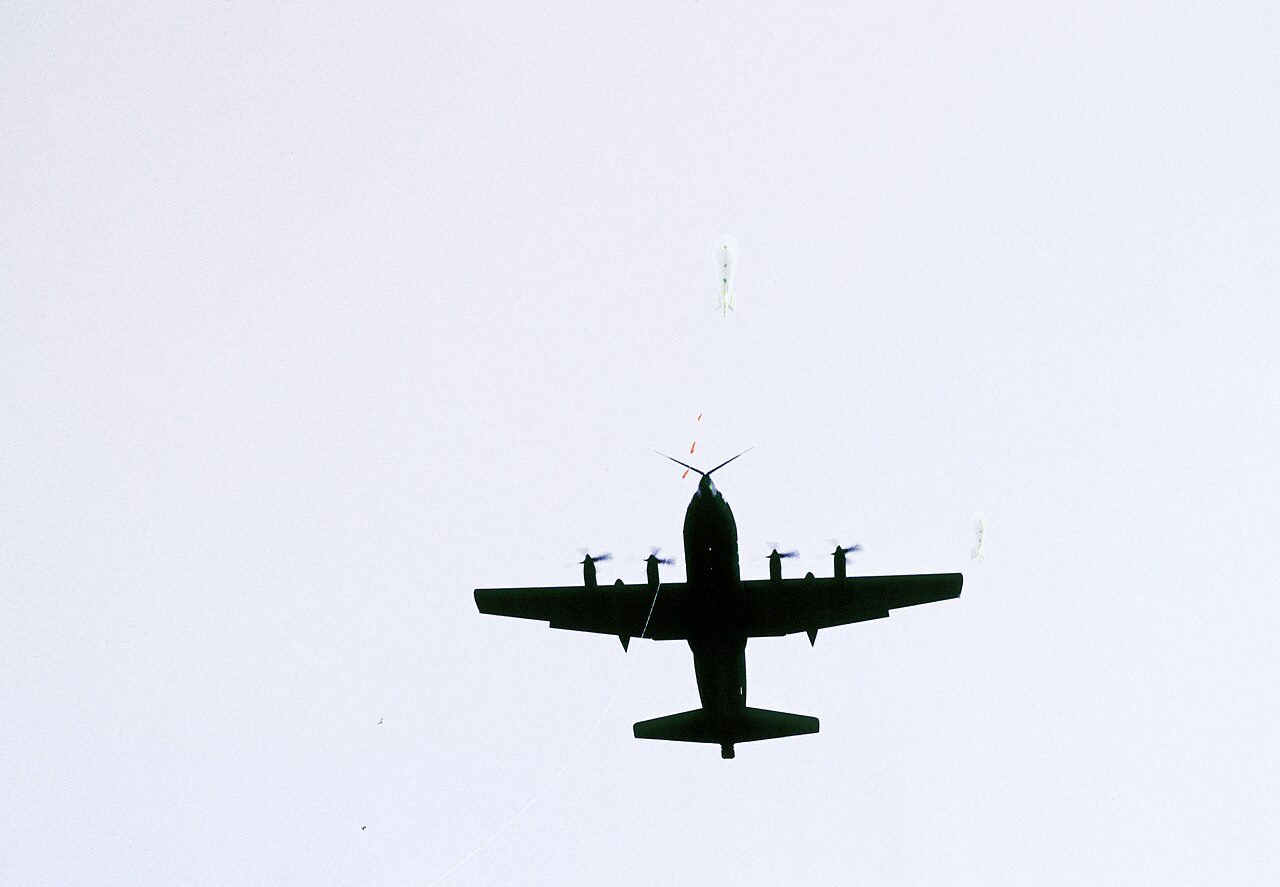

In May 1961 a Navy aircraft flying a magnetic survey over the Arctic Ocean spotted a Soviet drifting ice station that had been abandoned. Days later Moscow announced that it had pulled its people off station NP-9 (North Pole 9) after the ice runway that supplied it cracked1.
The Office of Naval Research (ONR) badly wanted a look inside. A year earlier ONR had installed an acoustic network on an American drift station to listen for Soviet submarines, and it assumed the Soviets were doing the same to track American boats under the polar ice. There was no direct proof. An empty Soviet station could supply it1.
A station no one could reach
The difficulty was distance. NP-9 lay too deep in the pack for an icebreaker and beyond helicopter range. The answer was a pickup system built by the inventor Robert Edison Fulton Jr.1,5.
Fulton had spent the 1950s, with backing from ONR, developing a way for an aircraft to lift a person off the ground without landing. A helium balloon raised a 500-foot braided nylon line attached to a harness. An aircraft with two steel horns on its nose flew into the line, a spring-loaded "sky anchor" locked it, and the crew winched the passenger aboard. After trials with dummies and a pig, the first human pickup took place on 12 August 1958, when a Marine staff sergeant was lifted into a Navy P2V Neptune1,3.
ONR's Captain John Cadwalader would command the mission. Two investigators were chosen: Major James F. Smith, USAF, a paratrooper and Russian linguist who had served on American drift stations, and Lieutenant (j.g.) Leonard A. LeSchack, USNR, a geophysicist who had set up the listening system on the ice island T-3. LeSchack went through parachute training at Lakehurst; both men practiced Skyhook pickups with a Navy crew at Patuxent River1,2.
Delays, and a new target
Approval inside the Navy came only in late September 1961, after skeptics argued the men would be killed. Cold-weather tests at Eglin Air Force Base turned up equipment problems, and NP-9 kept drifting away from Thule, Greenland, the planned base1.
In March 1962 the planners learned that the Soviets had hurriedly left another station, NP-8, after a pressure ridge wrecked its runway. It was newer and closer, at about 83° N, 135° W. An April attempt from Resolute Bay in Canada, using a Navy P2V and a C-130, searched for days and never found it1.
ONR's money then ran out, and the CIA stepped in. Leary records that Fulton had been working with the Agency on Skyhook since the fall of 1961 and that Intermountain Aviation, a CIA proprietary at Marana, Arizona, had fitted a B-17 with the gear. The Defense Intelligence Agency provided $30,000; bad weather pushed the final bill to nearly double that1,2.
Three days on NP-8
The B-17 and a C-46 support aircraft flew to Point Barrow, Alaska, chosen over Resolute Bay to avoid waiting for Canadian diplomatic clearance. After a fruitless first search, the B-17, helped by a Navy patrol plane from Kodiak, found NP-8 on 28 May 1962. Smith jumped through the floor hatch, followed by LeSchack1,2.
They had 72 hours. They photographed the station and gathered documents and equipment the Soviets had left behind, about 150 pounds of material2. Fog then hid the station from the B-17 on 31 May and again on 1 June. On 2 June a Navy P2V took off first, found NP-8 with its better navigation equipment, and guided the B-17 in by radio1.
Conditions were at the edge of what Skyhook could handle: a 30-knot surface wind and no visible horizon. The B-17 first hooked the bag of material. On the second pass the balloon line dragged LeSchack about 300 feet across the ice on his stomach before an ice block stopped him and the aircraft snatched him up, facing the wrong way; he turned himself around in the air. Smith was dragged too until he jammed his heels into a crack, and was lifted off on the third pass. ONR's chief later noted that all three pickups were made in stronger winds and lower visibility than ever attempted, in a record six and a half minutes1,2.
What it found
Cadwalader's report, which Leary used in declassified form, called the haul "intelligence of very great value." The station had been laid out for long periods of silent running, which confirmed the weight the Soviets gave acoustic work under the ice. Equipment and papers also showed that Soviet polar meteorology and oceanography were ahead of American efforts1. The CIA Museum describes the yield as intelligence on Soviet acoustic detection of submarines under the ice and Arctic anti-submarine warfare2.
The submarine question tied Coldfeet to the wider undersea contest of the period, from the Holystone submarine patrols to Ivy Bells and the raising of a Soviet submarine in Azorian.
Afterward
Leary, a historian of CIA air operations, published the full story in the Agency's journal Studies in Intelligence in 19951. On 21 April 2008 the CIA unveiled a painting of the pickup at its headquarters and brought surviving team members together for the first time in 46 years2. Aerial refueling of long-range helicopters in the 1960s reduced Skyhook's value, and its later use in clandestine work has never been fully documented. Fulton died in 20041,5.
Checking the record
Dates and outcome compared in two independent sources: they differ.
- CIA
- Station sighted May 1961; target switched to NP-8 in March 1962; parachute drop 28 May 1962; failed recovery attempts 31 May and 1 June; pickups on 2 June 1962. All three pickups (cargo, LeSchack, Smith) succeeded; intelligence of 'very great value' on Soviet acoustic work and polar research.
- Wikipedia
- Drop on 28 May 1962; pickup on 1 June 1962. Success; information on Soviet Arctic research including acoustic systems to detect US submarines.
Outcome agrees; the recovery date differs by a day. Leary, using the participants' accounts and a photograph captioned 2 June 1962, has a second fruitless search on 1 June and the pickups the next morning; the CIA Museum also says the pickups began a day late. This page follows 2 June.
Sources
- CIA A Good Pick-me-Up: Robert Fulton's Skyhook and Operation Coldfeet (Studies in Intelligence, vol. 38, no. 5), Central Intelligence Agency, Center for the Study of Intelligence (William M. Leary) (1995).
- CIA Seven Days in the Arctic, Central Intelligence Agency, CIA Museum.
- CIA Skyhook Extraction Mechanism Instructions, Central Intelligence Agency, CIA Museum.
- Wikipedia Project Coldfeet, Wikipedia.
- Wikipedia Robert Edison Fulton Jr., Wikipedia.
- Wikipedia English Wikipedia article (used for cross-checking).
Read next
 October 1971 – 1981
Operation Ivy Bells
From 1971 US Navy divers working from submarines tapped a Soviet military cable on the floor of the Sea of Okhotsk. Former NSA analyst Ronald Pelton sold the secret to the KGB, and the Soviets removed the tap in 1981.
 1959 – 1972
Operation Holystone
Holystone was a US Navy code name for close-in submarine spying on the Soviet Navy. The New York Times exposed it in May 1975, and Ford White House papers show how officials argued over the leak.
 1 July 1969 – 16 June 1975
Project Azorian (the Glomar Explorer)
In 1974 the CIA used a purpose-built ship, passed off as Howard Hughes's deep-sea mining vessel, to lift part of the sunken Soviet submarine K-129 from 16,500 feet down in the Pacific.
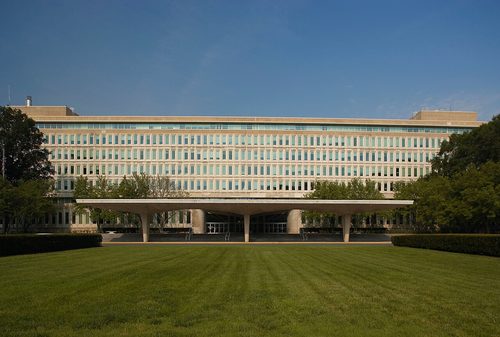 United States · 1947
Central Intelligence Agency (CIA)
The US civilian intelligence service, created by the National Security Act of 1947 to coordinate foreign intelligence, which within a year also became Washington's instrument for covert action.
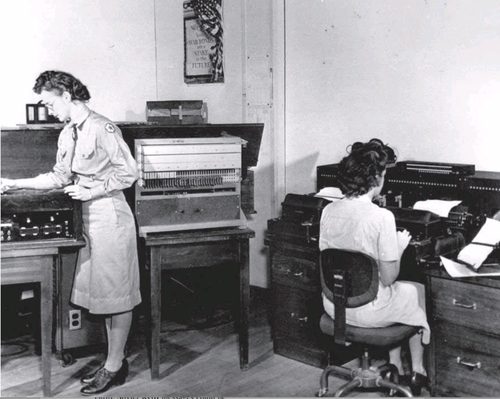 1914–1990s
Signals intelligence
Intelligence from intercepted communications and electronic emissions, from Room 40 and the Zimmermann telegram to Ultra, Venona, the Berlin tunnel and NSA's domestic programs exposed by the Church Committee.