
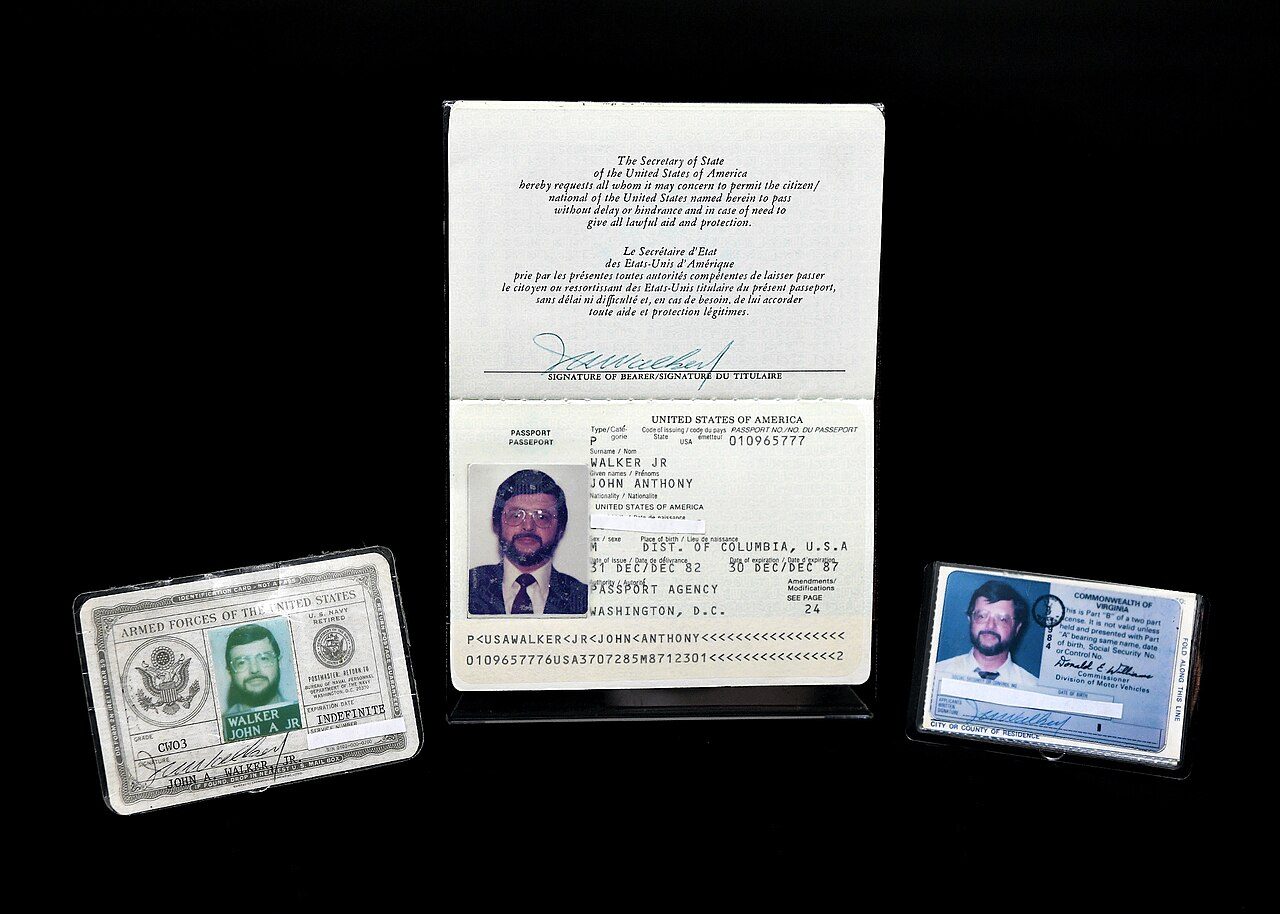

When the FBI broke it in 1985, US authorities called the Walker ring the most damaging espionage ring uncovered in the United States in three decades6. Its founder had spent most of his career protecting the Navy's messages. John Anthony Walker Jr. was a communications specialist with a top-secret cryptographic clearance, and when he walked into the Soviet embassy in Washington he offered the KGB what it most needed against the US fleet: the daily keys to its cipher machines2,1.
A warrant officer for sale
Walker had joined the Navy in 1955 and risen from seaman to warrant officer2. In 1967 he was a watch officer in the communications center of the Atlantic Fleet's submarine force headquarters in Norfolk, Virginia5. Short of money after failed investments, he went to the Soviet embassy and volunteered. The US counterintelligence community's own summary dates the visit to late 1968; an AP report citing court documents, and most other accounts, put it in 19672,4,5.
He sold key cards, the daily settings that made the Navy's cipher machines work, and technical information on the machines themselves. The Soviets gave him a device for reading the wiring of the rotors used in Navy encryption2. He continued in assignments ashore and afloat, including as communications officer of a fleet staff, and was paid several thousand dollars a month2,5.
Building a family ring
Walker knew that retirement would cut off his access, so he recruited replacements. The first was Jerry Whitworth, a Navy radioman he had met in 1970 at a radioman instructor school in San Diego. In September 1974, in a San Diego restaurant, Walker made his pitch, telling Whitworth the buyers were allies such as Israel or private groups; Whitworth rejoined the Navy to steal for him1.
According to the Ninth Circuit's later opinion, Whitworth photographed cryptographic material and messages at the Diego Garcia communications station, aboard the carriers Constellation and Enterprise, the supply ship Niagara Falls and the Alameda Naval Air Station, from 1975 until he retired in 1983. Walker, retired from the Navy in 1976 and working as a private investigator, carried the film to the Soviets through dead drops near Washington and meetings abroad; Whitworth's payments came to well over $300,0001,2.
Walker also recruited his older brother Arthur, a retired lieutenant commander working for a defense contractor, who passed two classified documents in 1981–82, and in 1983 his son Michael, a young seaman who passed more than 1,500 documents; investigators later found about 15 pounds of classified papers hidden near his bunk on the carrier Nimitz2. An attempt to recruit one of his daughters, then in the Army, failed2.
Letters signed RUS
Whitworth tried to get out. In May 1984 the FBI in San Francisco received the first of four anonymous letters signed "RUS," offering to expose a long-running espionage system in return for immunity. The FBI answered through classified advertisements in the Los Angeles Times, but the writer broke off contact in August 19841. At trial Whitworth's lawyer conceded that his client had written them1.
The decisive tip came from inside Walker's family. His former wife, who had known of his spying since 1968, reported him to the FBI in November 1984, and his daughter corroborated the story1. The FBI obtained a wiretap and learned of a trip planned for 19 May 1985.
Arrest
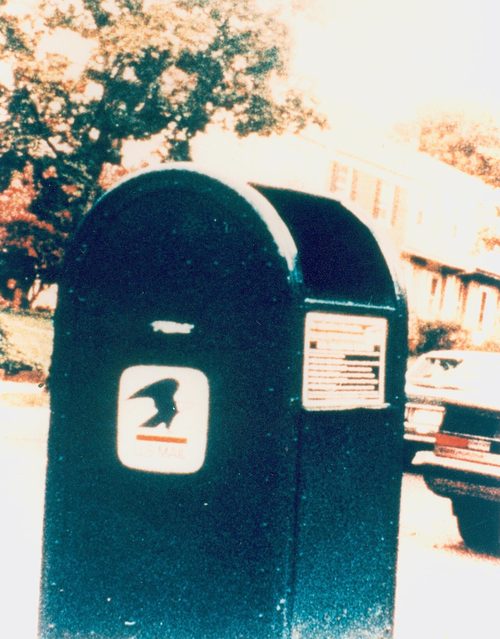
On 19 May agents followed Walker through rural Montgomery County, Maryland. He left a bag by a utility pole; inside were classified Navy documents taken by his son, letters from Whitworth and a note to his Soviet handler. A Soviet diplomat seen in the area did not collect it. In the early hours of 20 May Walker was arrested at a motel1,2. Arthur Walker was questioned the same day and admitted his part; Michael Walker was arrested aboard Nimitz on 22 May, and Whitworth in California on 3 June2,1.
Courts and damage
Arthur Walker was convicted on seven counts in August 1985 and sentenced to life2. On 28 October 1985 John and Michael Walker pleaded guilty under an agreement by which John testified against Whitworth in return for a lesser sentence for his son. On 6 November 1986 John received two life terms plus ten years and Michael 25 years2. Whitworth was convicted on 24 July 1986 and sentenced to 365 years and a $410,000 fine; the Ninth Circuit affirmed in 19881.
Vitaly Yurchenko, a KGB officer who defected in 1985, told American debriefers that the KGB considered the Walker operation the most important in its history and that the material let it decipher more than a million messages; its handlers were decorated2. A senior KGB official told him it would have been "devastating" to the United States in wartime2.
The case was the centerpiece of the Year of the Spy and of a wider finding that money, not ideology, now drove American spies2,3. Arthur Walker died in prison in July 2014 and John Walker on 28 August 20144. Whitworth was still in federal prison in 20144,6.
The documents
Declassified records of this operation, with the scans and their full text hosted here.
 3 October 1986 · 122 p.Meeting the Espionage Challenge: the Senate's verdict on the Year of the Spy (1986)Senate Select Committee on Intelligence (chairman: Dave Durenberger; vice chairman: Patrick J. Leahy)The Senate Intelligence Committee's public report of October 1986 on US counterintelligence after the Walker, Pelton, Howard and Pollard cases: what the spies cost, what failed, and 95 findings and recommendations.
 19 November 1985 · 117 p.Keeping the Nation's Secrets: the Stilwell Commission report (1985)DoD Security Review Commission (Commission to Review DoD Security Policies and Practices), Gen. Richard G. Stilwell, USA (Ret.), chairmanThe Pentagon's security review ordered after the Navy spy arrests of May 1985: 63 unanimous recommendations on clearances, polygraphs, document control and counterintelligence, delivered to Weinberger in November 1985.
Checking the record
Dates and outcome compared in two independent sources: they differ.
- Official history
- Walker volunteered at the Soviet embassy in late 1968; arrested 20 May 1985; pleaded guilty 28 October 1985; sentenced 6 November 1986. Life sentence for John Walker; Whitworth 365 years; Arthur Walker life; Michael Walker 25 years. KGB rated the operation its most important.
- Wikipedia
- Spied from late 1967 to 1985; arrested 20 May 1985; plea bargain late 1985. Life sentence; ring members convicted; Walker died in prison in 2014.
Arrest, plea and sentences agree, but the start date differs by a year. The counterintelligence reader says late 1968 and the Whitworth opinion says Walker had been selling secrets for six years by 1974; Wikipedia, the AP obituary citing court documents, and Walker's own account say late 1967. This page uses December 1967 as the likelier date and flags the conflict.
Sources
- Court record United States v. Jerry Alfred Whitworth, 856 F.2d 1268 (9th Cir. 1988), US Court of Appeals for the Ninth Circuit, via Public.Resource.Org (1988-09-01).
- Official history A Counterintelligence Reader, Volume III, Chapter 3: Decade of the Spy, US Office of the National Counterintelligence Executive, via FAS.
- Official history Espionage Against the United States by American Citizens 1947–2001 (Technical Report 02-5), Defense Personnel Security Research Center (PERSEREC), via FAS (2002-07).
- Other Former U.S. sailor who spied for Soviets dies in prison, Associated Press, via Portland Press Herald (2014-08-29).
- Wikipedia John Anthony Walker, Wikipedia.
- Wikipedia Jerry Whitworth, Wikipedia.
Elsewhere in the files
- Agency KGB
- Document Keeping the Nation's Secrets: the Stilwell Commission report (1985)
- Document Meeting the Espionage Challenge: the Senate's verdict on the Year of the Spy (1986)
- Document NSA's secret history of the Pelton trial and the Ivy Bells leak (1999)
- Operation 1985, the Year of the Spy
- Operation Operation Ivy Bells
- Person John Anthony Walker
Read next
 16 April – 25 November 1985
1985, the Year of the Spy
In 1985 the FBI arrested a string of Americans spying for Moscow, Beijing and Israel, a KGB officer defected and re-defected, and the CIA lost almost every agent it had inside Soviet intelligence.
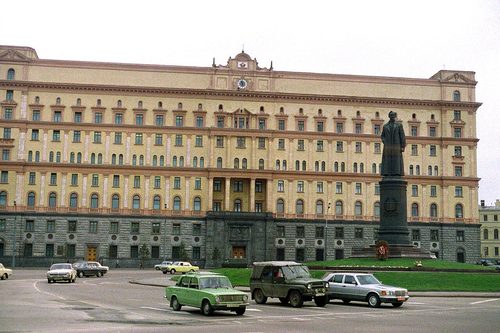 Soviet Union · 1954–1991
KGB
The Soviet Committee for State Security, 1954–1991: foreign intelligence, counter-intelligence, border troops and political police under one roof, from Khrushchev's reforms to the failed coup of August 1991.
 United States · 1908
Federal Bureau of Investigation (FBI)
The US Justice Department's investigative service, founded in 1908: chief hunter of foreign spies at home from the 1930s, and under J. Edgar Hoover the author of secret domestic programs exposed in the 1970s.
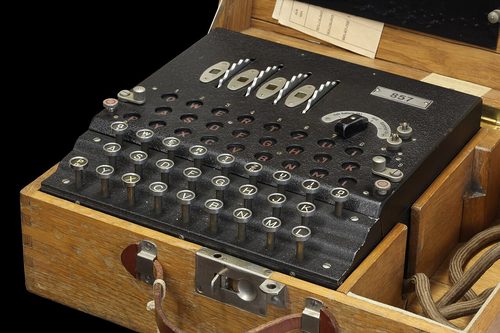 1915–1970s
Cipher machines
From Hebern's rotor to Enigma, Purple, Lorenz and SIGABA, the electromechanical machines that carried the secrets of the Second World War, and the codebreakers who read most of them.
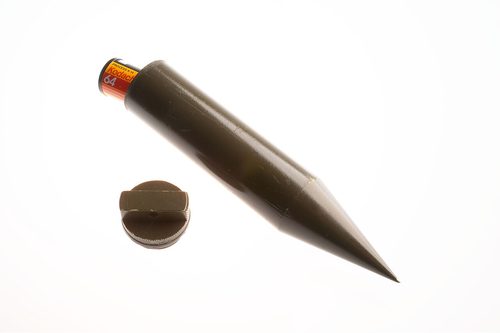 1940s–2001
Dead drops
A hiding place where one spy leaves material for another to collect later, so the two never meet. The Abel, Ames and Hanssen cases show how it worked and how the FBI turned it against its users.