

On 20 October 1967, the day before the March on the Pentagon, the Army's Assistant Chief of Staff for Intelligence, William Yarborough, cabled the director of the National Security Agency with an unusual request. He wanted, "on a continuing basis," anything showing that foreign governments were "controlling or attempting to control or influence the activities of U.S. 'peace' groups and 'Black Power' organizations"1.
A senior NSA official later told the Senate that such a request was "unprecedented. ... It is kind of a landmark in my memory; it stands out as a first." It started the watch lists that NSA formalized two years later as Project Minaret1.
Names in the haystack
NSA had kept lists of names before: from the early 1960s it watched for Americans travelling to Cuba. What changed in 1967 was the kind of name. The FBI, the Secret Service, the Defense Intelligence Agency, the military services and the CIA sent NSA the names of Americans active in the antiwar and civil rights movements, and NSA scanned the international communications it intercepted for them. Much of that traffic came from Operation Shamrock, under which the telegraph companies handed over copies of international cables1,5.
The Church Committee's count for the civil disturbance list, from 1967 to 1973, was about 1,200 American names. The FBI submitted roughly 950, the Secret Service about 180, the CIA about 30, DIA 20 people who had travelled to North Vietnam, and NSA itself 50 to 75. At the peak, in early 1973, the lists held 600 American and 6,000 foreign names. NSA said they produced about 2,000 reports, about a tenth of them drawn from messages between two Americans1.
The Committee pointed to a multiplier effect: listing an organization swept in every member's messages, and listing a person swept in every message mentioning him. Its examples included a message mentioning a senator's wife, a correspondent's dispatch from Southeast Asia to his magazine in New York, and invitations to speakers at a rally1.
The charter of 1 July 1969
As the program grew it also went further underground. A charter issued inside NSA on 1 July 1969 gave it the name MINARET and classified everything it produced on Americans as Top Secret, "For Background Use Only," without serial numbers and without any mark identifying NSA as the source. Recipients were asked to destroy or return the reports within two weeks. The charter stated the aim plainly:
An equally important aspect of MINARET will be to restrict the knowledge that such information is being collected and processed by the National Security Agency.
That passage is quoted in1. NSA's deputy director, Benson Buffham, testified that because these items were "display items, show-to items," there would probably be no record of them in NSA's permanent files1.
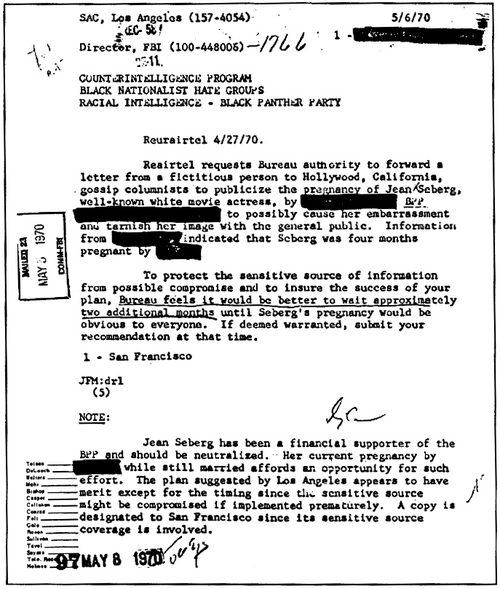
Customers were keen. In a memorandum of 3 June 1970 J. Edgar Hoover told NSA that the FBI had "a continuing interest in receiving intelligence information obtained under MINARET," which had helped it trace "international cooperation among New Leftists." At the same time the Bureau was running COINTELPRO against many of the same people, and the CIA was filing the material for Operation CHAOS1.
Who was on the list
The Church Committee did not publish names. They came out in 2013, when an interagency appeals panel, acting on a request from the National Security Archive, ordered the release of more of NSA's internal history, American Cryptology during the Cold War; the Archive published them on 25 September 2013. The names included Martin Luther King Jr. and Whitney Young of the Urban League, the boxer Muhammad Ali, the journalists Tom Wicker of the New York Times and Art Buchwald of the Washington Post, and two senators, Frank Church of Idaho and Howard Baker of Tennessee3. Both senators later sat on the committee that investigated the program4.
Shutting it down
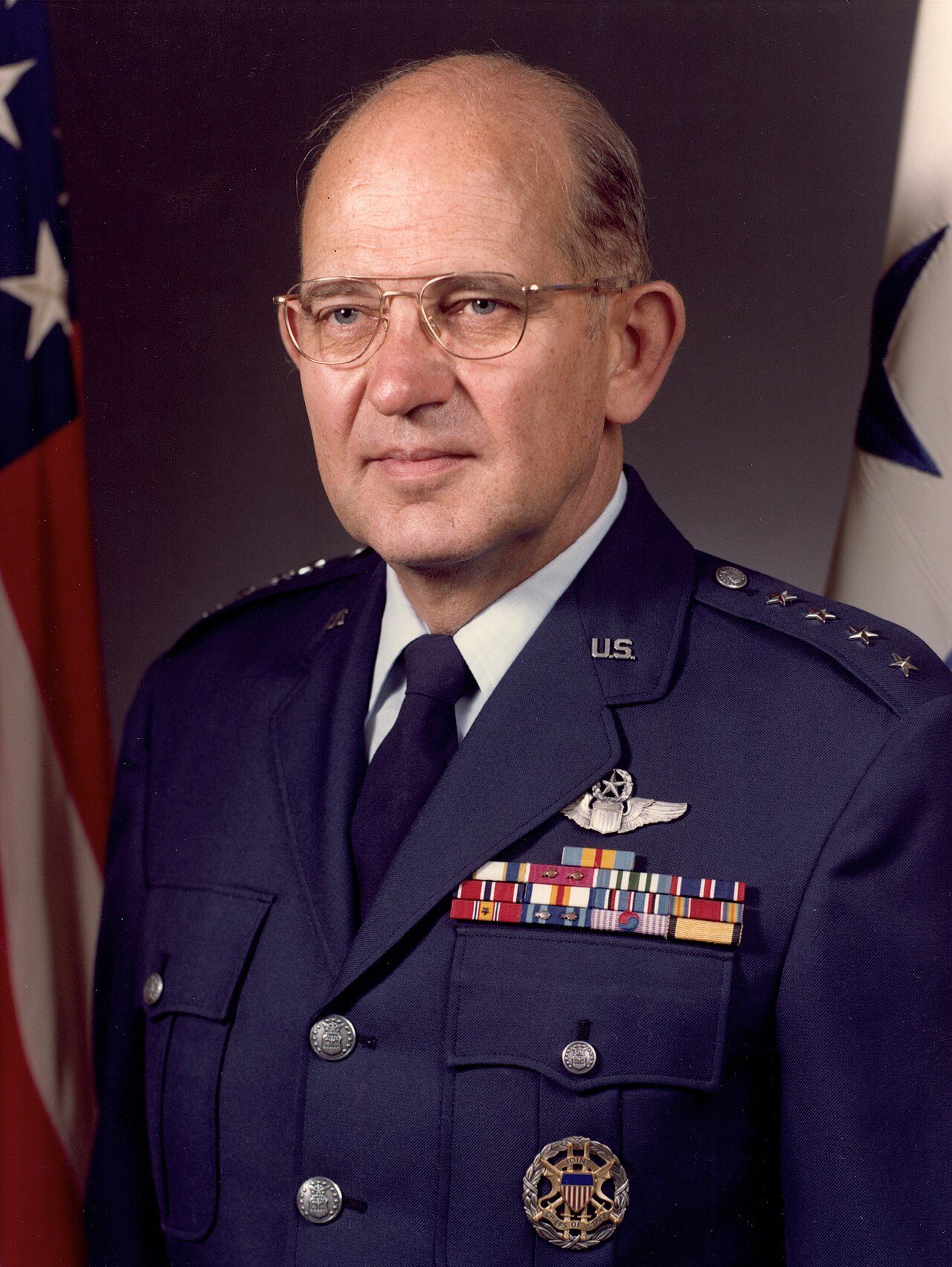
Several things ended Minaret. In the Keith decision of 19 June 1972, the Supreme Court held that warrantless electronic surveillance of domestic groups with no foreign connection was unconstitutional. In 1973 the government dropped a criminal case rather than reveal that some defendants' international messages had been picked up on a watch list. Lew Allen became NSA director on 15 August 1973; NSA stopped disseminating the material that month and in September asked the agencies to justify their requests1.
On 1 October 1973 Attorney General Elliot Richardson wrote to Allen that the lists were of "questionable legality." Assistant Attorney General Henry Petersen had told him the Justice Department had "no previous knowledge" of the program. The civil disturbance watch list was formally ended that autumn1,3.
The legal residue
The legality of the watch lists was never decided by a court. The Church Committee judged that Minaret had amounted to warrantless electronic surveillance of domestic organizations and that Keith cast doubt on it. The investigation helped produce the Foreign Intelligence Surveillance Act of 1978, which put national-security wiretaps on Americans under a court1,4.
The documents
Declassified records of this operation, with the scans and their full text hosted here.
 23 April 1976 · 50 p.The Church Committee's report on the NSA: 'National Security Agency Surveillance Affecting Americans' (1976)Senate Select Committee to Study Governmental Operations with Respect to Intelligence Activities (Frank Church, chairman)The Church Committee's 1976 staff report on the NSA: the MINARET watch lists, the drug intercepts, thirty years of telegram copying under SHAMROCK, and the NSA Office of Security's own files and break-ins.
 29 October 1975 · 166 p.Church Committee Hearings, Volume 5: The NSA and Fourth Amendment Rights (1975)Senate Select Committee to Study Governmental Operations with Respect to Intelligence Activities (Frank Church, chairman)The first public Senate testimony by an NSA director, Lew Allen's account of the watch lists, the committee's disputed vote to reveal SHAMROCK, and the 1969 MINARET charter and other NSA papers printed as exhibits.
Checking the record
Dates and outcome compared in two independent sources: they agree.
- Congress
- Army request of 20 October 1967; MINARET charter 1 July 1969; dissemination suspended August 1973; officially terminated fall 1973. About 1,200 Americans on the civil disturbance list over the period; about 2,000 reports disseminated; ended amid doubts about its legality.
- Wikipedia
- 1967 to 1973. About 1,650 US citizens targeted; disclosed by the Church Committee in 1975; contributed to FISA in 1978.
Dates and outcome agree. The numbers differ because the Committee counted the civil disturbance list alone while other counts combine all watch lists; this page gives the Committee's figures and marks the difference as contested.
Sources
- Congress Final Report of the Select Committee to Study Governmental Operations with Respect to Intelligence Activities, Book III (S. Rep. 94-755), 'National Security Agency Surveillance Affecting Americans', US Senate, digitized by the Internet Archive (1976-04).
- Congress Church Committee Final Report, Book III (PDF), US Senate Select Committee on Intelligence (1976-04).
- National Security Archive 'Disreputable if Not Outright Illegal': The National Security Agency versus Martin Luther King, Muhammad Ali, Art Buchwald, Frank Church, et al. (Electronic Briefing Book 441), National Security Archive (2013-09-25).
- Official history Senate Select Committee to Study Governmental Operations with Respect to Intelligence Activities, United States Senate, Historical Office.
- Wikipedia Project MINARET, Wikipedia.
- Wikipedia English Wikipedia article (used for cross-checking).
Elsewhere in the files
- Agency Federal Bureau of Investigation (FBI)
- Agency National Security Agency (NSA)
- Document Church Committee Hearings, Volume 5: The NSA and Fourth Amendment Rights (1975)
- Document The Church Committee's report on the NSA: 'National Security Agency Surveillance Affecting Americans' (1976)
- Document The Rockefeller Commission on Operation CHAOS (1975)
- Operation COINTELPRO
- Operation Operation CHAOS
- Operation Operation Shamrock
- Person Frank Church
- Person J. Edgar Hoover
- Tradecraft Signals intelligence
- Tradecraft Surveillance and countersurveillance
Read next
 August 1956 – 28 April 1971
COINTELPRO
From 1956 to 1971 the FBI ran secret programs to 'disrupt' and 'neutralize' American political groups, from the Communist Party and the Klan to civil rights and antiwar organizations. A burglary in 1971 exposed them.
 15 August 1967 – 5 March 1974
Operation CHAOS
Pressed by two presidents to prove that foreign communists were behind the antiwar movement, the CIA built files on 7,200 Americans from 1967 to 1974 and kept finding no such proof.
 United States · 1952
National Security Agency (NSA)
America's signals intelligence and communications security agency, created by a secret Truman directive in 1952 out of the Armed Forces Security Agency, and exposed to public scrutiny by the Church Committee in 1975.
 1924–1984
Frank Church
Idaho senator who chaired the 1975–76 Senate investigation of the CIA, FBI and NSA. His committee exposed assassination plots, COINTELPRO and Shamrock, and led to permanent intelligence oversight.
 1914–1990s
Signals intelligence
Intelligence from intercepted communications and electronic emissions, from Room 40 and the Zimmermann telegram to Ultra, Venona, the Berlin tunnel and NSA's domestic programs exposed by the Church Committee.