
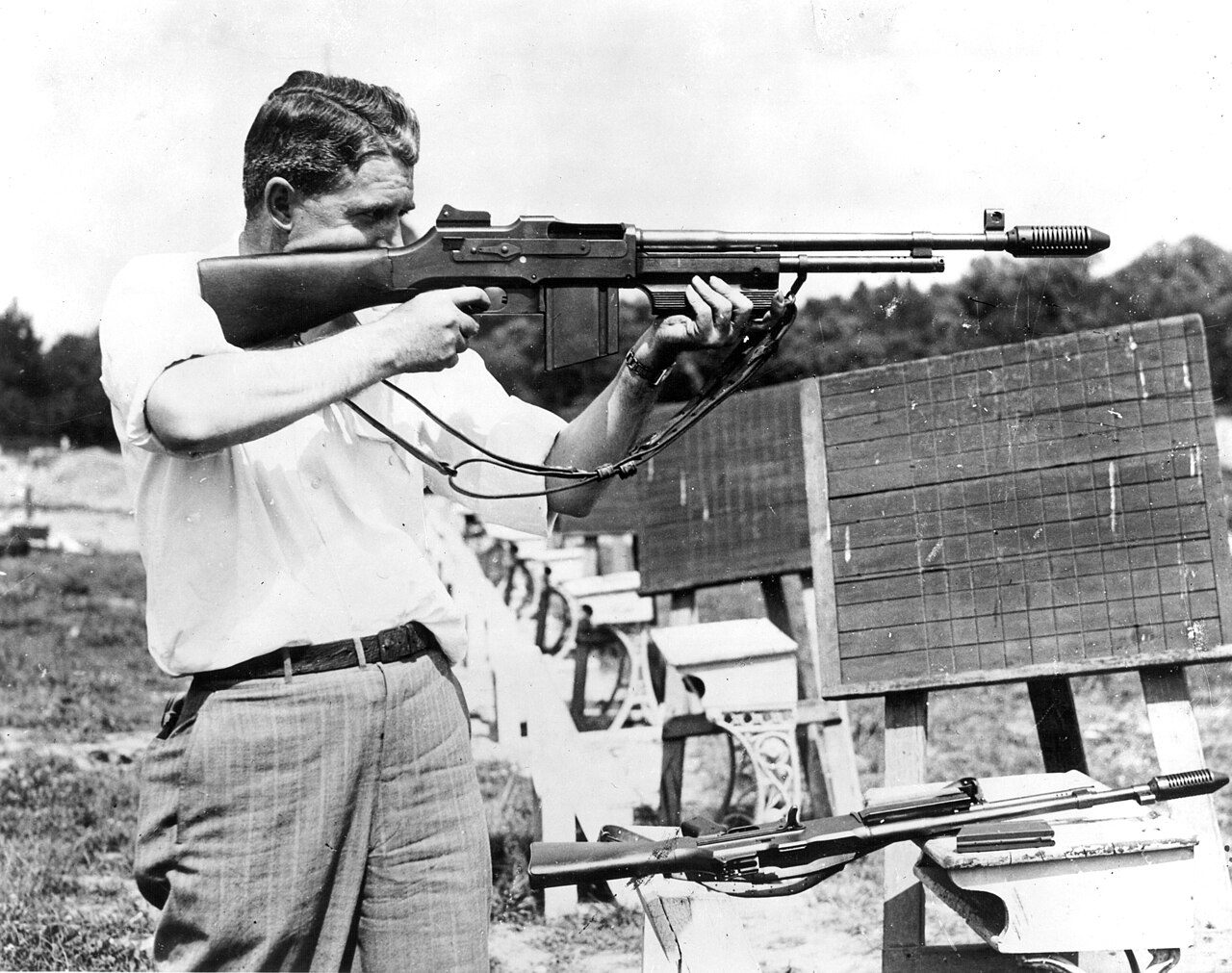
The FBI began without a name. In May 1908 Congress, suspicious of presidential power, banned the loan of Secret Service operatives to other departments, leaving the Justice Department without investigators. Attorney General Charles Bonaparte hired nine of them anyway, added 25 of his own, and on 26 July 1908 ordered his department's lawyers to send their investigative work to this new force of 34 special agents. On 16 March 1909 his successor, George Wickersham, called it the Bureau of Investigation1.
From white-collar cases to spy-catching
The early Bureau handled antitrust, land fraud, banking and naturalization cases, and from 1910 enforcement of the Mann Act. The First World War put it into counter-espionage: after Congress declared war on 6 April 1917, the Espionage Act and the Sabotage Act gave it German saboteurs, draft deserters and "enemy aliens" to pursue. The Red Scare followed, and with it the Palmer raids of 1919–20, planned from files compiled by a young Justice Department lawyer, J. Edgar Hoover. The Bureau's own history calls the raids "poorly planned and executed" and an assault on "the civil liberties of the thousands of people swept up"1.
Hoover became acting director on 10 May 1924 and stayed until his death in 1972. He purged political appointees, demanded legal or accounting training of new agents and built the fingerprint files and the laboratory. In July 1935 the Bureau became the Federal Bureau of Investigation1,8.
Domestic intelligence and the Second World War
The intelligence role was given quietly. In 1936 President Roosevelt asked the FBI to gather intelligence on fascist and communist groups. When the Attorney General sent him a joint FBI and military plan in 1938, he advised that no new legislation was needed and that the plan "should be handled in strictest confidence"2,5. The Church Committee later called this the origin of the federal government's permanent domestic intelligence structure5.
Before Pearl Harbor the FBI uncovered some 50 German spies, including the ring around Fritz Duquesne, and in 1942 it captured the eight saboteurs of Operation Pastorius. From 1940 its Special Intelligence Service sent more than 340 people undercover to Latin America; by 1946 it had identified 887 Axis spies there2. Hoover hoped to keep a worldwide role after the war. A memorandum he sent the Attorney General on 6 September 1945, attacking William Donovan's plans for a peacetime successor to the OSS, shows how hard he fought it; the job went instead to the new CIA6.
The Cold War
After 1945 the FBI was the main American service against Soviet espionage at home. Working with the Army's Venona decrypts, which it used quietly to avoid tipping off Moscow, it identified networks including the one that passed atomic secrets through Harry Gold and Julius Rosenberg. Venona and the investigations it supported identified some 350 people connected with Soviet intelligence. In 1957 agents arrested the Soviet "illegal" William Fisher, known as Rudolf Abel, in New York2.
The same years produced the Bureau's worst abuses. From 1956 to 1971 COINTELPRO turned counterintelligence methods on American political groups, from the Communist Party to the civil rights and antiwar movements. The Bureau kept a secret Security Index of people to be detained in an emergency, wiretapped and bugged Martin Luther King Jr., and asked the NSA to search international communications for the names on its lists under Project Minaret3,5.
Reform and the "Year of the Spy"
The 1971 burglary of the Media, Pennsylvania, office exposed COINTELPRO, and the Church Committee's 1975 hearings examined it alongside the campaign against King. In February 1973 the Bureau moved investigations of domestic subversives under stricter guidelines, a reform continued by Clarence Kelley, Director from July 1973. In 1976 Attorney General Edward Levi issued guidelines limiting such investigations to groups breaking the law or engaged in violence; by the FBI's count domestic security cases fell from over 21,000 in 1973 to 626 by September 1976. The Foreign Intelligence Surveillance Act of 1978 put national-security wiretaps under a court4,5.
Counterintelligence revived in the 1980s. With FISA and new laws on classified evidence in trials, so many American spies were arrested in the mid-1980s that the press called 1985 the "Year of the Spy". The worst case came from inside the Bureau: Special Agent Robert Hanssen, arrested in February 2001, had spied for Moscow for most of two decades4,7,8.
Key dates
- 26 July 1908 Attorney General Charles Bonaparte orders Justice Department cases referred to a new force of 34 special agents.
- 16 March 1909 Attorney General George Wickersham names the force the Bureau of Investigation.
- 10 May 1924 J. Edgar Hoover becomes acting director.
- July 1935 Renamed the Federal Bureau of Investigation.
- August 1936 President Roosevelt confidentially directs the Bureau to gather intelligence on fascist and communist groups.
- June 1941 Arrests the Duquesne spy ring, built with the help of a double agent.
- June 1942 Captures the eight German saboteurs landed by U-boat.
- 1950 Venona-assisted investigations lead to Harry Gold and the Rosenbergs.
- August 1956 Begins COINTELPRO against the Communist Party.
- June 1957 Arrests the Soviet illegal Rudolf Abel in New York.
- 28 April 1971 Ends COINTELPRO after the Media, Pennsylvania, burglary.
- 1976 Attorney General Edward Levi issues guidelines limiting domestic security investigations.
- 1985 Arrests in a string of espionage cases lead the press to call it the 'Year of the Spy'.
Operations in these files
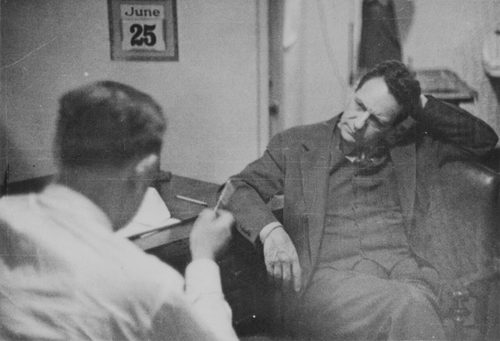 8 February 1940 – 2 January 1942
The Duquesne spy ring
Thirty-three German agents convicted in 1941–42 after the FBI turned an Abwehr recruit, William Sebold, ran his radio link to Hamburg for 16 months and filmed spies in a wired Manhattan office.
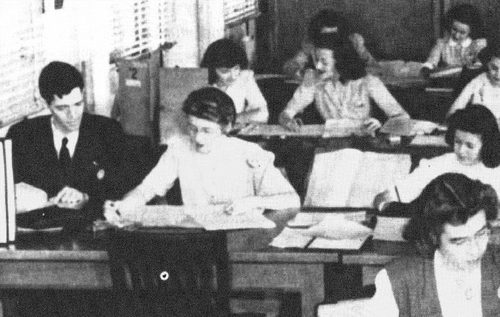 1 February 1943 – 1 October 1980
The Venona project
The US Army codebreaking program that, from 1943 to 1980, read parts of some 2,900 wartime Soviet intelligence cables and exposed Fuchs, the Rosenbergs and Donald Maclean.
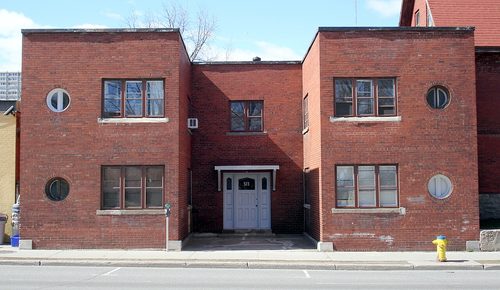 5 September 1945 – 27 June 1946
The Gouzenko affair
In September 1945 a GRU cipher clerk walked out of the Soviet embassy in Ottawa with over a hundred documents, exposing a Soviet spy network in Canada and a British atomic scientist.
27 January 1950 – 1959
Operation Washtub
From 1951 to 1959 the US Air Force, at first with the FBI, recruited Alaskan civilians as stay-behind agents who would hide and radio intelligence if the Soviet Union invaded the territory.
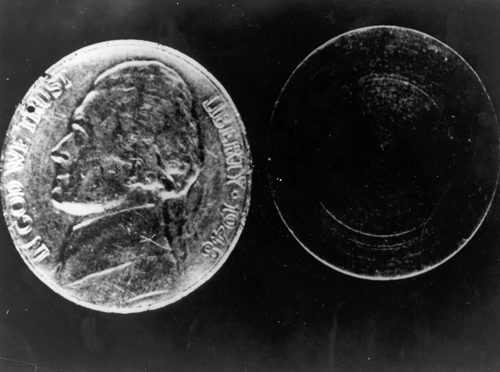 22 June 1953 – 15 November 1957
The Hollow Nickel case
A Brooklyn newsboy's trick nickel held a coded message the FBI could not read for four years, until a drunken KGB defector explained it and led agents to the illegal known as Rudolf Abel.
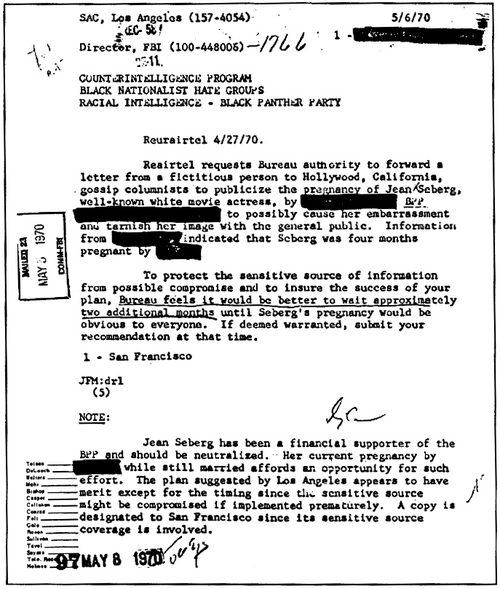 August 1956 – 28 April 1971
COINTELPRO
From 1956 to 1971 the FBI ran secret programs to 'disrupt' and 'neutralize' American political groups, from the Communist Party and the Klan to civil rights and antiwar organizations. A burglary in 1971 exposed them.
November 1961 – 15 March 1988
TOPHAT: the Polyakov case
From 1961 to 1980 GRU officer Dmitri Polyakov, later a major general, spied for the FBI and CIA. Betrayed by Robert Hanssen and Aldrich Ames, he was arrested in 1986 and shot in 1988.
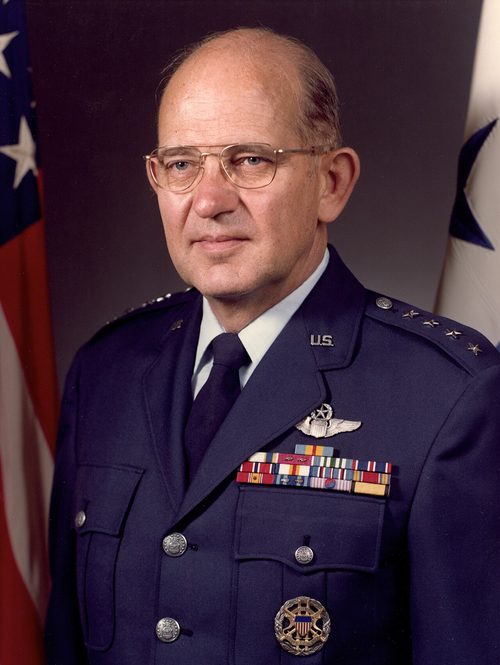 20 October 1967 – October 1973
Project Minaret
From 1967 to 1973 the NSA searched international communications for the names of Americans supplied by the FBI, CIA and Secret Service, among them Martin Luther King Jr., Muhammad Ali and two sitting senators.
 16 April – 25 November 1985
1985, the Year of the Spy
In 1985 the FBI arrested a string of Americans spying for Moscow, Beijing and Israel, a KGB officer defected and re-defected, and the CIA lost almost every agent it had inside Soviet intelligence.
Operations against the FBI

People
Sources
- FBI The Nation Calls, 1908–1923 (A Brief History of the FBI), Federal Bureau of Investigation, archived by the Wayback Machine.
- FBI World War, Cold War, 1939–1953 (A Brief History of the FBI), Federal Bureau of Investigation, archived by the Wayback Machine.
- FBI And Justice for All, 1954–1971 (A Brief History of the FBI), Federal Bureau of Investigation, archived by the Wayback Machine.
- FBI Crime and Corruption Across America, 1972–1988 (A Brief History of the FBI), Federal Bureau of Investigation, archived by the Wayback Machine.
- Congress Final Report of the Select Committee to Study Governmental Operations with Respect to Intelligence Activities, Book III (S. Rep. 94-755), US Senate, digitized by the Internet Archive (1976-04).
- FRUS Foreign Relations of the United States, 1945–1950, Emergence of the Intelligence Establishment, Document 8 (Hoover to Attorney General Clark, 6 September 1945), US Department of State, Office of the Historian (1945-09-06).
- FBI A World of Trouble, 1989–2001 (A Brief History of the FBI), Federal Bureau of Investigation, archived by the Wayback Machine.
- Wikipedia Federal Bureau of Investigation, Wikipedia.
- Wikipedia English Wikipedia article (used for cross-checking).
Elsewhere in the files
- Agency Central Intelligence Agency (CIA)
- Document A Venona decrypt: New York 1657, 27 November 1944
- Document Abel v. United States: the Supreme Court and the spy's wastebasket (1960)
- Document After the U-2: the President and his advisers (May 1960)
- Document Church Committee Hearings, Volume 5: The NSA and Fourth Amendment Rights (1975)
- Document Ex parte Quirin (1942): the Supreme Court and the Nazi saboteurs
- Document FBI file: 'Stay-Behind Special Agent Program in Alaska', the 1950 papers (Part 1, opening pages)
- Document Hoover tells the White House about Gouzenko (September 1945)
- Document Keeping the Nation's Secrets: the Stilwell Commission report (1985)
- Document Meeting the Espionage Challenge: the Senate's verdict on the Year of the Spy (1986)
- Document NSA's secret history of the Pelton trial and the Ivy Bells leak (1999)
- Document The CIA Inspector General's report on plots to kill Castro (1967)
- Document The Church Committee's report on the NSA: 'National Security Agency Surveillance Affecting Americans' (1976)
- Document The FBI letter that opened COINTELPRO against black nationalist groups (1967)
- Document The FBI's affidavit against Robert Hanssen (2001)
- Document The FBI's case write-up on the Duquesne spy ring (1985)
- Document The Rockefeller Commission on Operation CHAOS (1975)
- Operation 1985, the Year of the Spy
- Operation COINTELPRO
- Operation Operation Pastorius
- Operation Operation Washtub
- Operation Project Minaret
- Operation TOPHAT: the Polyakov case
- Operation The Duquesne spy ring
- Operation The Gouzenko affair
- Operation The Hanssen case
- Operation The Hollow Nickel case
- Operation The Venona project
- Operation The Walker spy ring
- Person Dmitri Polyakov
- Person Duško Popov (TRICYCLE)
- Person Elizabeth Bentley
- Person Harry Gold
- Person J. Edgar Hoover
- Person Julius Rosenberg
- Person Robert Hanssen
- Person Whittaker Chambers
- Tradecraft Concealment devices
- Tradecraft Dead drops
- Tradecraft Double agents
- Tradecraft Illegals and legends
- Tradecraft Microdots
- Tradecraft One-time pads
- Tradecraft Surveillance and countersurveillance