
Dmitri Polyakov spent almost twenty years inside Soviet military intelligence while reporting to the Americans, and he never asked to defect. "I was born Russian and I will die Russian," he is quoted as telling his handlers when they urged him to resettle in the United States5. He was shot in Moscow after two Americans, one in the FBI and one in the CIA, sold his name to Soviet intelligence2,3.
Soldier and GRU officer
Polyakov was born on 6 July 1921 in Starobelsk, in what was then the Ukrainian SSR, the son of a bookkeeper5,4. He went to artillery school, served as an artillery officer from the first day of the German invasion in June 1941, and was decorated for bravery. After the war he studied at the Frunze Military Academy and joined the GRU5,4.
His first foreign post, from 1951 to 1956, was in New York, under cover on the Soviet delegation to the United Nations Military Staff Committee. He returned in 1959 as a colonel, with a senior post in the GRU's New York operation5.
TOPHAT and BOURBON
On 8 November 1961 Polyakov approached the FBI and offered to work for it. Russian accounts say he named Soviet cipher clerks at his first meeting and dozens of Soviet intelligence officers at the next5. The FBI called him TOPHAT. After his return to Moscow in 1962 and his later postings abroad, the CIA ran him under the names BOURBON and ROAM (see the case)4.
His career kept improving his access. He was GRU chief and military attaché in Rangoon from 1965 to 1969 and in New Delhi from 1973 to 1976, became a major general in 1974, headed a faculty of the Military-Diplomatic Academy in Moscow, and returned to New Delhi at the end of 19795. A book by two of the CIA officers on his case calls him the "highest-ranking spy ever run against the Soviet Union during the Cold War," as a CIA review notes1. Accounts of what he passed include the GRU's officers and agents abroad, Soviet military doctrine and weapons, and early evidence of the Sino-Soviet rift4.
Betrayal
In June 1980 he was recalled from India unexpectedly3. He retired, officially for health reasons, and Russian accounts say he then took a civilian job in the GRU's personnel directorate5. The CIA, which had lost touch, was reassured when his hunting articles kept appearing in a Soviet magazine3.
He had already been compromised once. The Justice Department's inspector general found that Robert Hanssen, spying for the GRU in 1979–81, gave it "the identity of a long-time FBI asset in the GRU"; the report does not name him, but Polyakov is generally identified as that asset2,4. Nothing happened to him until after 1985, when the CIA officer Aldrich Ames, who later pleaded guilty to espionage for the KGB, gave the KGB the names of CIA and FBI sources. Sandra Grimes, a CIA officer on the case for years, said it was Ames's information that let the KGB catch Polyakov3.
Arrest and death
Polyakov was arrested on 7 July 1986. The Military Collegium of the Supreme Court of the USSR sentenced him to death for treason on 27 November 1987, and he was shot on 15 March 19885. Russian accounts say that in May 1988, two months after the execution, President Reagan raised the possibility of a pardon or an exchange with Gorbachev5. The CIA's confirmation came from the Soviet press3.
Key dates
- May 1951 Posted to New York with the Soviet delegation to the UN Military Staff Committee.
- 8 November 1961 Volunteers to the FBI in New York; code-named TOPHAT.
- 1965 Posted to Rangoon as military attaché and GRU chief; met by the CIA.
- 1974 Promoted to major general while GRU chief in New Delhi.
- November 1979 Robert Hanssen volunteers to the GRU and later betrays a long-time FBI asset in it.
- June 1980 Recalled from New Delhi; retires.
- 7 July 1986 Arrested by the KGB after Aldrich Ames's 1985 disclosures.
- 15 March 1988 Executed after a death sentence by the Military Collegium of the Supreme Court.
Sources
- CIA The Intelligence Officer's Bookshelf, March 2013 (review of Grimes and Vertefeuille, Circle of Treason), Central Intelligence Agency, Studies in Intelligence 57, no. 1 (Hayden Peake) (2013-03).
- Official history A Review of the FBI's Performance in Deterring, Detecting, and Investigating the Espionage Activities of Robert Philip Hanssen (unclassified executive summary), US Department of Justice, Office of the Inspector General (2003-08-14).
- National Security Archive Interview with Sandy Grimes (CNN Cold War, episode 21), part 2, National Security Archive (1998-01-30).
- Wikipedia Dmitri Polyakov, Wikipedia.
- Wikipedia Polyakov, Dmitry Fyodorovich (Russian), Wikipedia.
- Wikipedia English Wikipedia article (used for cross-checking).
Elsewhere in the files
Read next
 1944–2023
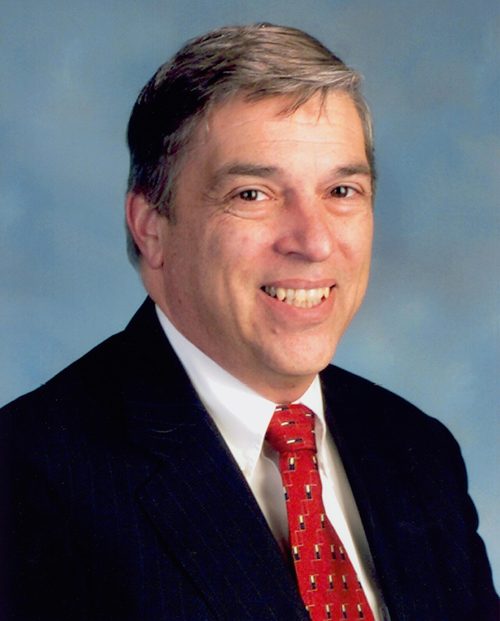
Robert Hanssen
FBI counterintelligence agent who sold secrets to the GRU, KGB and SVR in three bursts from 1979 to 2001 without ever revealing his name. Arrested in 2001, he died in a federal supermax prison in 2023.
 November 1979 – 18 February 2001
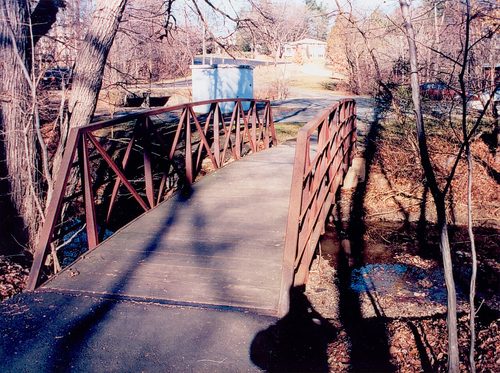
The Hanssen case
FBI agent Robert Hanssen spied for Soviet and Russian intelligence in three bursts from 1979 to 2001 without revealing his name. Caught at a Virginia dead drop in 2001, he was the most damaging spy in FBI history.
 16 April – 25 November 1985
1985, the Year of the Spy
In 1985 the FBI arrested a string of Americans spying for Moscow, Beijing and Israel, a KGB officer defected and re-defected, and the CIA lost almost every agent it had inside Soviet intelligence.