
Adolf Tolkachev spent more than a year trying to give his country's secrets to the CIA before it would take them. He approached American diplomats in Moscow again and again from January 1977, once standing at a bus stop holding two pieces of plywood with the last digits of his phone number painted on them, so that the station chief's wife could drive past and read them1. Once the CIA accepted him, he became, in the words of its own case study, "a worthy successor" to Oleg Penkovsky1.
The engineer
Tolkachev was born on 6 January 1927 in Aktyubinsk, in Soviet Kazakhstan, and grew up in Moscow. He graduated from the Kharkov Polytechnic Institute in 1954 and was assigned to the radio-engineering research institute that designed airborne radars for Soviet fighters, where he rose to a senior design post4,3. By Soviet standards he was well paid, about 350 rubles a month with his secrecy bonus, and he lived in a tall apartment block near the US Embassy1,4.
He told the CIA that he was a dissident at heart. His wife's mother had been executed in 1938, and he said the writings of Aleksandr Solzhenitsyn and Andrei Sakharov had moved him. He had thought of writing leaflets but judged that a man with his clearances would be isolated or destroyed at the first suspicion. He chose instead to work for the Americans, and wrote that he had taken a road with no turning back1,4. He said he had waited to act until his son was grown1.
Six years of delivery
From the first meeting on 1 January 1979 he delivered at a rate the CIA had rarely seen. With a Pentax camera clamped to a chair he photographed institute documents at home over his lunch break, handing over more than 150 rolls of film at two meetings in late 1979 and almost 200 at one in 19801. Royden's study quotes Defense Department and CIA memoranda calling his material "of incalculable value" and saying it had saved US programs "up to five years of R&D time"1. The documents covered Soviet fighter radars, air-to-air missiles and air-defense systems (see the case)3.
He kept careful control of the relationship. He refused dead drops as too risky and insisted on personal meetings; he negotiated his pay, much of it held in an escrow account in the West that passed a million dollars; and he pressed for a suicide pill, writing that he would "not like to carry on a conversation with organs of the KGB"1. For his son, who never knew the source, he asked for Western rock music, drafting pens and architecture books1.
Fear and arrest
In April 1983 a security investigation at his institute convinced him that arrest was imminent. He drove to a dacha, burned his cameras, radio gear and instructions, and for days carried a poison pill he had obtained, ready to bite it if called to his chief's office1. Nothing happened, and he went back to work with smaller cameras and handwritten notes1.
He was arrested in 1985, probably in June. On 13 June a CIA officer on his way to meet him was seized by the KGB1. The Soviet news agency TASS named him on 20 September 1985. The KGB chairman told the Politburo on 25 September 1986 that Tolkachev's death sentence had been carried out the day before1,2.
The CIA's case study holds that Edward Lee Howard, a CIA officer who had been briefed on the case for a Moscow assignment and was fired in 1983, almost certainly betrayed him, and notes that Aldrich Ames also gave his name to the KGB in 19851.
Key dates
- January 1977 Drops a note in the car of the CIA station chief at a Moscow gas station.
- 1 March 1978 Identifies himself in an eleven-page note handed to the station chief.
- 1 January 1979 First meeting with a CIA case officer in Moscow.
- April 1983 A security inquiry at his institute frightens him into burning his spy gear.
- June 1985 Arrested; on 13 June a CIA officer is seized on the way to meet him.
- 24 September 1986 Executed for high treason.
Sources
- CIA Tolkachev, A Worthy Successor to Penkovsky (Studies in Intelligence 47, no. 3), Central Intelligence Agency, Center for the Study of Intelligence (Barry G. Royden) (2003).
- National Security Archive Soviet Politburo Discussed CIA's 'Billion Dollar Spy', National Security Archive (2016-02-05).
- Wikipedia Adolf Tolkachev, Wikipedia.
- Wikipedia Tolkachyov, Adolf Georgiyevich (Russian), Wikipedia.
- Wikipedia English Wikipedia article (used for cross-checking).
Elsewhere in the files
Read next
 16 April – 25 November 1985
1985, the Year of the Spy
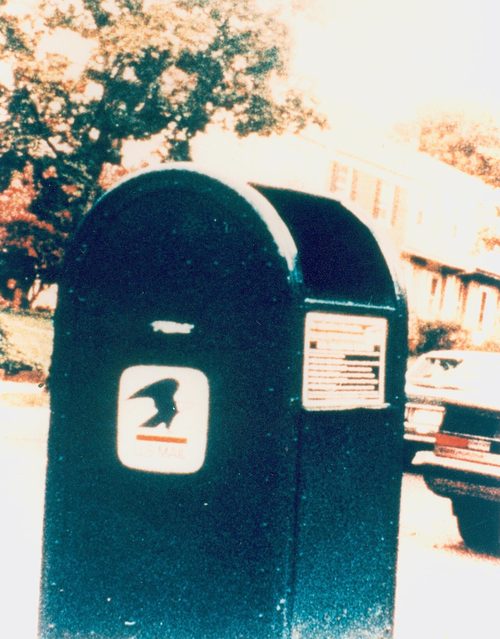
In 1985 the FBI arrested a string of Americans spying for Moscow, Beijing and Israel, a KGB officer defected and re-defected, and the CIA lost almost every agent it had inside Soviet intelligence.
1921–1988
Dmitri Polyakov
GRU major general who spied for the FBI and CIA from 1961 to 1980, under the code names TOPHAT and BOURBON. Betrayed by Robert Hanssen and Aldrich Ames, he was arrested in 1986 and shot in 1988.
 1919–1963
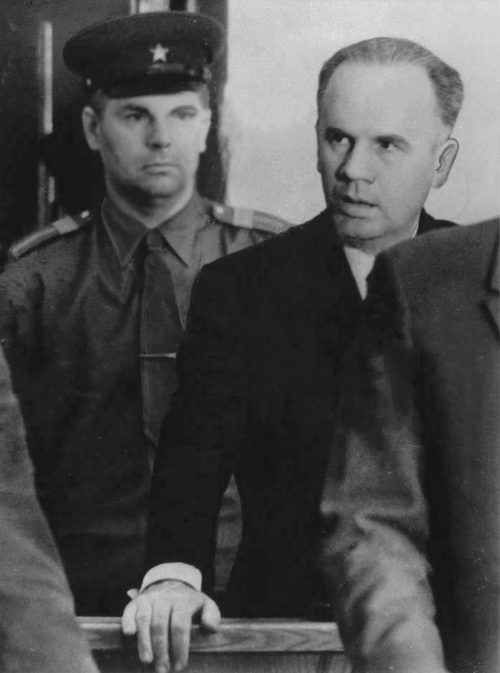
Oleg Penkovsky
GRU colonel who spied for the CIA and MI6 in 1961–62, supplying the missile manuals behind the IRONBARK reporting of the Cuban crisis; arrested in October 1962 and shot in May 1963.