
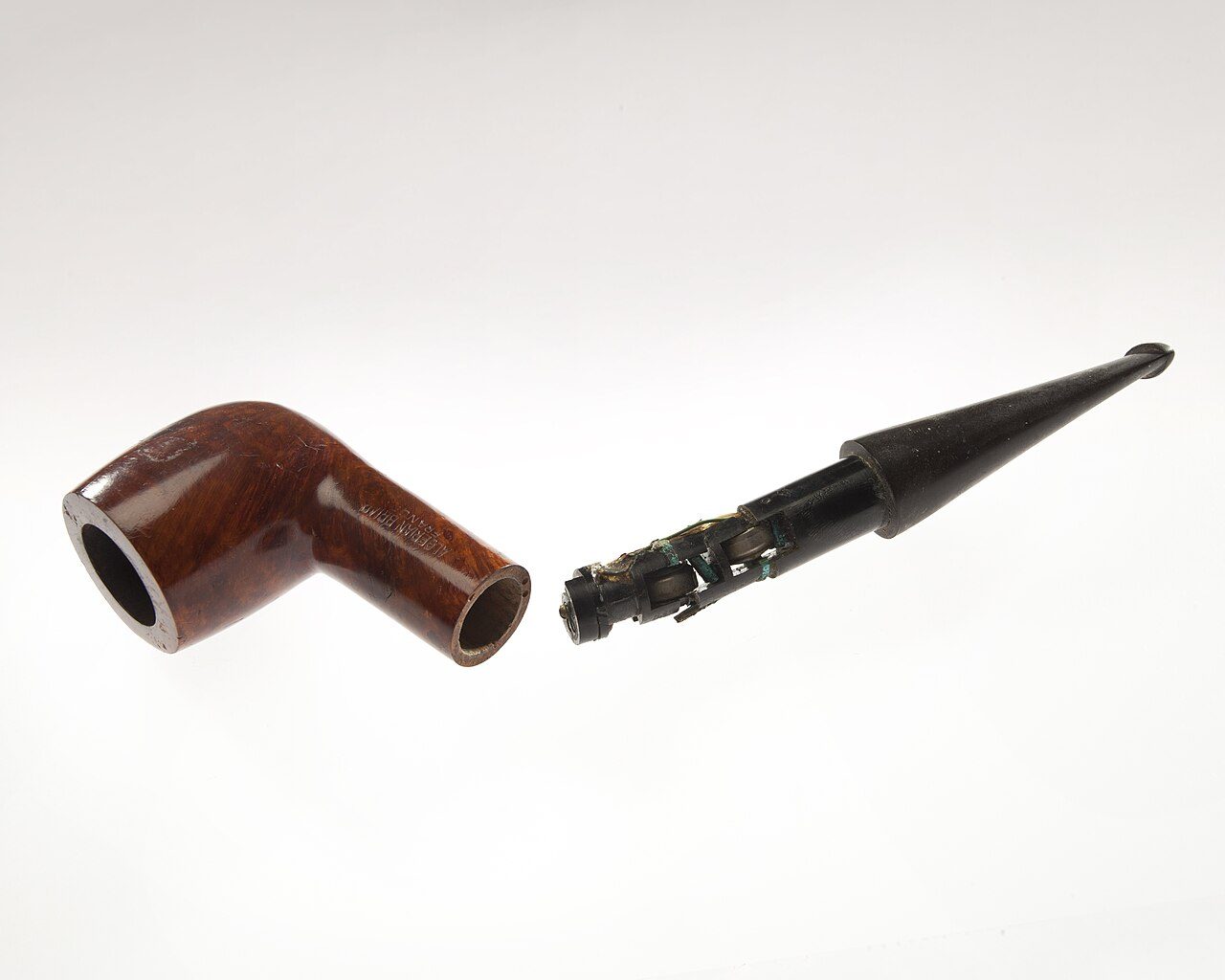

Anyone with a shortwave receiver during the Cold War could find them: a woman's voice, or a synthesized one, reading groups of five digits in German, Spanish, Russian or English, sometimes after a few bars of a folk tune, for minutes at a time, on schedules no station ever explained. Listeners called them numbers stations. Few governments have ever admitted to running one.5
The logic is simple to state. A powerful transmitter at home can reach an agent on another continent, and the agent needs nothing more incriminating than an ordinary radio. Paired with a one-time pad, a broadcast addressed to everyone reveals nothing to anyone but the holder of the matching key. The broadcast also flows one way, so the agent never transmits and cannot be located by direction-finding.2,5
What the record confirms
Most of what is said about individual stations comes from hobbyists, who catalogued them, gave them nicknames such as the "Lincolnshire Poacher" (after the English folk tune it played) and traced some transmitters to particular countries. In 1997 a London label issued The Conet Project, four CDs of such recordings, which brought the subject to a wider public.5 These attributions are often plausible but are not official.
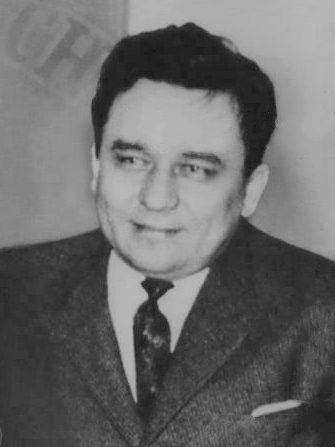
The firmest evidence comes from the people on the receiving end. When the FBI arrested the Soviet illegal Rudolf Abel in New York in 1957, his studio and hotel room held shortwave radios alongside cipher pads and microdot equipment.4 In the Portland case, MI5 found pads in Gordon Lonsdale's safe-deposit box in 1960, and searches of the Krogers' house after the January 1961 arrests uncovered a radio transmitter hidden under the floor.7 (For the illegals' system as a whole, see Illegals and legends.)
A CIA one-way link in Moscow
The CIA has released its own description of an agent broadcast system. In November 1981 its Moscow station gave the aviation engineer Adolf Tolkachev a commercially bought shortwave radio, a small demodulator and two one-time pads, as part of what it called an "Interim-One-Way Link." Broadcasts lasted ten minutes and carried dummy traffic as well as any real message, so that the transmissions themselves gave nothing away; a message could run to more than 400 five-digit groups.2
The system foundered on domestic life. Tolkachev reported that he had no privacy in his apartment in the evenings, and the schedule was moved to weekday mornings, until new security rules at his institute made it impossible for him to slip home. In December 1982 he handed back the equipment, the broadcast schedule and his pad.2 The CIA had earlier sent radio messages to its Soviet agent TRIGON, Aleksandr Ogorodnik, as one of the impersonal links that kept him and his case officer from ever meeting.3 (See The Tolkachev case.)
Atención in a Miami courtroom
The first numbers station to be named in open court was Cuban. In September 1998 the FBI arrested members of a Cuban intelligence network in South Florida, known as La Red Avispa (the Wasp Network); five were convicted in Miami in 2001.5,6 The network received instructions through the Cuban "Atención" broadcasts.5
The Eleventh Circuit's 2008 opinion upholding the convictions describes how the government proved it. Cuban intelligence "transmitted encrypted radio messages" to the network's leader; the government showed "that the encrypted messages were transmitted to [his] call sign," and that "the messages were decrypted with materials found at [his] apartment." Some of the decoded messages, the court found, concerned the Brothers to the Rescue flights over Havana that ended when Cuban jets shot down two of the group's aircraft on 24 February 1996.1
How the services detected it
A broadcast to an unknown listener was very hard to trace from the outside. The cases above were all broken from the receiving end, by a defector, a search or a surveillance team that found the radio, the pads or a decryption program in the agent's home.1,4,7
Sources
- Court record United States v. Campa, 529 F.3d 980 (11th Cir. 2008), US Court of Appeals for the Eleventh Circuit (PDF hosted by Georgetown Law) (2008-06-04).
- CIA Tolkachev, A Worthy Successor to Penkovsky (Barry G. Royden), Studies in Intelligence 47, no. 3, Central Intelligence Agency, Center for the Study of Intelligence (archived by the Internet Archive) (2003).
- CIA TRIGON: Spies Passing in the Night, Central Intelligence Agency, Stories (2016-06-20).
- FBI Hollow Nickel/Rudolf Abel, Federal Bureau of Investigation, History (archived by the Internet Archive).
- Wikipedia Numbers station, Wikipedia.
- Wikipedia Cuban Five, Wikipedia.
- Wikipedia Portland spy ring, Wikipedia.
- Wikipedia English Wikipedia article (used for cross-checking).
Elsewhere in the files
Read next
 1917–1980s
One-time pads
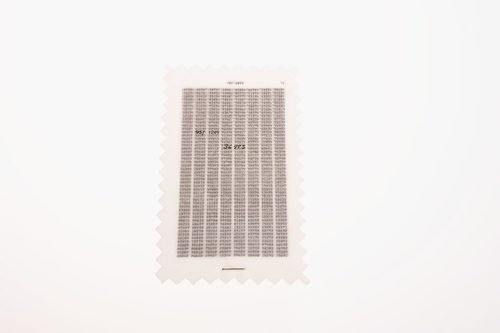
The one cipher proven unbreakable if its key is random and never reused. Soviet intelligence relied on it, and a wartime printing shortcut that duplicated pages let US codebreakers read thousands of messages.
 1914–1990s
Signals intelligence
Intelligence from intercepted communications and electronic emissions, from Room 40 and the Zimmermann telegram to Ultra, Venona, the Berlin tunnel and NSA's domestic programs exposed by the Church Committee.
January 1977 – 24 September 1986
The Tolkachev case
From 1979 to 1985 Soviet radar engineer Adolf Tolkachev photographed secret designs for the CIA in Moscow, handing over hundreds of rolls of film. Betrayed in 1985, he was executed in September 1986.
 1920s–1980s
Illegals and legends
Soviet officers who lived abroad as private citizens under borrowed identities, with no diplomatic protection. The Abel and Portland court records show how their legends were built and how they came apart.
 1951 – 22 March 1961
The Portland spy ring
A Soviet network that took naval secrets from the Admiralty's underwater research establishment at Portland, run by the KGB illegal 'Gordon Lonsdale' and broken up by MI5 in January 1961.