
On 1 October 1985 an envelope postmarked in Prince George's County, Maryland, was mailed to the home of a KGB officer in Alexandria, Virginia. Inside was a second envelope: "DO NOT OPEN. TAKE THIS ENVELOPE UNOPENED TO VICTOR I. CHERKASHIN," the KGB's counterintelligence chief at the Soviet embassy. The unsigned letter inside offered secret documents for $100,000, and as proof of good faith named three KGB officers secretly working for the FBI1. The writer was Robert Hanssen, an FBI supervisory special agent. He would not be identified for fifteen years.
Three rounds of espionage
The Justice Department's inspector general, who later interviewed Hanssen at length, divided his treachery into three periods2.
The first began in November 1979, eight months after Hanssen moved to a counterintelligence assignment in the FBI's New York office. He walked a package in to a GRU officer at a Soviet trade organization, identified himself only as an FBI agent, and over a year and a half received at least $21,000. The most important thing he passed was "the identity of a long-time FBI asset in the GRU," generally identified as General Dmitri Polyakov (TOPHAT). The episode ended in spring 1981, when his wife found him reading a GRU message2,4.
The second, the most damaging, ran from October 1985 to December 1991, mostly while he worked in Soviet counterintelligence at FBI headquarters. Known to the KGB only as "B" and signing himself "Ramon," he gave the KGB the names of the FBI's best Soviet sources, KGB officers Valeriy Martynov and Sergey Motorin, whom CIA officer Aldrich Ames had already betrayed months earlier. Both were arrested and executed; a third source he named was imprisoned1,2. Over six years he passed thousands of pages and dozens of computer disks on US nuclear war planning, new weapons technology, double-agent programs, the Intelligence Community's collection requirements, an investigation of a suspected KGB agent in the State Department, and "an entire technical program of enormous value, expense and importance"1,2.
After a reckless approach to a GRU officer in a parking garage in 1993 that led to a Russian diplomatic protest but no suspicion of him, the third period ran from 1999 to his arrest. Hanssen, by then detailed to the State Department, mined the FBI's case database for its most sensitive investigations, including the hunt for the mole who was in fact himself2.
Tradecraft and recklessness
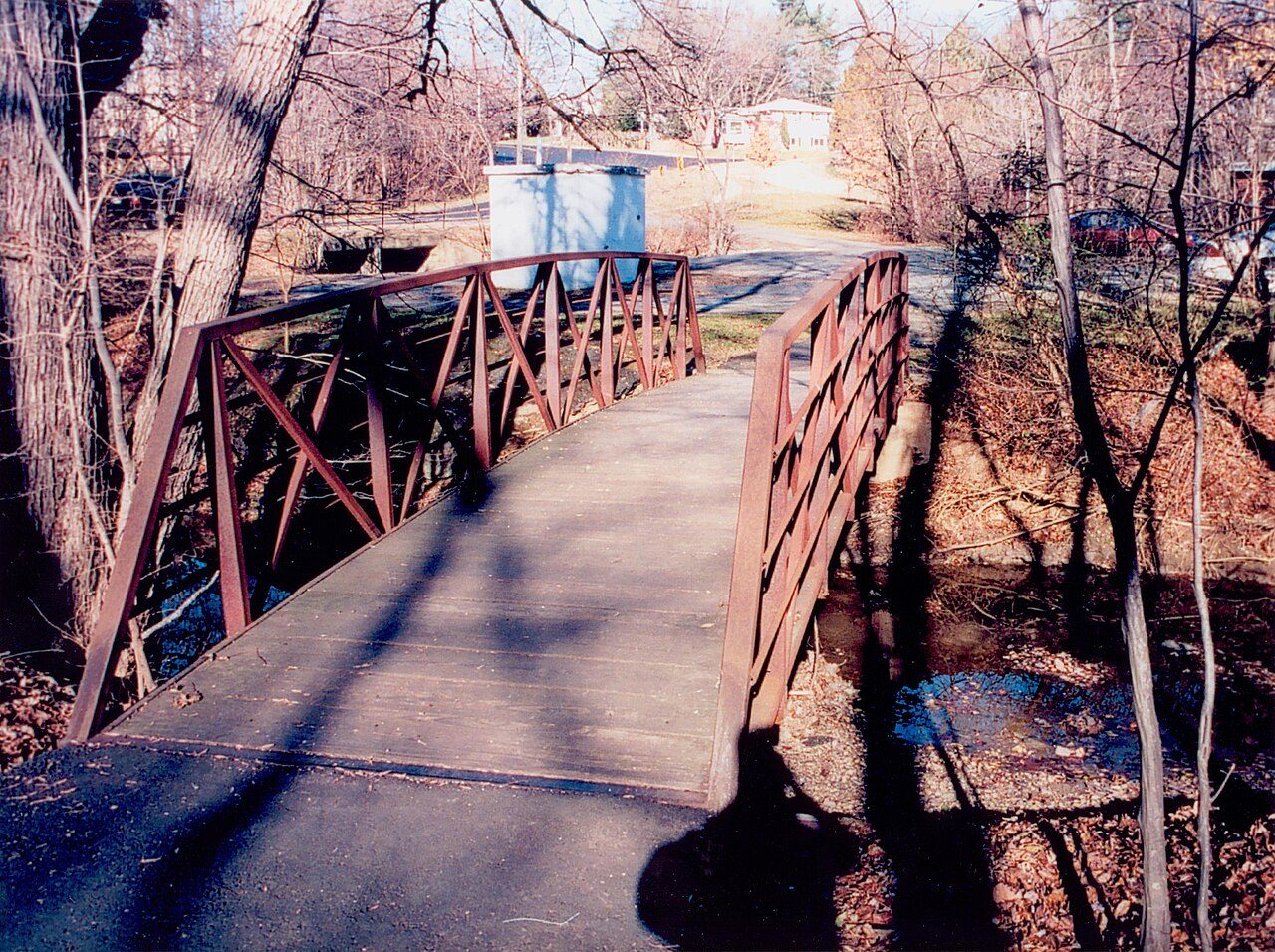
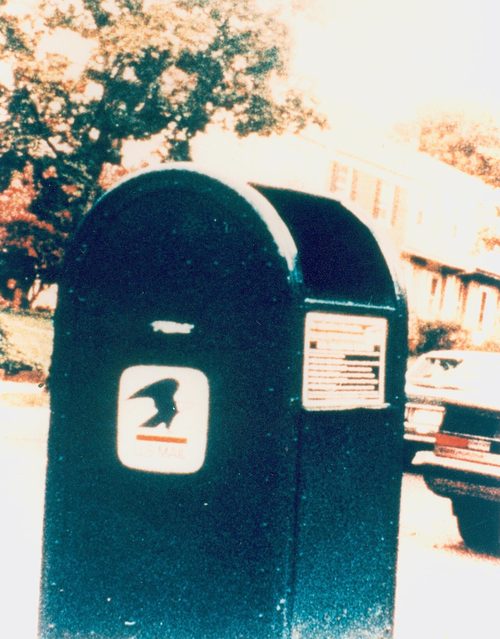
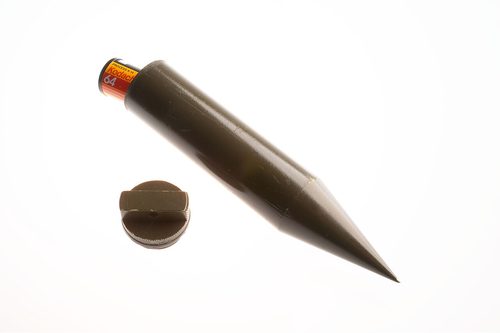
Hanssen dictated his own terms. "I am open to commo suggestions but want no specialized tradecraft," he wrote in 1985, adding a simple code: he would add six to every month, day and time1. He never met his handlers or gave his name. Exchanges went through dead drops in Northern Virginia parks, including one code-named ELLIS under a footbridge in Foxstone Park near his home, signaled by a mark on the park sign (see dead drops)1.
The inspector general found him less a master spy than a beneficiary of lax security. He deposited KGB cash in a savings account in his own name a block from FBI headquarters, used an FBI phone line to talk to the KGB, proposed the recruitment of his best friend, and searched FBI records for his own name. He was never given a polygraph or asked for a financial disclosure in 25 years2. In return the KGB and its successor, the SVR, paid him more than $600,000 in cash and diamonds and told him that another $800,000 was being held for him in Moscow1.
The wrong suspect
In 1985 and 1986 the FBI and CIA lost almost every significant human source they had against the Soviet Union2. Ames's arrest in 1994 explained much, but not all, of the damage. The FBI then spent years pursuing a CIA officer as the remaining mole, sent the Justice Department a report treating him as a spy, and never opened even a preliminary inquiry on an FBI employee. The inspector general concluded the Bureau had been "focused on the wrong suspect at the wrong agency"; the CIA officer was later exonerated2.
The break came from the Russian side. The affidavit says the FBI's evidence included KGB/SVR operational files, information from former KGB/SVR personnel, a recording of a 1986 telephone call between "B" and a KGB officer, and the inner plastic bag from one of B's packages, on which an FBI examiner found two of Hanssen's fingerprints1. B's habit of quoting General Patton, remembered by colleagues, matched too1.
Arrest
In January 2001 the FBI moved Hanssen into a new headquarters job created so that it could watch him1. Searches of his car turned up classified printouts, tape and chalk for marking signal sites1. On 12 February agents found $50,000 left for him at another drop site, code-named LEWIS1. On 18 February 2001, after he taped a package of classified material under the Foxstone Park footbridge, he was arrested2,4.
He pleaded guilty on 6 July 2001 to conspiracy, 13 counts of espionage and one of attempted espionage. Prosecutors dropped the death penalty in return for full debriefings3. On 10 May 2002 he was sentenced to life imprisonment2. The inspector general called him "the most damaging spy in FBI history"2. The case led the FBI to introduce counterintelligence polygraphs and financial disclosure for its own staff2.
The documents
Declassified records of this operation, with the scans and their full text hosted here.

Checking the record
Dates and outcome compared in two independent sources: they agree.
- Official history
- Espionage in 1979–81, 1985–91 and 1999–2001; arrested 18 February 2001; pleaded guilty 6 July 2001; sentenced 10 May 2002. Compromised dozens of human sources, at least three of whom were executed; life imprisonment.
- Wikipedia
- Spied 1979–1981, 1985–1991 and 1999–2001; arrested 18 February 2001; sentenced 10 May 2002. Fifteen life sentences without parole; died at ADX Florence on 5 June 2023.
Dates and outcome agree. Wikipedia gives total payments of about $1.4 million; the affidavit counts over $600,000 in cash and diamonds plus escrow the Russians said was worth $800,000, which this page follows.
Sources
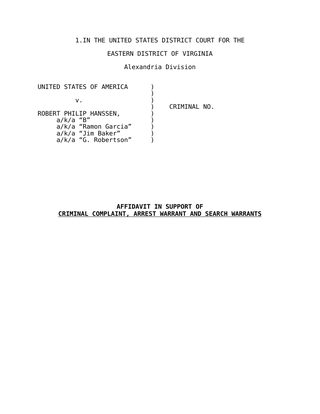
- Court record Affidavit in Support of Criminal Complaint, Arrest Warrant and Search Warrants, United States v. Robert Philip Hanssen (E.D. Va.), US District Court for the Eastern District of Virginia, via FAS (2001-02).
- Official history A Review of the FBI's Performance in Deterring, Detecting, and Investigating the Espionage Activities of Robert Philip Hanssen (unclassified executive summary), US Department of Justice, Office of the Inspector General (2003-08-14).
- Court record Thompson Statement Regarding Hanssen Guilty Plea, US Department of Justice, Office of the Deputy Attorney General (2001-07-06).
- Wikipedia Robert Hanssen, Wikipedia.
Elsewhere in the files
- Agency Federal Bureau of Investigation (FBI)
- Document The FBI's affidavit against Robert Hanssen (2001)
- Operation 1985, the Year of the Spy
- Operation TOPHAT: the Polyakov case
- Person Dmitri Polyakov
- Person Robert Hanssen
- Tradecraft Dead drops
- Tradecraft Double agents
- Tradecraft Surveillance and countersurveillance
Read next
 1944–2023
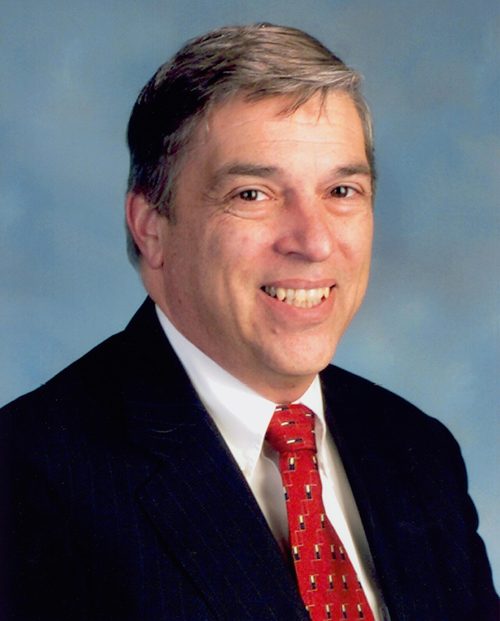
Robert Hanssen
FBI counterintelligence agent who sold secrets to the GRU, KGB and SVR in three bursts from 1979 to 2001 without ever revealing his name. Arrested in 2001, he died in a federal supermax prison in 2023.
November 1961 – 15 March 1988
TOPHAT: the Polyakov case
From 1961 to 1980 GRU officer Dmitri Polyakov, later a major general, spied for the FBI and CIA. Betrayed by Robert Hanssen and Aldrich Ames, he was arrested in 1986 and shot in 1988.
 16 April – 25 November 1985
1985, the Year of the Spy
In 1985 the FBI arrested a string of Americans spying for Moscow, Beijing and Israel, a KGB officer defected and re-defected, and the CIA lost almost every agent it had inside Soviet intelligence.
 1940s–2001
Dead drops
A hiding place where one spy leaves material for another to collect later, so the two never meet. The Abel, Ames and Hanssen cases show how it worked and how the FBI turned it against its users.
 United States · 1908
Federal Bureau of Investigation (FBI)
The US Justice Department's investigative service, founded in 1908: chief hunter of foreign spies at home from the 1930s, and under J. Edgar Hoover the author of secret domestic programs exposed in the 1970s.
 Soviet Union · 1954–1991
KGB
The Soviet Committee for State Security, 1954–1991: foreign intelligence, counter-intelligence, border troops and political police under one roof, from Khrushchev's reforms to the failed coup of August 1991.