
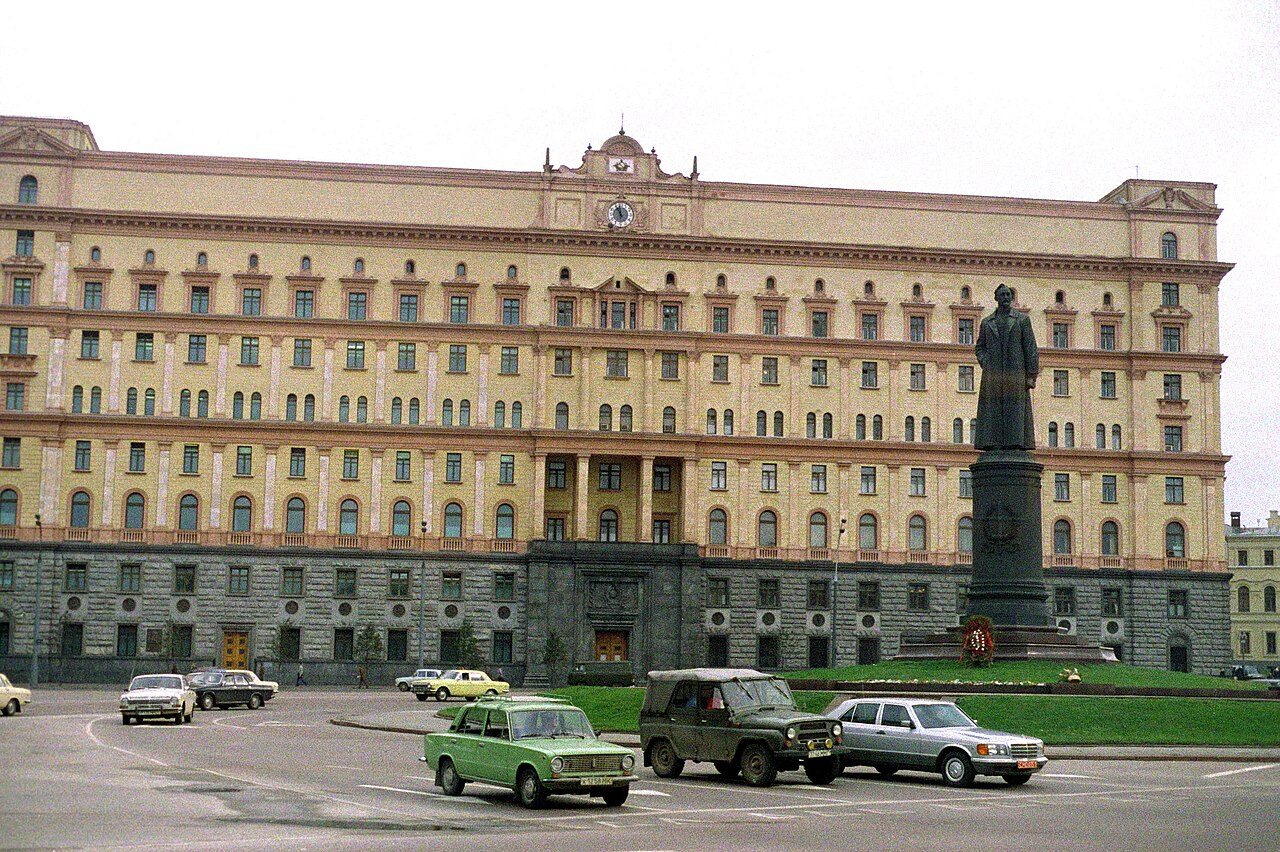

The decree that created the KGB is one sentence long. On 13 March 1954 the Presidium of the Supreme Soviet resolved: "Form a Committee for State Security under the Council of Ministers of the USSR." It was signed by Kliment Voroshilov.1 Behind that sentence lay a year of upheaval after Stalin's death and the fall of the security chief Lavrenty Beria, which ended with state security split from the police ministry and placed under tighter Communist Party control.7
The KGB was the last in a line of Soviet political police and intelligence services that began with the Cheka in 1917. For the period from 1917 to 1954, including the OGPU, the NKVD and the MGB, see Cheka–NKVD.7
What it did
Unlike Western services, the KGB combined almost every security function. Its First Chief Directorate ran foreign intelligence, including the Illegals and legends of Directorate S, officers living abroad under false identities. The Second Chief Directorate handled counter-intelligence at home; other directorates covered military counter-intelligence, the border troops, codes and ciphers, and the guarding of the leadership.7,9 A Fifth Directorate, created on 25 July 1967 to combat "ideological subversion," policed dissent among writers, scientists, religious believers and national minorities.7,9 According to Vadim Bakatin, its last chairman, the KGB employed about 480,000 people in August 1991.8
It was not the Soviet Union's only intelligence service. Military intelligence remained with the separate GRU.7
Chairmen
Ivan Serov led the KGB from 1954 to 1958, followed by Aleksandr Shelepin (1958–1961), Vladimir Semichastny (1961–1967), Yuri Andropov (1967–1982), Vitaly Fedorchuk (1982), Viktor Chebrikov (1982–1988), Vladimir Kryuchkov (1988–1991) and Bakatin (August–December 1991).8 Andropov's fifteen years made the KGB more professional and more powerful, and in 1982 he became party leader. In July 1978 the agency was renamed the KGB of the USSR and given the status of a state committee.8
Operations abroad
The KGB inherited the networks built by its predecessors, including the surviving members of the The Cambridge Five, and continued to run illegals in the West. The The Portland spy ring in Britain was run by one, Konon Molody, and Rudolf Abel was arrested in New York in 1957 (see The Hollow Nickel case). Later American cases such as the The Walker spy ring and the agents exposed in the 1985, the Year of the Spy involved Americans who volunteered for money.7
It also killed. A CIA memorandum prepared in February 1964 for the Warren Commission, and published in 1975, described the KGB's "executive action" capability and the case of Bogdan Stashinsky, a KGB officer who surrendered to the West German police in November 1961 and said he had killed the Ukrainian émigré leaders Lev Rebet and Stepan Bandera on official orders.4 The memorandum is careful about the limits of its knowledge, noting that Soviet intelligence was "undoubtedly credited with successes it actually has not achieved."4
Disinformation, or "active measures," was a third strand (see Operation INFEKTION).7 From 1981, fearing a surprise Western nuclear attack, the KGB and GRU ran Operation RYAN, the background to the war scare around Able Archer 83 and the war scare.8
At home and in the bloc
Serov personally supervised the "normalization" of Hungary after the Soviet army crushed the 1956 uprising, and KGB officers posing as Western tourists helped prepare the 1968 invasion of Czechoslovakia.7 At home it pursued dissidents, from writers to human-rights activists. It worked closely with Eastern European services such as the Stasi (Ministry for State Security) and the StB.
Western services pushed back. In 1971 Britain expelled 105 Soviet intelligence officers in Operation FOOT, which MI5 regards as the turning point of its Cold War counter-espionage.5 The KGB was penetrated in turn. MI5 credits Oleg Gordievsky, a KGB officer in the London residency working for British intelligence, with the information that caught the MI5 officer Michael Bettaney, who had offered secrets to the KGB in 1983.5 French intelligence had its own source inside the KGB; see Vladimir Vetrov (FAREWELL) and the The Farewell Dossier.
The end
Kryuchkov was among the leaders of the attempted coup against Mikhail Gorbachev in August 1991 and was arrested when it collapsed.8 The KGB was then broken up. On 26 November 1991 Boris Yeltsin turned the Russian republic's KGB into a Federal Security Agency.3 On 3 December 1991 a USSR law abolished the KGB and created in its place, for a transitional period, an Inter-Republican Security Service, a Central Intelligence Service and a border-guard committee, with republican security bodies passing to the republics.2 The intelligence service became Russia's SVR and the domestic service, after several changes, the FSB.7
Key dates
- 13 March 1954 Created by decree of the Presidium of the Supreme Soviet as the Committee for State Security under the Council of Ministers.
- 1956 KGB chairman Ivan Serov supervises the aftermath of the Soviet suppression of the Hungarian uprising.
- 7 January 1961 The KGB illegal 'Gordon Lonsdale' is arrested in London.
- November 1961 KGB assassin Bogdan Stashinsky surrenders in West Germany and reveals the killings of two Ukrainian émigré leaders.
- 1967 Yuri Andropov becomes chairman, serving until 1982.
- 1971 Britain expels 105 Soviet intelligence officers in Operation FOOT.
- 5 July 1978 Renamed the KGB of the USSR and raised to a state committee.
- 1981 KGB and GRU begin Operation RYaN to look for signs of a Western nuclear first strike.
- August 1991 Chairman Vladimir Kryuchkov joins the failed coup against Gorbachev and is arrested.
- 3 December 1991 USSR law abolishes the KGB and divides its functions among new bodies.
Operations in these files
 1951 – 22 March 1961
The Portland spy ring
A Soviet network that took naval secrets from the Admiralty's underwater research establishment at Portland, run by the KGB illegal 'Gordon Lonsdale' and broken up by MI5 in January 1961.
 May – November 1962
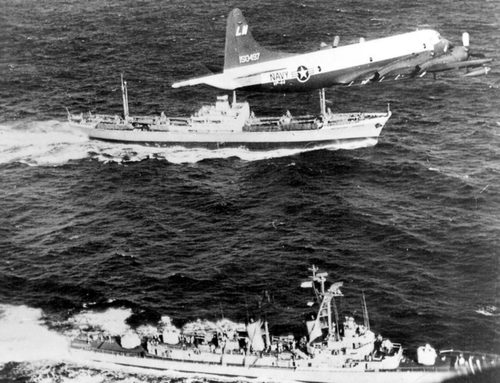
Operation Anadyr
The Soviet General Staff's 1962 plan to move nuclear missiles and some 42,000 troops to Cuba in secret, and the deception that hid it from US intelligence until a U-2 flight on 14 October.
 5 May 1964 – March 1965
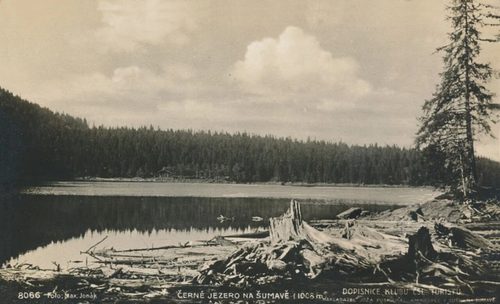
Operation Neptune (1964)
In 1964 Czechoslovak intelligence sank chests of blank paper in a Bohemian lake, staged their discovery for television, then filled the story with Nazi files from Moscow to press West Germany over war crimes.
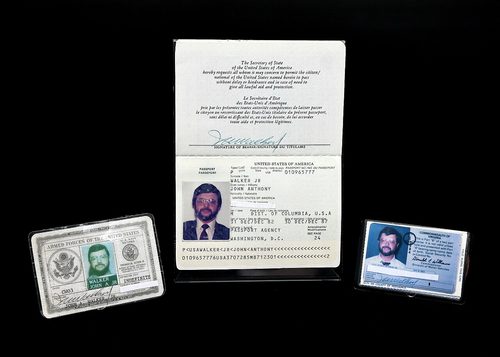 December 1967 – 20 May 1985
The Walker spy ring
For seventeen years US Navy communications specialist John Walker sold cipher keys and secret messages to the KGB, later recruiting a friend, his brother and his son. The FBI arrested him in May 1985.
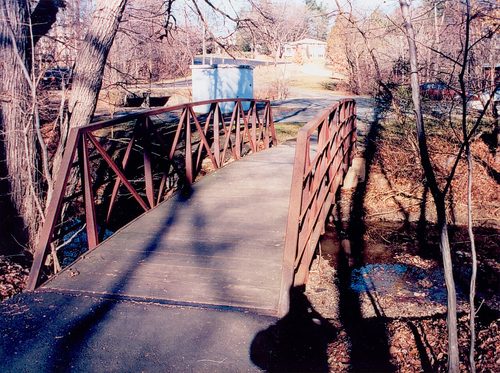 November 1979 – 18 February 2001
The Hanssen case
FBI agent Robert Hanssen spied for Soviet and Russian intelligence in three bursts from 1979 to 2001 without revealing his name. Caught at a Virginia dead drop in 2001, he was the most damaging spy in FBI history.
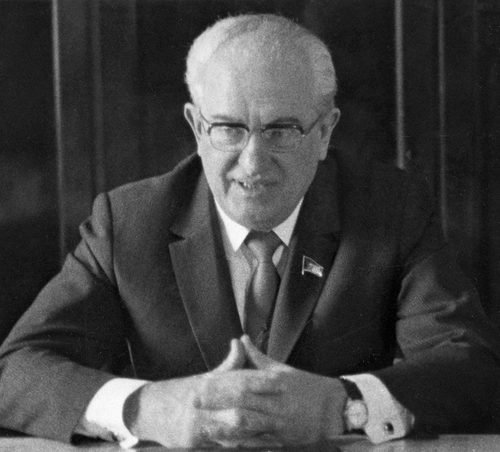 May 1981 – April 1989
Operation RYAN
The KGB–GRU intelligence alert launched in May 1981 to detect a feared American nuclear first strike, its indicator lists, and the long argument over whether Moscow's fear was real.
17 July 1983 – 1989
Operation INFEKTION
The 1980s KGB and Stasi campaign to persuade the world that the US military had created AIDS at Fort Detrick: how the story was planted, spread and disowned, and what its codename really was.
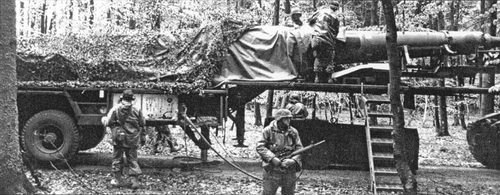 2–11 November 1983
Able Archer 83 and the war scare
A routine NATO nuclear-release exercise in November 1983 met an unusual Soviet military alert. What the declassified record shows about the reaction, and why historians still disagree on the danger.
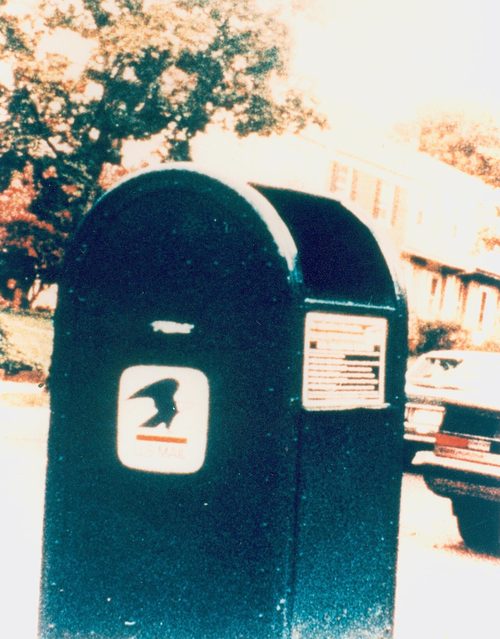 16 April – 25 November 1985
1985, the Year of the Spy
In 1985 the FBI arrested a string of Americans spying for Moscow, Beijing and Israel, a KGB officer defected and re-defected, and the CIA lost almost every agent it had inside Soviet intelligence.
Operations against the KGB
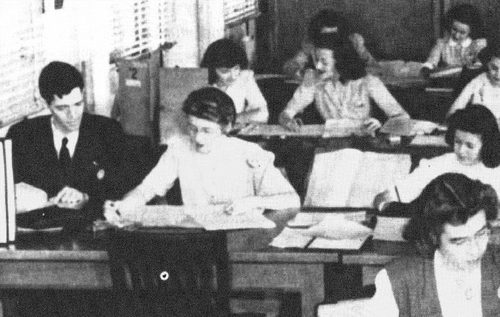 1 February 1943 – 1 October 1980
The Venona project
The US Army codebreaking program that, from 1943 to 1980, read parts of some 2,900 wartime Soviet intelligence cables and exposed Fuchs, the Rosenbergs and Donald Maclean.
1949 – 1954
Operation Redsox
REDSOX was the CIA's early Cold War program for parachuting and smuggling émigré agents into the Soviet Union. It produced little intelligence and cost many agents their lives.
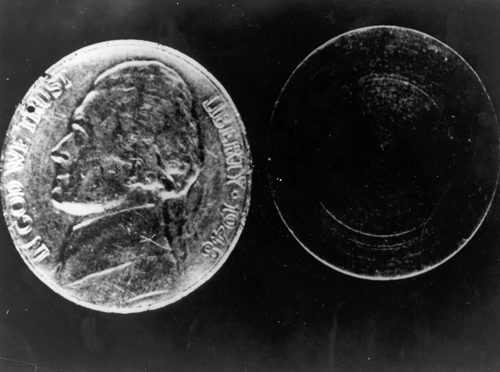 22 June 1953 – 15 November 1957
The Hollow Nickel case
A Brooklyn newsboy's trick nickel held a coded message the FBI could not read for four years, until a drunken KGB defector explained it and led agents to the illegal known as Rudolf Abel.
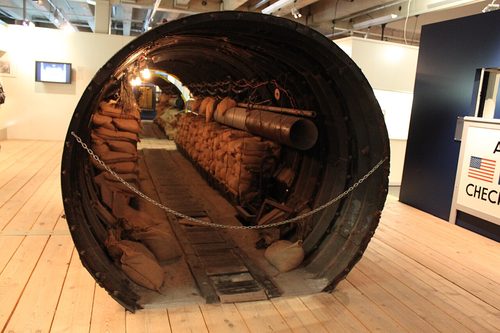 December 1953 – 22 April 1956
Operation Gold (the Berlin Tunnel)
From 1955 to 1956 the CIA and British SIS tapped Soviet military phone and teleprinter cables in East Berlin from a 1,476-foot tunnel, unaware that a KGB mole had betrayed the plan before digging began.
 20 April 1961 – 22 October 1962
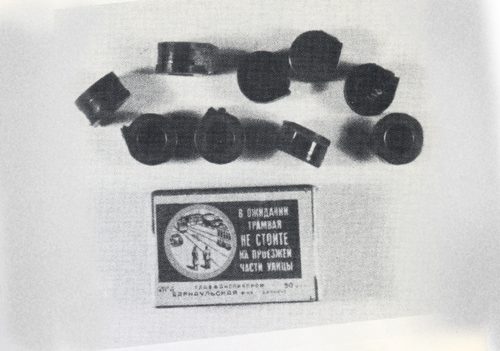
IRONBARK: the Penkovsky case
How a disaffected GRU colonel, Oleg Penkovsky, fed the CIA and MI6 Soviet missile manuals in 1961–62, and how his IRONBARK material shaped US judgments in the Cuban Missile Crisis.
 3 July 1979 – 1992
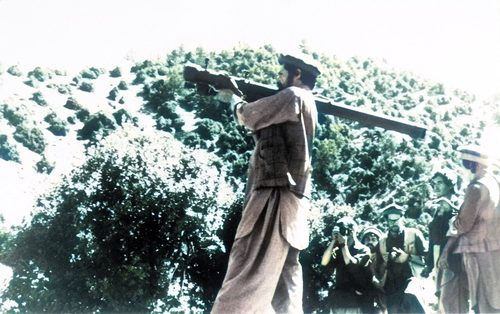
Operation Cyclone
The CIA's covert program to arm the Afghan resistance, from a $695,000 non-lethal finding in July 1979 through Soviet-made rifles via Pakistan to Stinger missiles, and what the record says about bin Laden.
February 1981 – 23 January 1985
The Farewell Dossier
In 1981–82 a disaffected KGB officer, Vladimir Vetrov, gave French counterintelligence thousands of documents on Soviet technology theft. The West expelled scores of Soviet officers and fed Moscow doctored technology.
People
- Morris and Lona Cohen 1910–1995
- Yuri Andropov 1914–1984
- George Blake 1922–2020
- Rudolf Abel (William Fisher) 1903–1971
- Robert Hanssen 1944–2023
- John Anthony Walker 1937–2014
- Vasili Mitrokhin 1922–2004
- Konon Molody (Gordon Lonsdale) 1922–1970
- Kim Philby 1912–1988
- Melita Norwood 1912–2005
- Vladimir Vetrov (FAREWELL) 1932–1985
Sources
- Other Decree of the Presidium of the Supreme Soviet of the USSR of 13 March 1954, 'On the formation of the Committee for State Security under the Council of Ministers of the USSR', Wikisource (Russian), transcribed from the Russian state archives exhibition (1954-03-13).
- Other Law of the USSR of 3 December 1991 No. 124-N, 'On the reorganization of the organs of state security', pravo.levonevsky.org (archived copy) (1991-12-03).
- Other Decree of the President of the RSFSR of 26 November 1991 No. 233, 'On the transformation of the KGB of the RSFSR into the Federal Security Agency of the RSFSR', President of Russia, legal documents bank (1991-11-26).
- CIA A 1964 view of KGB methods (CIA memorandum of February 1964 for the Warren Commission), Studies in Intelligence vol. 19 no. 3, Central Intelligence Agency, Center for the Study of Intelligence (archived copy) (1964-02).
- Official history The later Cold War, MI5 (Security Service), archived by the Internet Archive.
- Other Mitrokhin Archive, HC Deb 21 October 1999 vol 336 cc587–99, UK Parliament, Hansard (1999-10-21).
- Wikipedia KGB, Wikipedia.
- Wikipedia Комитет государственной безопасности СССР, Wikipedia (Russian).
- Other KGB SSSR: Struktura (structure of the KGB, 1954–1991), Shield and Sword handbook site (shieldandsword.mozohin.ru), archived copy.
- Wikipedia English Wikipedia article (used for cross-checking).
Elsewhere in the files
- Agency Central Intelligence Agency (CIA)
- Agency Cheka, OGPU and NKVD
- Agency GRU (Soviet military intelligence)
- Agency SDECE and DST (French intelligence)
- Agency StB (Czechoslovak State Security)
- Agency Stasi (Ministry for State Security)
- Document 'CIA Agents Imprisoned in the Soviet Union': a retiring officer's memo on captured REDSOX agents (1978)
- Document A Venona decrypt: New York 1657, 27 November 1944
- Document Abel v. United States: the Supreme Court and the spy's wastebasket (1960)
- Document Meeting the Espionage Challenge: the Senate's verdict on the Year of the Spy (1986)
- Document Meredith Gardner's first Venona report: "Covernames in Diplomatic Traffic" (1947)
- Document NSA's secret history of the Pelton trial and the Ivy Bells leak (1999)
- Document SNIE 11-10-84: the intelligence community reads the war scare (May 1984)
- Document Soviet Acquisition of Militarily Significant Western Technology: An Update (1985)
- Document The Afghan covert program in May 1980: INR's briefing for Secretary Muskie
- Document The Afghan program begins: the Special Coordination Committee, 26 June 1979
- Document The CIA's history of the Berlin Tunnel (1968)
- Document The FBI's affidavit against Robert Hanssen (2001)
- Document The Soviet "War Scare" (PFIAB, 1990)
- Operation 1985, the Year of the Spy
- Operation Able Archer 83 and the war scare
- Operation IRONBARK: the Penkovsky case
- Operation Operation Anadyr
- Operation Operation Cyclone
- Operation Operation Gold (the Berlin Tunnel)
- Operation Operation INFEKTION
- Operation Operation Ivy Bells
- Operation Operation Neptune (1964)
- Operation Operation RYAN
- Operation Operation Redsox
- Operation The Cambridge Five
- Operation The Farewell Dossier
- Operation The Hanssen case
- Operation The Hollow Nickel case
- Operation The Portland spy ring
- Operation The Tolkachev case
- Operation The Venona project
- Operation The Walker spy ring
- Person Erich Mielke
- Person Felix Dzerzhinsky
- Person George Blake
- Person John Anthony Walker
- Person Kim Philby
- Person Konon Molody (Gordon Lonsdale)
- Person Markus Wolf
- Person Melita Norwood
- Person Morris and Lona Cohen
- Person Robert Hanssen
- Person Rudolf Abel (William Fisher)
- Person Vasili Mitrokhin
- Person Vladimir Vetrov (FAREWELL)
- Person Yuri Andropov
- Tradecraft Brush passes
- Tradecraft Concealment devices
- Tradecraft Dead drops
- Tradecraft Double agents
- Tradecraft Illegals and legends
- Tradecraft Microdots
- Tradecraft Numbers stations
- Tradecraft One-time pads
- Tradecraft Surveillance and countersurveillance
- Tradecraft The "Moscow Rules"