
For most of the 1970s, American officials who suspected that Soviet intelligence was systematically stealing Western technology could not prove it. Gus Weiss, an economist on the National Security Council staff, later wrote that requests for collection on the problem met the answer "no evidence," "no requirements and no interest"1. Then, in 1981, the French counterintelligence service acquired a source who could show them the whole machine.
Directorate T and Line X
According to Weiss's 1996 account in CIA's Studies in Intelligence, the Soviet leadership responded to its technological lag around 1970 by reinvigorating collection on Western science. A KGB unit, Directorate T of the KGB's First Chief Directorate, set the agenda; its field officers, posted under diplomatic and trade cover, were known as Line X. The GRU, the Academy of Sciences and East European services also took part, working from requirements set by Soviet economic and military-industrial planners1.
Vladimir Vetrov was an engineer by training and a Line X veteran. He had served in Paris from 1965 and later in Montreal, and by 1980 he was in Moscow evaluating what Line X collected, a post that gave him a view of the entire program6,2.
A volunteer for the DST
Vetrov did not approach the CIA or France's foreign service, the SDECE. Through a French businessman he knew from his Paris years, he offered himself, around the turn of 1981, to the Direction de la surveillance du territoire, France's domestic counterintelligence service (DST). Hayden Peake's review for the CIA notes the logic: the DST was not supposed to run agents abroad, so the KGB was not watching for it. The French gave him an English code name, FAREWELL, so that if it leaked the KGB would look toward the Americans or British2,4,5.
For about a year he photographed documents and handed them over in Moscow, often through French civilians rather than professional officers. Weiss put the haul at about 4,000 KGB documents. It included a list of Soviet organizations engaged in scientific collection, Directorate T's own reports on its goals and results, the names of more than 200 Line X officers in ten KGB residencies in the West, and more than 100 leads to their recruited sources1. The internal reports claimed Line X had met between two-thirds and three-quarters of its collection requirements, with the biggest gains in radar, computers, machine tools and semiconductors1.
Passed to Washington
At the economic summit in Ottawa in July 1981, President François Mitterrand privately told President Ronald Reagan about the source and offered the material. It reached the CIA through Vice President George Bush1,5. Weiss, who read it, said it confirmed his "worst nightmares": Soviet military research was in large part running on Western work1.
In January 1982 Weiss proposed to the Director of Central Intelligence, William Casey, that the United States use the Line X shopping list against its authors. Instead of only blocking the KGB's purchases, American intelligence would help it acquire "improved" products, designed to look genuine and fail later1. Weiss wrote that the CIA and the Defense Department, with the FBI handling the domestic side, then built just such a program:
Contrived computer chips found their way into Soviet military equipment, flawed turbines were installed on a gas pipeline, and defective plans disrupted the output of chemical plants and a tractor factory.
The quotation is from Weiss's article1. He added that the Pentagon fed in misleading information on stealth, space defense and tactical aircraft, and that the program "was never detected"1. No program files have been released to test these claims.
Arrest and exposure
Vetrov's handlers had little control over him. In February 1982, in a car parked in Moscow, he stabbed his mistress, who survived, and killed a man who approached the car; he was arrested for murder, not espionage, and sentenced to twelve years6,2. From prison he hinted in letters that he had done "something big." The KGB investigated, he confessed to spying and wrote a denunciation of the Soviet system, and he was executed on 23 January 19856,2. Peake summarizes the account by Sergei Kostin and Eric Raynaud: he confessed after being promised a prison term, and was shot anyway2. Weiss's article misdates the execution to 19831.
The roll-up
On 5 April 1983 France expelled 47 Soviet diplomats and journalists identified through the dossier6,4. Casey sent his deputy to brief NATO governments on Line X, and Weiss credited those briefings with the expulsion or compromise of about 200 Soviet intelligence officers and their sources and the collapse of Line X operations in Europe1.
By 1985 Mitterrand had come to suspect that the whole affair was a CIA test of his loyalty, and he dismissed the head of the DST, Yves Bonnet. Weiss called the suspicion a "mistaken belief"1,5.
What the record does not show
Weiss judged that Farewell might deserve "a footnote" in the history of the Cold War's end, and he believed it did real economic damage1. Hubert Védrine, Mitterrand's diplomatic adviser, called it one of the most important spy cases of the century while rejecting the idea that it caused the Soviet collapse4. The French case files remain closed, and the American deception program is known almost entirely from Weiss's article and later memoirs. How the KGB first came to suspect Vetrov is also unsettled: Peake's summary of Kostin and Raynaud says only that a mole passed clues that the material was reaching Washington, and that the authors could not say when or how2. Two years after the expulsions, the balance swung the other way: in the Year of the Spy it was Western agents inside the Soviet system who were lost.
The documents
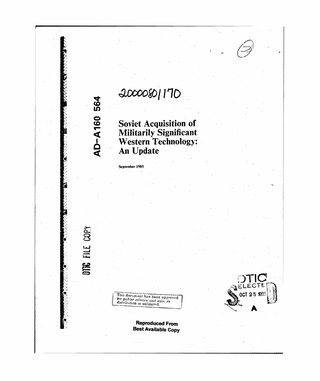
Declassified records of this operation, with the scans and their full text hosted here.
Checking the record
Dates and outcome compared in two independent sources: they differ.
- CIA
- Vetrov supplied about 4,000 documents from 1981; Mitterrand told Reagan in July 1981; Weiss proposed the deception to Casey in January 1982; Weiss says Vetrov was executed in 1983. About 200 Soviet intelligence officers and their sources expelled or compromised; Line X operations in Europe collapsed; altered technology fed to Line X.
- Wikipedia
- Documents passed early 1981 to early 1982; Ottawa summit meeting 19 July 1981; Vetrov executed 23 January 1985. Mass expulsion of Soviet technology spies; CIA deception operation; pipeline explosion alleged by Reed.
The span of the operation and the outcome agree, but Weiss dates Vetrov's execution to 1983. Wikipedia, French and Russian accounts and the CIA's own 2012 book review give January 1985, which this page follows; Weiss also gives Vetrov's age as 53, which does not fit a 1932 birth.
Sources
- CIA Duping the Soviets: The Farewell Dossier (Studies in Intelligence, 1996), Central Intelligence Agency, Center for the Study of Intelligence (Gus W. Weiss) (1996).
- CIA The Intelligence Officer's Bookshelf, June 2012 (review of Kostin and Raynaud, Farewell), Central Intelligence Agency, Studies in Intelligence 56, no. 2 (Hayden Peake) (2012-06).
- Other KGB Veteran Denies CIA Caused '82 Blast, The Moscow Times (Anatoly Medetsky) (2004-03-18).
- Other How the Cold War was won by the French, The Independent (John Lichfield) (2009-09-17).
- Wikipedia Farewell Dossier, Wikipedia.
- Wikipedia Vladimir Vetrov, Wikipedia.
- Wikipedia At the Abyss (Trans-Siberian gas pipeline sabotage allegation), Wikipedia.
- Wikipedia English Wikipedia article (used for cross-checking).
Elsewhere in the files
Read next
 France · 1946–1982
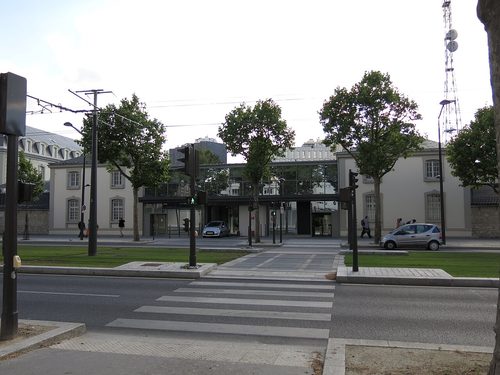
SDECE and DST (French intelligence)
France's Cold War pair: the SDECE, its foreign intelligence and action service from 1946 to 1982, and the DST, the police counterespionage directorate that ran the KGB defector-in-place known as FAREWELL.
 Soviet Union · 1954–1991
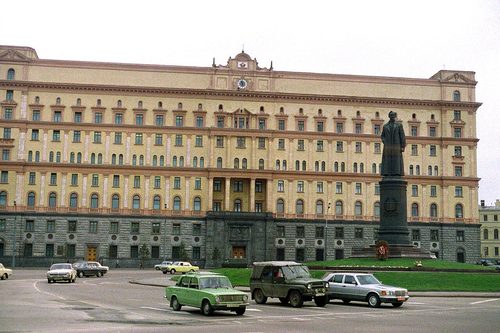
KGB
The Soviet Committee for State Security, 1954–1991: foreign intelligence, counter-intelligence, border troops and political police under one roof, from Khrushchev's reforms to the failed coup of August 1991.
 16 April – 25 November 1985
1985, the Year of the Spy
In 1985 the FBI arrested a string of Americans spying for Moscow, Beijing and Israel, a KGB officer defected and re-defected, and the CIA lost almost every agent it had inside Soviet intelligence.
January 1977 – 24 September 1986
The Tolkachev case
From 1979 to 1985 Soviet radar engineer Adolf Tolkachev photographed secret designs for the CIA in Moscow, handing over hundreds of rolls of film. Betrayed in 1985, he was executed in September 1986.