
For most of the Soviet period the GRU lived in the shadow of the security police it never stopped competing with. The KGB and its predecessors had the larger budget, the domestic power and the public fame. The GRU had the Red Army behind it, a network of military attachés in every Soviet embassy, and for long stretches some of the best-placed spies of the century. Its name was not published in the Soviet Union, but it was known in the West from the late 1920s, and defectors made it notorious.5
From Registration Directorate to Fourth Department
The service began in autumn 1918, during the Civil War, as the Registration Directorate of the Red Army's field staff, created on Leon Trotsky's authority; its first head was Semyon Aralov.5 In the 1920s it became the Intelligence Directorate of the Red Army Staff and, from about 1926, the Fourth Directorate, often called simply the Fourth Department. Its reports went directly to the State Defense Council and the Politburo, apparently bypassing the army staff.5
Its longest-serving interwar chief, the Latvian Yan Berzin, ran it until 1935 and briefly again in 1937. He was arrested in May 1938 and killed that July in Stalin's purge.5 Walter Krivitsky, the most senior Red Army intelligence officer ever to defect, described the service's workings in a 1939 memoir.5
The service relied heavily on illegals, officers living abroad under false identities, and on foreign communists. Richard Sorge, who ran the Tokyo ring, was one of its illegals, and Ursula Kuczynski, better known as Ruth Werner, one of its agents.5 (See Illegals and legends.)
The war and the American networks
Stalin gave the service its modern form as the Main Intelligence Directorate (GRU) in February 1942; from April 1943 it handled human intelligence outside the USSR.5 The joint NSA–CIA history of the Venona decrypts describes GRU officers in Soviet consulates in the United States working with the Comintern and with Communist Party agents in government and industry. Before the war the GRU had overshadowed the NKVD in America: in 1940 the GRU residency in New York sent three cables for every one sent by its NKVD counterpart, a ratio that reversed in 1941.1 The former GRU courier Whittaker Chambers told the FBI about his network in 1942, and his later testimony became central to the Hiss case.1 (See The Venona project and Whittaker Chambers.)
On 5 September 1945 Igor Gouzenko, a GRU cipher clerk in the Soviet embassy in Ottawa, defected with documents identifying Soviet agents, including inside the Manhattan Project.1 His evidence, together with Elizabeth Bentley's a few weeks later, galvanized American counterintelligence.1 (See The Gouzenko affair.)
Penetrated from within
The GRU's own officers became the West's most valuable sources. In the 1950s the CIA ran Lieutenant Colonel Pyotr Popov, a GRU officer in East Germany, whose information helped the FBI track a pair of GRU illegals in New York in 1957; the illegals' escape and report contributed to Popov's arrest.1 Colonel Oleg Penkovsky, recruited by the CIA and MI6 in April 1961, photographed missile manuals and the classified edition of the General Staff journal Military Thought before his arrest in October 1962.2 (See IRONBARK: the Penkovsky case.) General Dmitri Polyakov volunteered to the FBI in the early 1960s, was arrested in 1986 and executed in 1988.5 (See Dmitri Polyakov and TOPHAT: the Polyakov case.)
The 1980s war scare
In May 1981 the KGB chairman, Yuri Andropov, announced that the KGB and GRU would join forces in RYAN, a collection effort to give early warning of an American nuclear attack. A February 1983 KGB instruction noted that "our military neighbors," the GRU, were doing similar work against Western armed forces.3 During NATO's Able Archer 83 exercise in November 1983, GRU residencies received messages to search for US military activity, alongside the KGB's circular telegram.4
Dissolution
The Soviet GRU outlived the Soviet Union by a few months. On 7 May 1992 it was dissolved and the new Russian Federation's military intelligence service took over its functions under the same name.5
Key dates
- 1918 Registration Directorate set up under the Red Army field staff, sponsored by Leon Trotsky.
- July 1938 Former chief Yan Berzin killed in Stalin's purge.
- February 1942 Reorganized in its modern form as the Main Intelligence Directorate.
- 5 September 1945 GRU cipher clerk Igor Gouzenko defects in Ottawa.
- April 1961 GRU colonel Oleg Penkovsky begins working for the CIA and MI6.
- May 1981 Andropov announces a joint KGB–GRU collection effort against a feared US first strike.
- November 1983 GRU residencies tasked to look for US mobilization during NATO's Able Archer exercise.
- 1988 GRU general Dmitri Polyakov, a long-serving American source, executed.
- 7 May 1992 Soviet GRU dissolved; the Russian Federation's GRU takes over its work.
Operations in these files
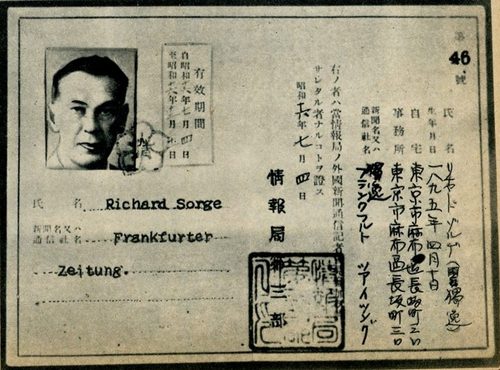 September 1933 – 18 October 1941
The Sorge spy ring
From 1933 to 1941 a Soviet military intelligence network in Tokyo, run by the German journalist Richard Sorge, reported from inside the German embassy and Prince Konoe's circle until Japanese police broke it.
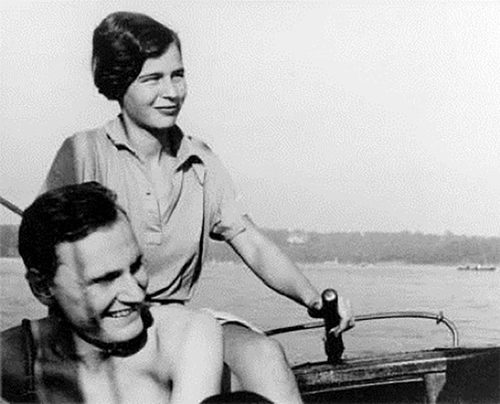 1938 – 3 May 1945
The Red Orchestra (Rote Kapelle)
Rote Kapelle was the German counterintelligence name for Soviet radio networks in Belgium, France and the Netherlands and for a Berlin resistance circle that passed secrets to Moscow. Most were rounded up in 1942.
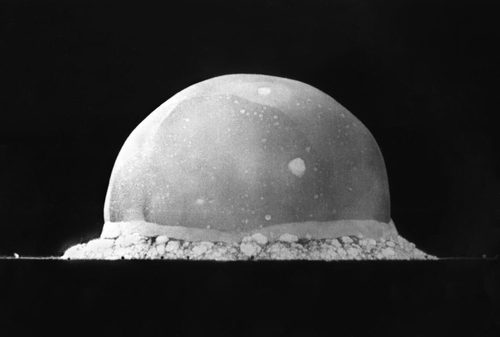 September 1941 – June 1950
Soviet atomic espionage (Enormoz)
How Soviet intelligence penetrated the Manhattan Project under the codename ENORMOZ, who its sources were, how Venona and confessions exposed them, and what the stolen secrets were worth.
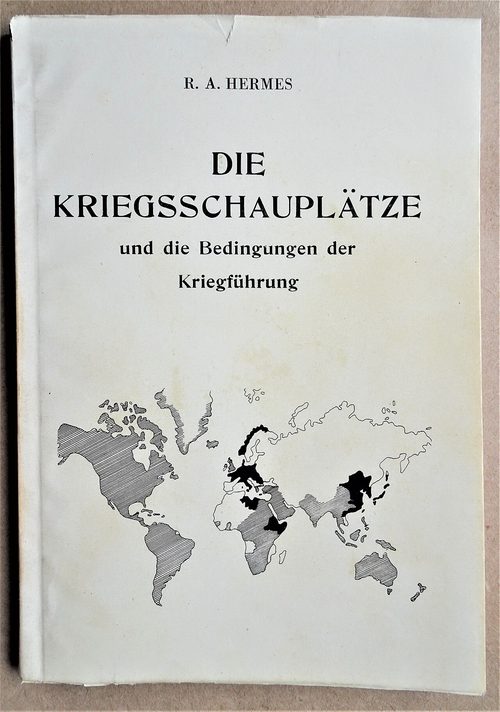 August 1942 – 19 May 1944
The Lucy spy ring
From Lucerne, the German émigré publisher Rudolf Roessler fed German high command secrets to Soviet intelligence in 1942–1943. Who his sources were, and how the material reached him, is still argued over.
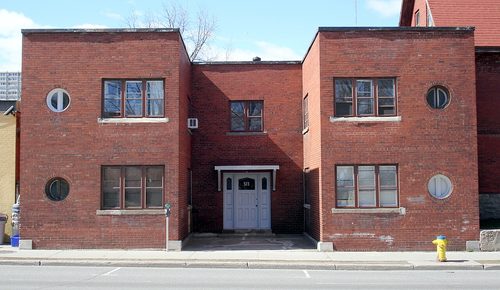 5 September 1945 – 27 June 1946
The Gouzenko affair
In September 1945 a GRU cipher clerk walked out of the Soviet embassy in Ottawa with over a hundred documents, exposing a Soviet spy network in Canada and a British atomic scientist.
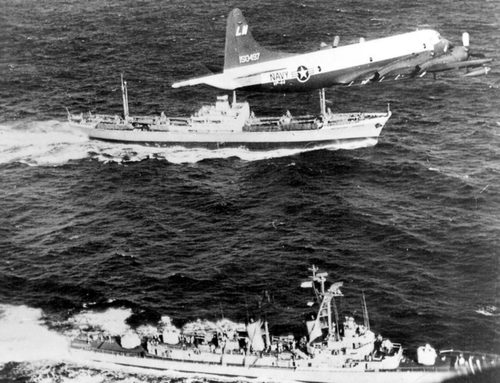 May – November 1962
Operation Anadyr
The Soviet General Staff's 1962 plan to move nuclear missiles and some 42,000 troops to Cuba in secret, and the deception that hid it from US intelligence until a U-2 flight on 14 October.
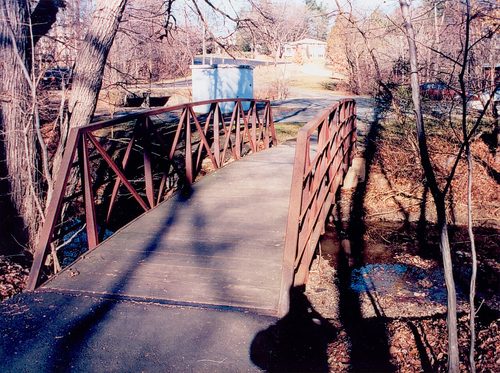 November 1979 – 18 February 2001
The Hanssen case
FBI agent Robert Hanssen spied for Soviet and Russian intelligence in three bursts from 1979 to 2001 without revealing his name. Caught at a Virginia dead drop in 2001, he was the most damaging spy in FBI history.
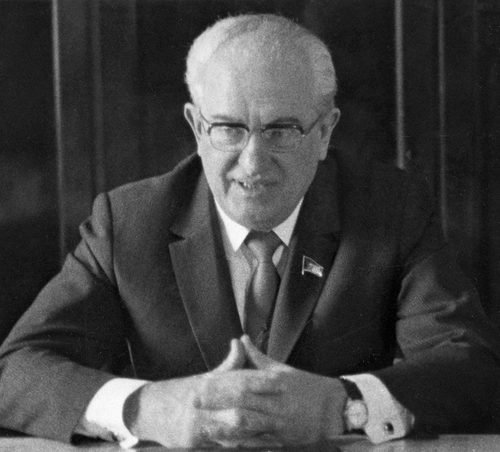 May 1981 – April 1989
Operation RYAN
The KGB–GRU intelligence alert launched in May 1981 to detect a feared American nuclear first strike, its indicator lists, and the long argument over whether Moscow's fear was real.
 2–11 November 1983
Able Archer 83 and the war scare
A routine NATO nuclear-release exercise in November 1983 met an unusual Soviet military alert. What the declassified record shows about the reaction, and why historians still disagree on the danger.
Operations against the GRU
 1 February 1943 – 1 October 1980
The Venona project
The US Army codebreaking program that, from 1943 to 1980, read parts of some 2,900 wartime Soviet intelligence cables and exposed Fuchs, the Rosenbergs and Donald Maclean.
5 September 1945 – 27 June 1946
The Gouzenko affair
In September 1945 a GRU cipher clerk walked out of the Soviet embassy in Ottawa with over a hundred documents, exposing a Soviet spy network in Canada and a British atomic scientist.
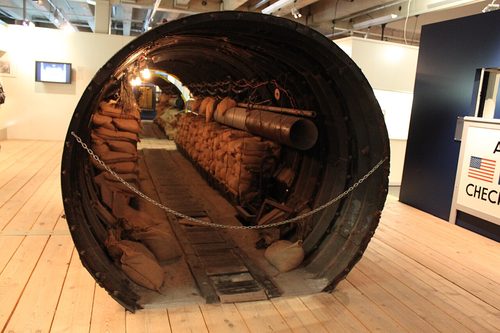 December 1953 – 22 April 1956
Operation Gold (the Berlin Tunnel)
From 1955 to 1956 the CIA and British SIS tapped Soviet military phone and teleprinter cables in East Berlin from a 1,476-foot tunnel, unaware that a KGB mole had betrayed the plan before digging began.
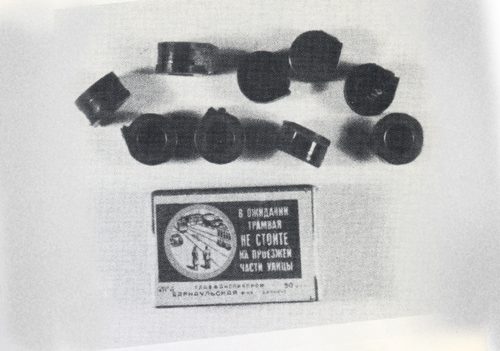 20 April 1961 – 22 October 1962
IRONBARK: the Penkovsky case
How a disaffected GRU colonel, Oleg Penkovsky, fed the CIA and MI6 Soviet missile manuals in 1961–62, and how his IRONBARK material shaped US judgments in the Cuban Missile Crisis.
November 1961 – 15 March 1988
TOPHAT: the Polyakov case
From 1961 to 1980 GRU officer Dmitri Polyakov, later a major general, spied for the FBI and CIA. Betrayed by Robert Hanssen and Aldrich Ames, he was arrested in 1986 and shot in 1988.
People
Sources
- CIA VENONA: Soviet Espionage and the American Response, 1939–1957 — Introduction and chronology, National Security Agency and Central Intelligence Agency (1996).
- CIA Review Essay: The True Story Behind the Movie 'The Courier' (Studies in Intelligence 66, no. 1), Central Intelligence Agency, Center for the Study of Intelligence (2022-03).
- CIA A Cold War Conundrum: The 1983 Soviet War Scare, by Benjamin B. Fischer, Central Intelligence Agency, Center for the Study of Intelligence (1997).
- FRUS Foreign Relations of the United States, 1981–1988, Volume IV, Document 135 (Editorial Note), US Department of State, Office of the Historian (2021).
- Wikipedia Main Intelligence Directorate (Soviet Union), Wikipedia.
- Wikipedia English Wikipedia article (used for cross-checking).
Elsewhere in the files
- Agency Cheka, OGPU and NKVD
- Agency KGB
- Document Hearings on American Aspects of the Richard Sorge Spy Case (HUAC, 1951)
- Document Hoover tells the White House about Gouzenko (September 1945)
- Document Penkovskiy's Legacy: a CIA analyst on the IRONBARK papers (1972)
- Document Richard Sorge's own typescript: the discarded Shanghai draft of his confession (1941)
- Document Soviet Acquisition of Militarily Significant Western Technology: An Update (1985)
- Document The Rote Drei: CIA's study of the 'Lucy' radio traffic (c. 1969)
- Document The Soviet "War Scare" (PFIAB, 1990)
- Operation Able Archer 83 and the war scare
- Operation IRONBARK: the Penkovsky case
- Operation Operation Anadyr
- Operation Operation Gold (the Berlin Tunnel)
- Operation Operation RYAN
- Operation Soviet atomic espionage (Enormoz)
- Operation TOPHAT: the Polyakov case
- Operation The Farewell Dossier
- Operation The Gouzenko affair
- Operation The Hanssen case
- Operation The Lucy spy ring
- Operation The Red Orchestra (Rote Kapelle)
- Operation The Sorge spy ring
- Operation The Venona project
- Person Dmitri Polyakov
- Person Igor Gouzenko
- Person Klaus Fuchs
- Person Oleg Penkovsky
- Person Richard Sorge
- Person Robert Hanssen
- Person Ruth Werner (SONYA)
- Person Whittaker Chambers
- Person Yuri Andropov
- Tradecraft Double agents
- Tradecraft One-time pads