
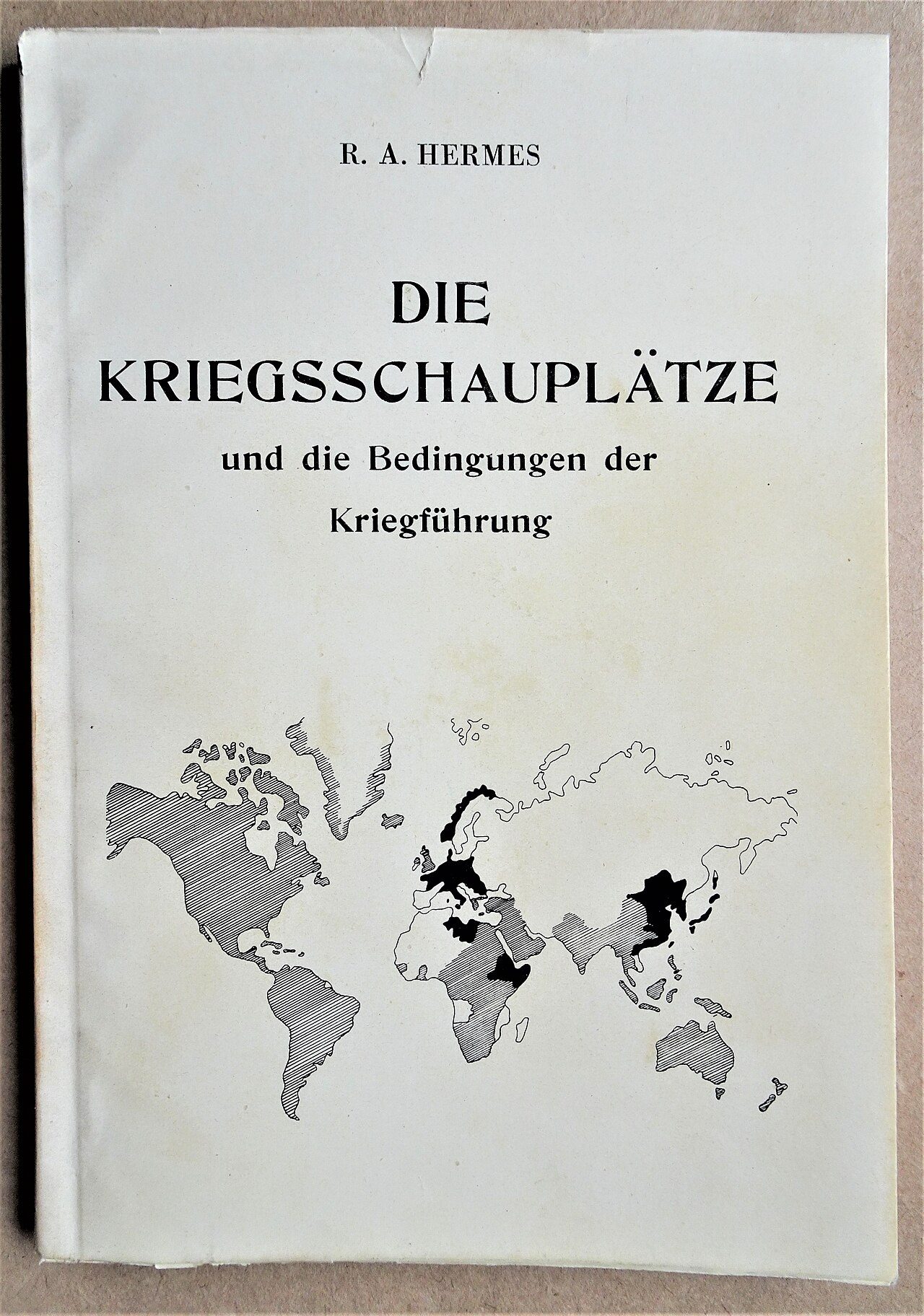
The Lucy story was told first, and most vividly, by people with reasons to embellish it. In its popular form, a quiet German publisher in Lucerne received the German high command's decisions within hours and relayed them to Moscow, turning the war in the East. CIA's analyst Mark Tittenhofer, working from the surviving radio traffic, reached a blunter verdict1:
the widely accepted story that Lucy was a master spy is nothing but a myth.
What remains when the myth is stripped off is still remarkable.
The Swiss network
Lucy was one source among many feeding a Soviet military intelligence network in Switzerland that German counterintelligence called the Rote Drei, the Red Three, after its transmitters; the network was treated as part of the wider Red Orchestra1,6. Its resident director was Alexander Radó, a Hungarian cartographer in Geneva, code-named Dora. Before him, Ursula Kuczynski, the agent known as Sonia and later as Ruth Werner, had run a parallel group and trained the British radio operator Alexander Foote; she left for England in December 19401.
Radó had three principal agents. The most important was Rachel Dübendorfer, code-named Sissy, in Bern. Her cut-out, Christian Schneider ("Taylor"), brought her the typed reports of a German émigré in Lucerne whom Moscow called Lucy1. Lucy was Rudolf Roessler, born in Kaufbeuren in 1897, a theater critic and journalist who left Germany for Lucerne in 1934 and ran a small anti-Nazi publishing house, Vita Nova5. He also supplied the Swiss: from 1939 he reported to Bureau Ha, a semi-official intelligence office run by Major Hans Hausamann that worked alongside Swiss military intelligence1,5.
What the radio traffic shows
The CIA study rests on 437 messages judged authentic, about 8 percent of the estimated total of 5,000. They show that the Swiss network exchanged traffic with Moscow from about August 1941 to May 1944, and that Sissy first took on Taylor and Lucy only in the late summer of 19421. That date rules out the claim, first made by Foote, that Lucy warned Moscow of the June 1941 invasion; the study traces that claim in part to messages it judges spurious1.
Of 332 messages from Radó to Moscow in the CIA collection, 69 cite a source called Werther, 31 Teddy, 26 Olga and 11 Anna. Together these four, all reporting through Lucy, account for about 42.5 percent of the traffic1. Moscow pressed again and again to learn who they were. In April 1943 the Center told Sissy that the Taylor-Lucy group "remains wholly unclarified for us" and asked for a personality sketch of Lucy1. She refused to give him up, and Roessler never met Radó1.
The traffic also shows money changing hands. A message from November 1943 reports Sissy's warning that "Lucy group no longer works when the salary stops," and Moscow answered that the group would be paid according to its demands1.
Who were the sources?
Arrest and afterlife
The Germans had detected the Swiss transmissions and pressed Bern to act4. In October 1943 Swiss police arrested the operators Edmond and Olga Hamel and Margarete Bolli; Foote followed on 20 November1. Roessler, Schneider and Dübendorfer were arrested in May 1944, Roessler on 19 May, and from that date his reports to both Moscow and London stopped1. Lucy's material had therefore ended before the 20 July 1944 bomb plot, which undercuts claims that it flowed until the conspirators were arrested1. He was released on 6 September 1944. A Swiss military court heard the case in October 1945; Dübendorfer and her partner Paul Böttcher, who had fled to France, were sentenced in absentia to two years, while Roessler was by most accounts convicted without further punishment1,5.
Roessler returned to espionage after the war. From 1947, with his friend Xaver Schnieper, he sold reports on Western forces in West Germany to Czechoslovak intelligence, and through it to Moscow. A Swiss court convicted both men in November 19531. Roessler died in 19581,5. Radó, recalled to Moscow in 1945, spent years in Soviet prison before his release after Stalin's death6.
The documents
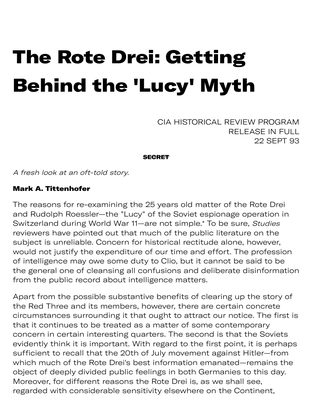
Declassified records of this operation, with the scans and their full text hosted here.

Checking the record
Dates and outcome compared in two independent sources: they differ.
- CIA
- Swiss network in radio contact with Moscow about August 1941 to May 1944; Lucy's material first reached it in the late summer of 1942; Lucy's group last cited as a source in October 1943; Roessler arrested 19 May 1944 and released 6 September 1944. Lucy was a cut-out, not a master spy; his sources were probably anti-Nazi officers using Abwehr channels; identities of the four main sources unproven.
- Wikipedia
- First major contribution May 1941 (Barbarossa warning); ring ended summer 1944 with the 20 July plot arrests. The article also reports the CIA study's contrary dates. Supplied Soviet high command with German plans including Case Blue and Kursk; sources unidentified.
The Wikipedia narrative repeats the older Foote/Accoce-Quet story of a 1941 Barbarossa warning and an end with the July plot, while noting that the CIA study contradicts both. This page follows the CIA study because it rests on the surviving radio traffic rather than memoirs.
Sources
- CIA The Rote Drei: Getting Behind the 'Lucy' Myth, by Mark A. Tittenhofer (Studies in Intelligence; CIA Historical Review Program release, 22 September 1993), Central Intelligence Agency, Center for the Study of Intelligence (1993-09-22).
- CIA The Rote Kapelle: The CIA's History of Soviet Intelligence and Espionage Networks in Western Europe, 1936–1945 (University Publications of America, 1979), full text on the Internet Archive, Central Intelligence Agency (via Internet Archive) (1979).
- National Archives Report on the IRR File on The Red Orchestra (Paul Brown, IWG Historical Researcher), National Archives and Records Administration, Nazi War Crimes Interagency Working Group.
- Wikipedia Lucy spy ring, Wikipedia.
- Wikipedia Rudolf Roessler, Wikipedia.
- Wikipedia Red Three, Wikipedia.
- Wikipedia English Wikipedia article (used for cross-checking).
Elsewhere in the files
Read next
 1938 – 3 May 1945
The Red Orchestra (Rote Kapelle)
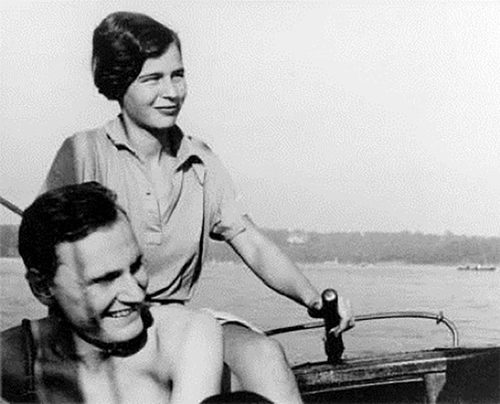
Rote Kapelle was the German counterintelligence name for Soviet radio networks in Belgium, France and the Netherlands and for a Berlin resistance circle that passed secrets to Moscow. Most were rounded up in 1942.
 December 1932 – May 1945
Ultra and the breaking of Enigma
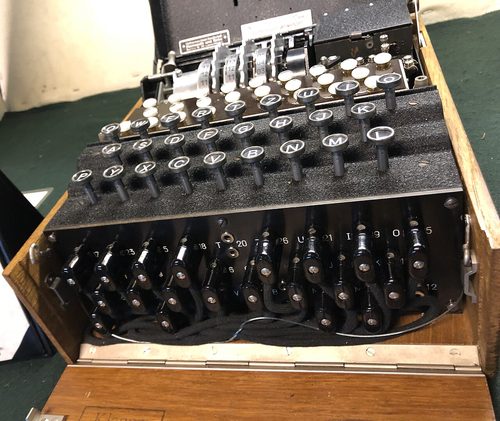
How Polish mathematicians first broke the German Enigma machine, and how Britain's codebreakers at Bletchley Park turned that start into Ultra, the most closely guarded intelligence source of the Second World War.
 Germany · 1920–1944
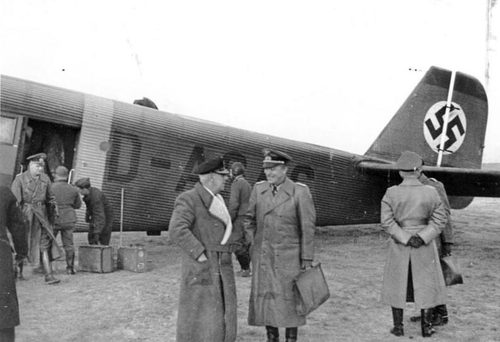
Abwehr
The German armed forces' intelligence service from 1920 to 1944: spies, saboteurs and counterintelligence under Admiral Canaris, outplayed by the FBI and MI5 and finally absorbed by the SS.
 1887–1945
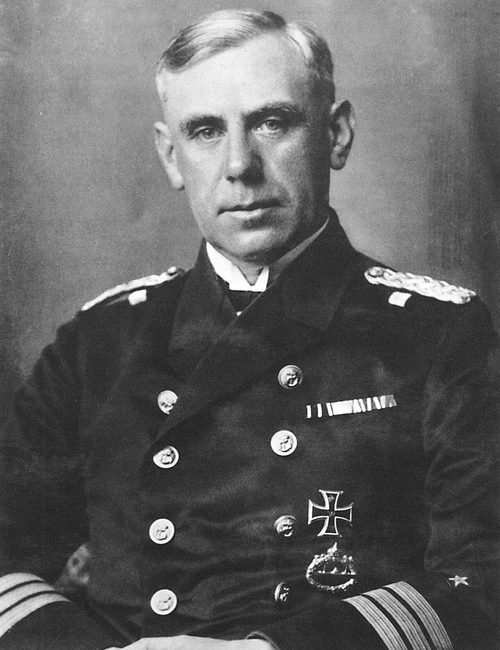
Wilhelm Canaris
Admiral who ran the Abwehr, Germany's military intelligence service, from 1935 to 1944. Early supporter of Hitler, later a protector of the military opposition, hanged at Flossenbürg in April 1945.
 September 1933 – 18 October 1941
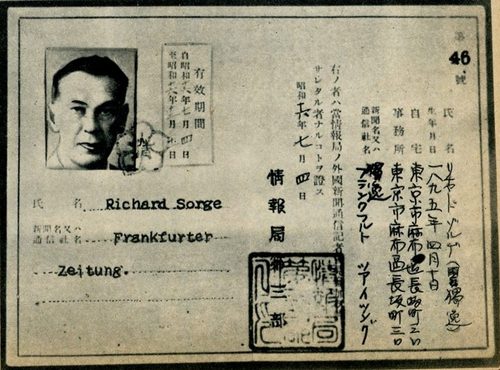
The Sorge spy ring
From 1933 to 1941 a Soviet military intelligence network in Tokyo, run by the German journalist Richard Sorge, reported from inside the German embassy and Prince Konoe's circle until Japanese police broke it.
 1914–1990s
Signals intelligence
Intelligence from intercepted communications and electronic emissions, from Room 40 and the Zimmermann telegram to Ultra, Venona, the Berlin tunnel and NSA's domestic programs exposed by the Church Committee.