
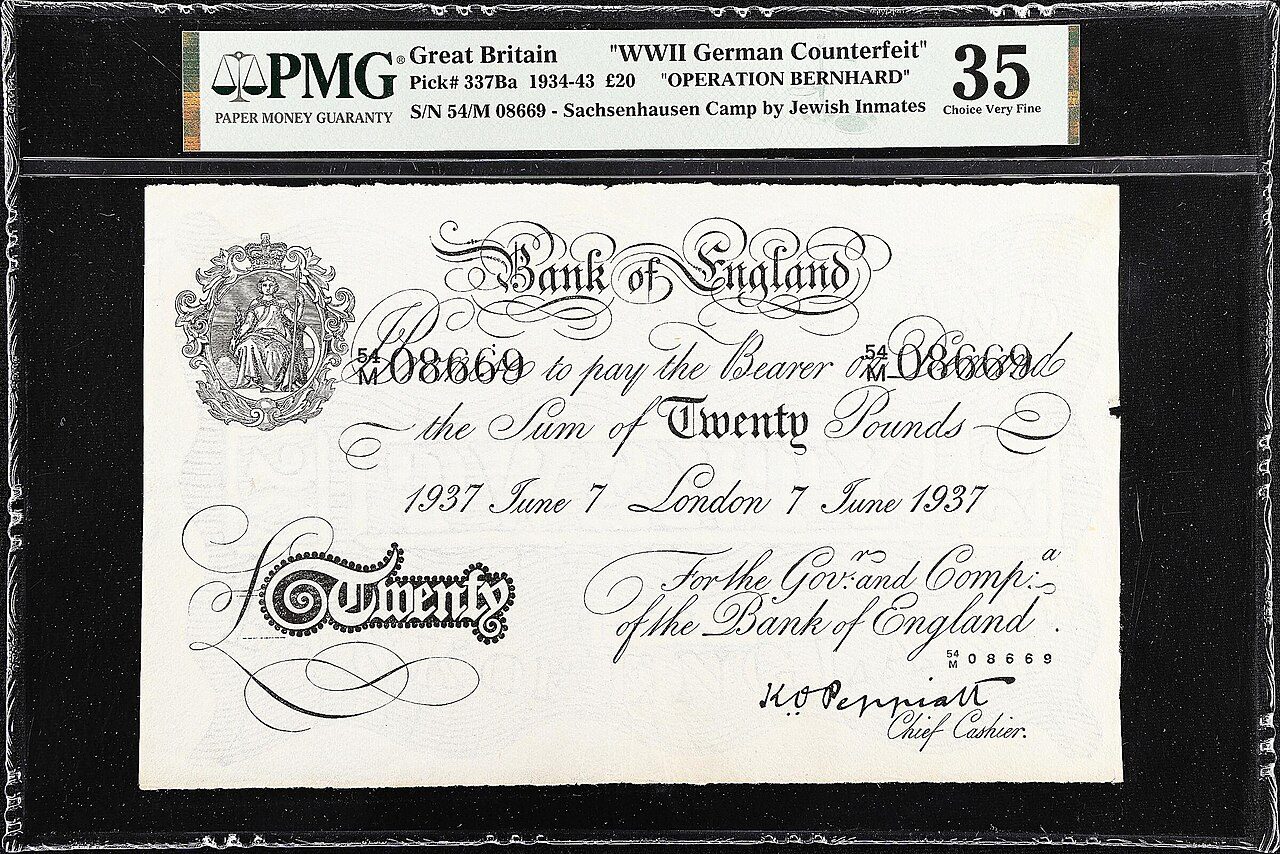
The most successful forgery of the Second World War was printed by concentration camp prisoners behind a double fence in Sachsenhausen, north of Berlin. Its product was the Bank of England's "white fiver" and its larger siblings, and much of it was spent paying German agents abroad.1,2
A target that had not changed since 1855
British banknotes at the start of the war were black printing on one side of white rag paper, with a small vignette of Britannia in the corner, a design little changed since 1855. Security relied on the watermark, on the feel of the paper, on about 150 deliberate tiny flaws that differed by denomination, and on the Bank's ledgers. Every note's serial number was recorded, and numbers were checked again as notes came back to the Bank.1,5
The first attempt, Operation Andreas, began in 1940 inside the technical section of the SS security service. Its aim was economic warfare: forge enough notes to drop over Britain and wreck confidence in sterling. Specialists analyzed the rag paper, worked on the engraving and studied the serial system, and an agent tested early output by taking some notes to Switzerland, where they passed as genuine. The unit fell apart in 1942 after its chief, Alfred Naujocks, lost favor with Heydrich.2,5
Block 19
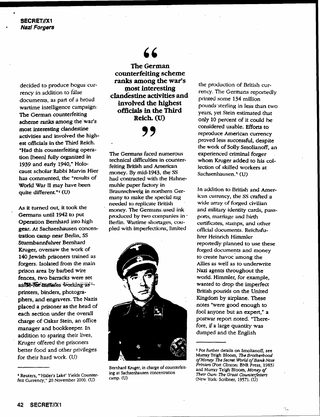
In July 1942 Himmler revived the scheme with a new purpose: to fund SS intelligence operations abroad. SS Major Bernhard Krüger of the SS foreign intelligence office searched the concentration camps for Jewish prisoners with skills in engraving, printing, paper and banking. Sachsenhausen Memorial records 142 men in the forgery unit, held in barracks walled off from the rest of the camp. They had single beds, civilian clothes and better food, and they knew that illness, failure or the end of the project would mean their deaths.1,2
Production started in early 1943. The prisoners worked two shifts, matched the deliberate flaws, and aged the finished notes by passing them from hand to hand, folding them and pinning them as a bank clerk would. Notes were graded by quality: the best for use in neutral countries and by agents, lesser grades for paying collaborators. In 1944 they were ordered to forge US dollars as well; according to survivors' accounts they slowed the work deliberately, and only sample $100 notes were finished by early 1945.1,5
Spending the money
The forgeries were laundered through a network run from northern Italy by Friedrich Schwend, who exchanged them for genuine currency and goods, taking a large cut. The best-known recipient was the valet in Ankara known as Cicero, who sold photographs of the British ambassador's papers and was paid largely in Bernhard notes (see the Cicero affair).5,6
How the Bank caught on
According to the Bank of England Museum, the first counterfeit was detected in 1943 after passing through a British bank in Morocco: a clerk checking the ledgers found that a note with the same number had already been paid. Once the scale became clear, the Bank withdrew all notes larger than £5. It did not reissue a £10 note until 1964, followed by the £20 in 1970 and the £50 in 1981, all in new, harder-to-copy designs.1
Austria, the lake, and liberation
With Allied armies closing in on Germany in early 1945, the unit and its presses were moved to Mauthausen in March, then to the Redl-Zipf tunnels, where production was never restarted. Crates of notes and equipment were sunk in Lake Toplitz. The prisoners were taken to Ebensee concentration camp in early May. An order to kill them all together was frustrated when a truck broke down and the last group arrived late. They were liberated by American troops on 6 May 1945.1,2,5
Forged notes kept turning up for years. Crates of forged notes were recovered from Lake Toplitz in the late 1950s, and a 2000 search with a deep-sea submersible brought up more. Krüger surrendered to the British in 1946 and was never charged, since forging an enemy's currency was not a war crime. One survivor, the Slovak printer Adolf Burger, published a memoir in 1983 that became the basis of the Oscar-winning film The Counterfeiters (2007). Bernhard notes are held today by the Bank of England Museum, the US Holocaust Memorial Museum and the Sachsenhausen Memorial; the International Spy Museum has a £10 printing plate recovered from Lake Toplitz, the only one known to survive.1,2,3,4,5
The documents
Declassified records of this operation, with the scans and their full text hosted here.

Checking the record
Dates and outcome compared in two independent sources: they agree.
- Official history
- Begun as Operation Andreas in 1940; revived as Operation Bernhard in 1942; first forgery detected in 1943; prisoners liberated by US forces on 6 May 1945. Forgeries paid spies and bought supplies; most stock thought to have been thrown into Lake Toplitz; the Bank withdrew notes above £5 and later reissued higher denominations in new designs.
- Wikipedia
- Operation Andreas from early 1940 to early 1942; revived July 1942; production from January 1943; unit moved to Austria in March 1945; Ebensee guards fled on 5 May and US troops arrived the next day. Between £132.6 million and £300 million printed; notes laundered abroad, used to pay Cicero; much dumped in Lakes Toplitz and Grundlsee.
The Bank of England is the institution the forgeries targeted, not a government archive; no declassified US or UK file on the operation could be opened. Its account agrees with Wikipedia on dates and outcome but disagrees on the serial numbers: Wikipedia says the forgers worked out the system, the Bank says they reused genuine numbers. This page reports both.
Sources
- Official history Operation Bernhard, Bank of England Museum (2024-01-26).
- Other A Genuine Forgery, Sachsenhausen Memorial and Museum (Stiftung Brandenburgische Gedenkstätten).
- Other Operation Bernhard counterfeit British 5 pound note (accession 2015.586.9), United States Holocaust Memorial Museum.
- Other Operation Bernhard Printing Plate, International Spy Museum.
- Wikipedia Operation Bernhard, Wikipedia.
- Wikipedia Elyesa Bazna, Wikipedia.
- Wikipedia English Wikipedia article (used for cross-checking).
Elsewhere in the files
Read next
 26 October 1943 – April 1944
The Cicero affair
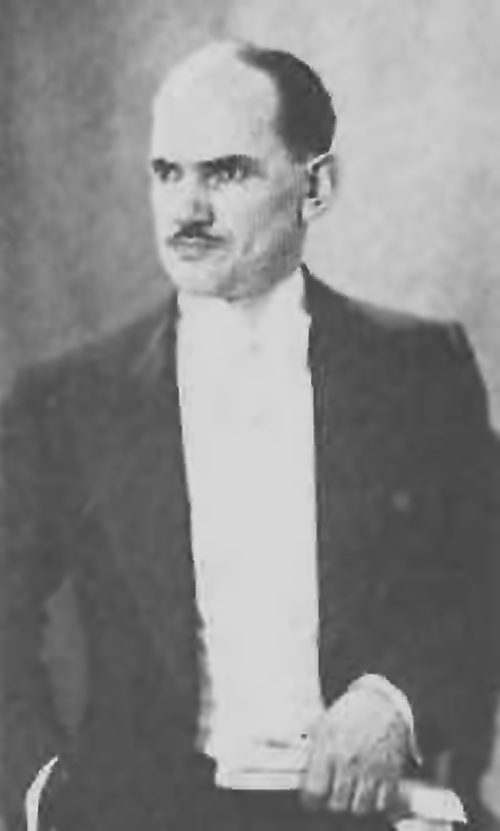
In 1943–44 the British ambassador's valet in Ankara photographed secret papers and sold them to the SD as "Cicero." An OSS source in Berlin exposed the leak; Berlin doubted the goods; much of his pay was forged.
 Germany · 1920–1944
Abwehr
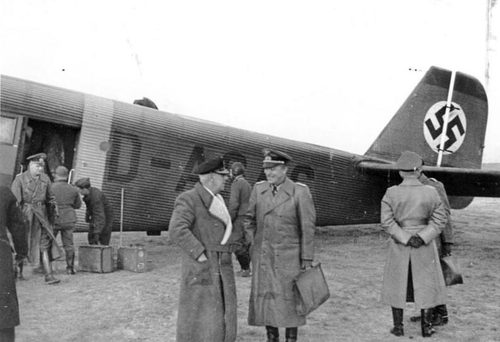
The German armed forces' intelligence service from 1920 to 1944: spies, saboteurs and counterintelligence under Admiral Canaris, outplayed by the FBI and MI5 and finally absorbed by the SS.