
Six months after Germany declared war on the United States, the Abwehr tried to take the war onto American soil. It wanted to hit American industry with trained saboteurs. The attempt was named after Francis Daniel Pastorius, who led the first organized German settlement in North America. It failed completely and quickly, mostly because one of the saboteurs gave it away. Its lasting effect was on American law.1,3
Recruiting and training
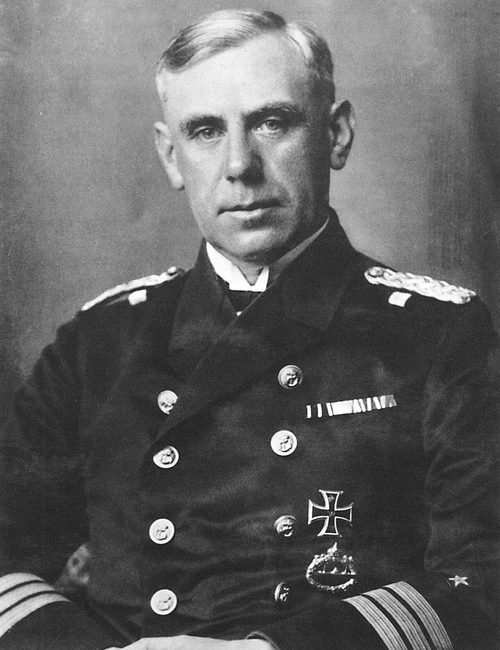
The FBI's history says the order to strike at American production came "allegedly by Hitler himself." Wikipedia, following later histories, says the task went to the Abwehr chief, Wilhelm Canaris.1,3 The officer in charge, according to the FBI's history, was Lieutenant Walter Kappe of Abwehr II, the Abwehr's sabotage branch. Kappe had lived in the United States before the war and had been active in the German American Bund. Early in 1942 he recruited men who had lived in America and come back to Germany.1 All eight men eventually sent were born in Germany and had lived in the United States for long periods. Ernest Burger had become a naturalized American in 1933. Herbert Haupt had come to the United States as a child and claimed citizenship through his father.1,2
At a sabotage school near Berlin, which Wikipedia places on an estate at Quenzsee, the trainees studied explosives, incendiaries, timing devices and secret writing. They also learned how to blend into American life. They were then shown German aluminum and magnesium plants, rail yards, canals and locks so they would recognize the same kinds of targets in America.1,2,3 The target list given in later accounts included Alcoa aluminum plants, hydroelectric plants at Niagara Falls, the Ohio River locks near Louisville and the Pennsylvania Railroad's Horseshoe Curve near Altoona.3
The landings
Two U-boats left the German base at Lorient, France, on 26 and 28 May 1942.1 At about 12:10 a.m. on 13 June, four men led by George John Dasch came ashore near Amagansett on Long Island: Dasch, Burger, Heinrich Heinck and Richard Quirin. On 17 June a second group landed at Ponte Vedra Beach, south of Jacksonville, Florida: Edward Kerling, Werner Thiel, Hermann Neubauer and Herbert Haupt.1
Both groups wore German uniforms or uniform caps as they landed. The point was to be treated as prisoners of war rather than spies if they were caught on the beach. They then buried the uniforms with their explosives and changed into civilian clothes.1,2 Between them they carried $175,200 in American money.1
The Long Island group was seen almost at once. An unarmed Coast Guardsman on beach patrol, identified in later accounts as Seaman John Cullen, came on them in the dunes. Dasch offered him money to forget what he had seen. Cullen took it, then reported the encounter. A patrol found the buried explosives, but the four men had already caught a train to New York.1,3
Dasch's surrender
Dasch soon decided to give up the plan, and he told Burger. On the evening of 14 June, calling himself "Pastorius," he phoned the FBI's New York office. He said he had just arrived from Germany and would contact headquarters from Washington. On 19 June he called FBI headquarters from a Washington hotel and was taken into custody. Over several days of questioning he identified the others and told agents where to look.1
The rest of the Long Island group were arrested in New York on 20 June. Kerling and Thiel were picked up in New York on 23 June, and Neubauer and Haupt in Chicago on 27 June. Not one act of sabotage had been attempted. The FBI recovered $174,588 of the money.1
Military commission and Ex parte Quirin
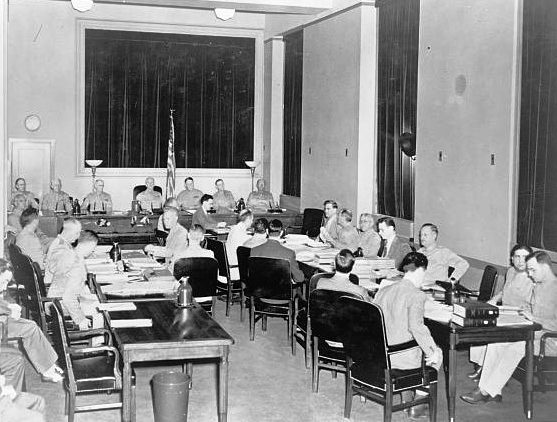
Roosevelt did not send the case to civilian courts. Instead he convened a military commission of seven Army generals, which sat in the Justice Department building in Washington from 8 July 1942. Attorney General Francis Biddle prosecuted alongside the Army's Judge Advocate General, Myron Cramer. Colonel Kenneth Royall led the defense.1
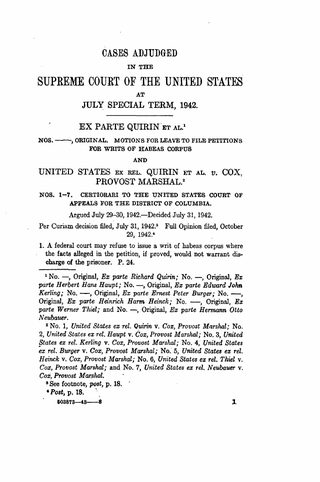
Defense counsel went to the Supreme Court, which heard argument on 29 and 30 July and ruled on 31 July. It found that the commission had jurisdiction. The full opinion followed on 29 October. In it the Court drew the line between lawful and unlawful combatants:
Unlawful combatants are likewise subject to capture and detention, but in addition they are subject to trial and punishment by military tribunals for acts which render their belligerency unlawful.
The opinion said that men who enter the country in wartime "without uniform or other appropriate means of identification" to destroy war industries are unlawful belligerents. Haupt's claim to American citizenship did not change that.2 The case became the main American precedent for trying enemy combatants by military commission.3
All eight were found guilty and sentenced to death. Biddle and J. Edgar Hoover asked Roosevelt to spare Dasch and Burger. Dasch's sentence was commuted to 30 years and Burger's to life. The other six were executed in the electric chair at the District of Columbia jail on 8 August 1942.1,3
Aftermath
In April 1948 Truman granted Dasch and Burger clemency on condition that they be deported to the American zone of Germany.1 According to Wikipedia, sixteen people were later charged with helping the saboteurs, among them Haupt's parents.3
The FBI writes that German intelligence never tried another sabotage landing in the United States. The only other U-boat landing of agents, in Maine in late 1944, was an espionage mission, and both men were caught. During the war the Bureau found no case of enemy-directed sabotage in the United States.1 Pastorius came a year after the FBI's arrest of the Duquesne spy ring, and it was the Abwehr's last attempt to send saboteurs to America.1,3
The documents
Declassified records of this operation, with the scans and their full text hosted here.

Checking the record
Dates and outcome compared in two independent sources: they agree.
- FBI
- Long Island landing about 12:10 a.m., 13 June 1942; Florida landing 17 June; all arrested by 27 June; six executed 8 August 1942. All eight convicted by military commission; six executed, Dasch given 30 years and Burger life; both granted clemency and deported in 1948.
- Wikipedia
- Long Island landing night of 12/13 June 1942; Florida landing 16 June; trial ended 1 August, verdicts 3 August; executions 8 August 1942. Same convictions, sentences, executions and 1948 clemency.
The outcome is the same. Wikipedia dates the Florida landing to 16 June and Dasch's call to 15 June, where the FBI and the Supreme Court say 17 June and 14 June. Wikipedia ends the trial on 1 August with verdicts on 3 August; the FBI says the trial ran to 4 August. This page follows the FBI and the court record.
Sources
- FBI Nazi Saboteurs and George Dasch, Federal Bureau of Investigation, History: Famous Cases.
- Court record Ex parte Quirin, 317 U.S. 1 (1942), Supreme Court of the United States (Legal Information Institute, Cornell Law School) (1942-10-29).
- Wikipedia Operation Pastorius, Wikipedia.
- Wikipedia English Wikipedia article (used for cross-checking).
Elsewhere in the files
Read next
 Germany · 1920–1944
Abwehr
The German armed forces' intelligence service from 1920 to 1944: spies, saboteurs and counterintelligence under Admiral Canaris, outplayed by the FBI and MI5 and finally absorbed by the SS.
 United States · 1908
Federal Bureau of Investigation (FBI)
The US Justice Department's investigative service, founded in 1908: chief hunter of foreign spies at home from the 1930s, and under J. Edgar Hoover the author of secret domestic programs exposed in the 1970s.
 8 February 1940 – 2 January 1942
The Duquesne spy ring
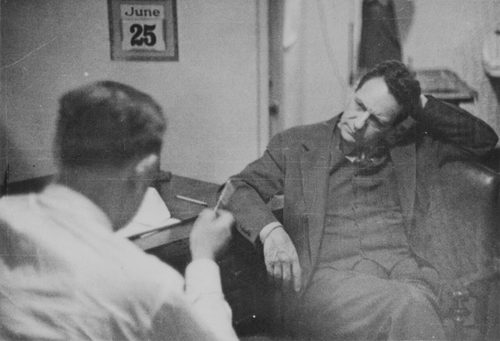
Thirty-three German agents convicted in 1941–42 after the FBI turned an Abwehr recruit, William Sebold, ran his radio link to Hamburg for 16 months and filmed spies in a wired Manhattan office.
 1895–1972
J. Edgar Hoover
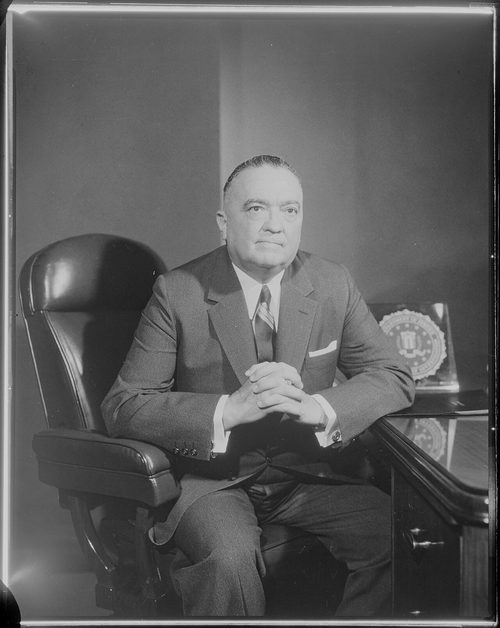
Director of the Bureau of Investigation and then the FBI for 48 years, from 1924 until his death in 1972. He built a modern police agency and a secret domestic intelligence apparatus that the Senate later condemned.
 1887–1945
Wilhelm Canaris
Admiral who ran the Abwehr, Germany's military intelligence service, from 1935 to 1944. Early supporter of Hitler, later a protector of the military opposition, hanged at Flossenbürg in April 1945.
 1770s–1970s
Secret writing
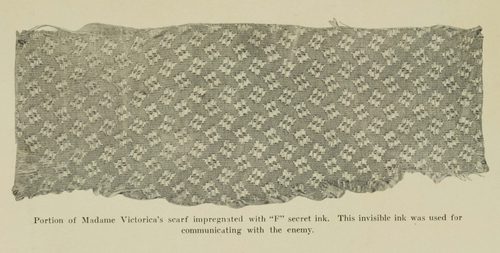
Invisible inks carried spy reports from the American Revolution to the Cold War. The record runs from Washington's 'sympathetic stain' to the CIA's oldest classified papers, finally released in 2011.