
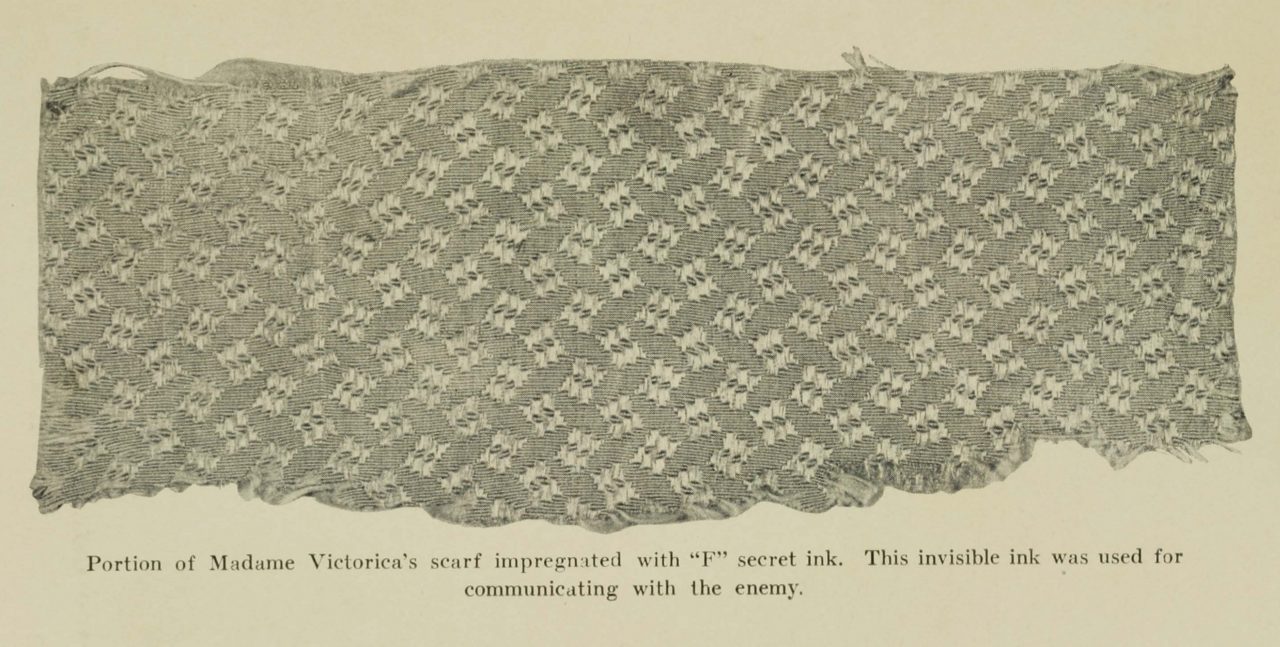

In April 2011 the CIA declassified what it described as the United States government's six oldest classified documents. They dated from 1917 and 1918, they were held at the National Archives, and every one of them was about invisible ink. One outlined how certain secret inks were developed and how sealed letters could be opened without detection; another, a French memorandum of 14 June 1918, gave the formula for a German ink. They had stayed classified, the agency said, for "nearly a century."2
Secret writing is one of the oldest forms of covert communication and one of the most durable. Its aim, like the Microdots's, is concealment: a letter that looks innocent to a censor carries a second message between the lines.
The sympathetic stain
The best-documented early American use came in the Revolutionary War. According to the CIA's history of the period, James Jay, a physician and brother of John Jay, developed a "sympathetic stain" that needed one chemical to write and a second to make the writing appear, which made it safer than inks developed by heat. Jay used it to send military information from London and later supplied it to George Washington and to the American agent Silas Deane in Paris.1
Washington issued the stain to the Culper Ring, his network of agents on Long Island and in New York.1 The CIA history quotes his instructions: the ink would "not only render his communications less exposed to detection, but relieve the fears of such persons as may be entrusted in its conveyance." Rather than hiding a report in a blank book, he advised, it was "a much better way" to write "a letter in the Tory stile with some mixture of family matters and between the lines and on the remaining part of the sheet communicate with the Stain the intended intelligence."1 The ring's leader, Benjamin Tallmadge, added a numerical code after the British captured papers showing that some Americans around New York were using the stain.1
The First World War
Industrial war brought mass postal censorship, and with it laboratories whose job was to find hidden writing. In the United States, the Army's new code and cipher section, MI-8, set up under Herbert Yardley in 1917, included a secret-ink subsection.5
Its best-known case was Maria de Victorica, a German agent who arrived in New York in January 1917 and was arrested in April 1918. A silk scarf impregnated with German secret ink and a letter written in it survive among the case papers.5
The documents the CIA released in 2011 come from the same period and reflect the same concerns: the preparation of inks, the development of the enemy's, and the undetected opening of mail.2
The Second World War
Secret writing was the main channel between German intelligence and its agents abroad, and so it became the main channel of the British Double Cross system, which ran those agents under MI5 control.6 The Abwehr gave Juan Pujol García a crash course that included secret writing, a bottle of invisible ink, a codebook and £600 when it sent him off, it believed, to Britain.7 Letters written in German inks but composed by his British handlers became one of the routes for the deception before D-Day; Dusko Popov and other double agents reported the same way.6
The eight saboteurs of Operation Pastorius, landed in the United States by U-boat in June 1942, had been trained at a sabotage school near Berlin in, as the FBI lists it, "chemistry, incendiaries, explosives, timing devices, secret writing, and concealment of identity."8
The Cold War
Secret writing remained a standard part of an agent's training. Before the Soviet diplomat Aleksandr Ogorodnik (TRIGON) returned to Moscow in 1974, CIA officers trained him in "secret writing, the use of one-time pads, and dead drop techniques."4 (See One-time pads and Dead drops.)
The method could also matter in a crisis. In September 1962 a Cuban "observer agent," recruited under Operation Mongoose, reported in secret writing that "very secret and important work," believed to involve missiles, was under way in the hills near San Cristóbal, west of Havana. A CIA history of the period shows how that report, matched with refugee sightings of large missiles heading west, helped CIA officers mark out the area that a U-2 finally photographed on 14 October 1962, after weather delays (see Intelligence in the Cuban Missile Crisis).3
Detection
Every invisible ink invited a developer, and the contest was as much about suspicion as chemistry: an agent once identified could have every letter read. The CIA's decision to keep its 1917–18 ink papers classified until 2011, on the ground that only "recent advancements in technology" made release possible, shows how long even First World War techniques were treated as sensitive.2
Sources
- CIA Intelligence in the War of Independence, Central Intelligence Agency, Office of Public Affairs.
- CIA CIA Declassifies Oldest Documents in U.S. Government Collection (news release, 19 April 2011), Central Intelligence Agency (text hosted by the Federation of American Scientists) (2011-04-19).
- CIA The "Photo Gap" that Delayed Discovery of Missiles (Max Holland), Studies in Intelligence 49, no. 4, Central Intelligence Agency, Center for the Study of Intelligence (archived by the Internet Archive) (2005).
- CIA TRIGON: Spies Passing in the Night, Central Intelligence Agency, Stories (2016-06-20).
- Wikipedia Maria de Victorica, Wikipedia.
- Wikipedia Double-Cross System, Wikipedia.
- Wikipedia Juan Pujol García, Wikipedia.
- FBI Nazi Saboteurs and George Dasch, Federal Bureau of Investigation, History (archived by the Internet Archive).
- Wikipedia English Wikipedia article (used for cross-checking).
Elsewhere in the files
Read next
 1870–1960s
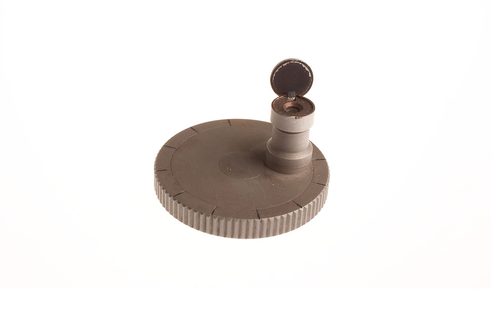
Microdots
A page of text photographed down to the size of a printed full stop. The Abwehr's wartime microdots, Popov's Pearl Harbor questionnaire and the Soviet illegals' kits in New York and London show how far the trick went.
 1940s–1980s
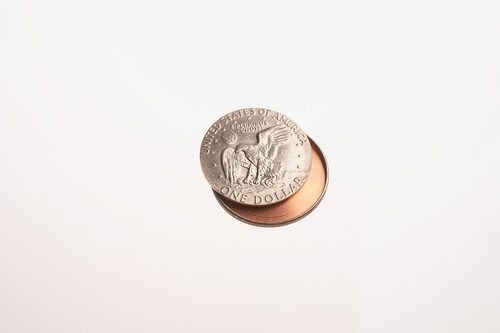
Concealment devices
Hollow coins, bolts, batteries and books: the everyday objects spies used to carry film and messages. Many now sit in FBI and CIA collections, and nearly all were found the same way, through an informant or an arrest.
 September 1939 – May 1945
The Double-Cross System
How MI5 caught or recruited Germany's wartime spies in Britain and ran them as double agents, steered by the Twenty Committee, until their reports could carry the D-Day deception.
 13 June – 8 August 1942
Operation Pastorius
In June 1942 U-boats landed eight Abwehr saboteurs on Long Island and in Florida. One turned himself in, all were caught within two weeks, and the Supreme Court upheld their trial by military commission.
 10 August – 20 November 1962
Intelligence in the Cuban Missile Crisis
How US intelligence missed, then found, Soviet missiles in Cuba in 1962: a wrong estimate, a five-week gap in U-2 coverage, the 14 October flight over San Cristóbal, and what the photographs never showed.