
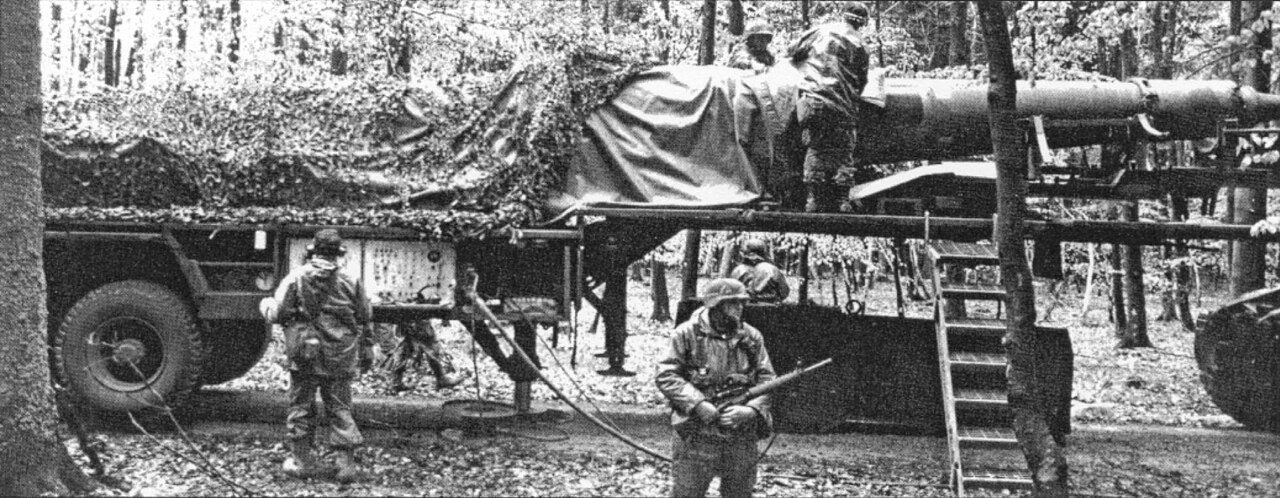

Able Archer was NATO's annual command post exercise for practicing the procedures that would take the alliance from conventional war to the release of nuclear weapons. No troops maneuvered and no weapons moved; headquarters passed messages. The 1983 edition, coordinated from Supreme Headquarters Allied Powers Europe in Belgium, would have attracted no attention had the Soviet military not reacted to it as it did.1,7
A routine exercise, played differently
A British assessment of March 1984, quoted in the State Department's documentary history, explains what was new. NATO's procedures and message formats for the transition to nuclear war had been substantially changed in 1983. Earlier scenarios began with forces already at General Alert; this time pre-exercise messages notionally moved them up through the alert stages from 2 November. The exercise "remained entirely a Command Post Exercise, as in previous years."1
The scenario began, on paper, with the opposing "Orange" forces attacking across Allied Command Europe and using chemical weapons before the first day of play on 7 November.7 The timing was poor. Relations with Moscow were at a low after the Soviet destruction of the airliner KAL 007, the first Pershing II missiles were due in West Germany within weeks, and the US invasion of Grenada had just added to the tension.1 Soviet intelligence had spent two years under orders, through Operation RYAN, to look for exactly the signs a nuclear-release exercise produces: unusual communications, alert changes and consultations among allies.5
The Soviet reaction
The fullest account is the one the President's Foreign Intelligence Advisory Board pieced together in 1990, much of it printed in Foreign Relations of the United States.1 On 8 or 9 November Moscow sent a circular telegram ordering KGB residencies in Western Europe to report on an increased alert at US bases in Europe, and GRU residencies received similar instructions. Soviet, East German, Czechoslovak and Polish signals units were tasked against the exercise from 1 November, and the Soviets flew more than 36 intelligence flights, many more than in earlier years.1
Several days before the exercise began, elements of at least two forward-based Soviet air armies were placed on alert. The declassified portions list nuclear weapons moved from storage to delivery units by helicopter, a stand-down of flight operations from 4 to 10 November that kept aircraft available, and a 30-minute, around-the-clock readiness posture with priority targets assigned. Large parts of the passage remain blacked out. By 11 November the alert had been withdrawn.1
What Washington saw
Almost nothing of this registered at the time. The National Intelligence Daily of 10 November reported that Soviet air units in East Germany, including strike forces, had gone on alert "unusual in breadth," but judged that the Soviets were probably using the NATO exercise to train, "and not because of an anticipated military move by the West."2 In March 1984 the vice chairman of the National Intelligence Council warned the Director of Central Intelligence that if the Soviets had in fact been frightened, an upcoming US nuclear command exercise could "really frighten them."3 A Special National Intelligence Estimate that May concluded the Soviets did not perceive a genuine danger of conflict.5
President Reagan's diary for 18 November 1983, quoted in the FRUS editorial note, records: "I feel the Soviets are so defense minded, so paranoid about being attacked that without being in any way soft on them we ought to tell them no one here has any intention of doing anything like that." The editors found no documentation explaining what prompted the remark.1 Reports from the KGB officer Oleg Gordievsky, a British agent, later reached Washington through London and shaped how the episode was understood.5
The PFIAB's verdict
The board's report of 15 February 1990 held that the US intelligence community had not given enough weight to the possibility that the war scare was real. It credited the American officers in charge of the exercise with minimizing the risk by doing nothing in the face of the Soviet alert, but added that they "acted correctly out of instinct, not informed guidance."4 It concluded: "In 1983 we may have inadvertently placed our relations with the Soviet Union on a hair trigger."4 The report itself is described at The Soviet "War Scare" (PFIAB, 1990).
One of those officers was Lieutenant General Leonard Perroots, in 1983 assistant chief of staff for intelligence at US Air Forces Europe. He had recommended not raising US readiness in response to the Soviet alert, which the board called "a fortuitous, if ill-informed, decision."4 His end-of-tour memorandum of January 1989, written as he retired as director of the Defense Intelligence Agency, described a "potentially disastrous situation" and US signals intelligence on a Soviet 4th Air Army alert that included preparations for immediate use of nuclear weapons. FRUS printed it in an appendix in 2021; the National Security Archive reports that the State Department later removed the appendix from the volume.6
The documents
Declassified records of this operation, with the scans and their full text hosted here.
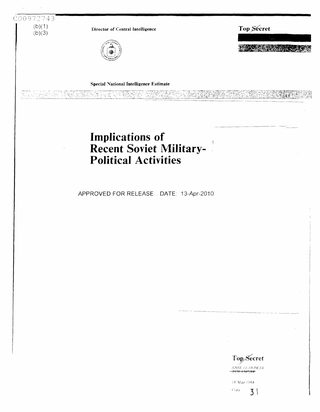 18 May 1984 · 12 p.SNIE 11-10-84: the intelligence community reads the war scare (May 1984)Director of Central Intelligence (National Intelligence Council); the National Foreign Intelligence Board concurringThe Special National Intelligence Estimate of 18 May 1984 that judged Soviet war talk after Able Archer 83 to be posturing, not fear of attack. Six years later the President's advisory board faulted its certainty.
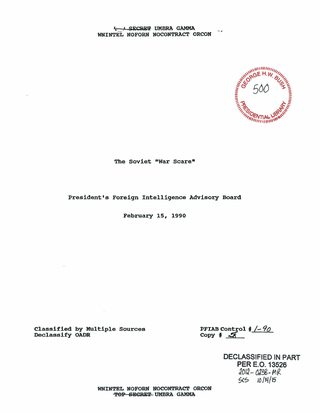 15 February 1990 · 25 p.The Soviet "War Scare" (PFIAB, 1990)President's Foreign Intelligence Advisory BoardA 1990 review by the President's Foreign Intelligence Advisory Board concluding that Soviet fear of a US first strike in 1983 was genuine, and that American intelligence had underrated it. Declassified in 2015.
Checking the record
Dates and outcome compared in two independent sources: they agree.
- FRUS
- Exercise play 7–11 November 1983 (PFIAB); the British assessment dates it 2–11 November including pre-exercise communications; Soviet air alert from 2 November, withdrawn by 11 November. Exercise ended normally; Soviet forces returned to normal status on 11 November.
- Wikipedia
- 7–11 November 1983. Exercise ended on 11 November without incident; Soviet nuclear forces stood down.
Both agree on 7–11 November for exercise play and on a peaceful end. The FRUS editorial note adds that pre-exercise communications began on 2 November, which is why some sources give 2–11 November; this page lists that wider span.
Sources
- FRUS Foreign Relations of the United States, 1981–1988, Volume IV, Soviet Union, January 1983–March 1985, Document 135 (Editorial Note), US Department of State, Office of the Historian (2021).
- FRUS Foreign Relations of the United States, 1981–1988, Volume IV, Document 134: Article in the National Intelligence Daily, 10 November 1983, US Department of State, Office of the Historian (1983-11-10).
- FRUS Foreign Relations of the United States, 1981–1988, Volume IV, Document 204: Memorandum From the Vice Chairman of the National Intelligence Council (Meyer), 29 March 1984, US Department of State, Office of the Historian (1984-03-29).
- National Security Archive The Soviet 'War Scare' (President's Foreign Intelligence Advisory Board report, 15 February 1990), National Security Archive (declassified US government document) (1990-02-15).
- CIA A Cold War Conundrum: The 1983 Soviet War Scare, by Benjamin B. Fischer, Central Intelligence Agency, Center for the Study of Intelligence (1997).
- National Security Archive The Censored History of Able Archer 83, National Security Archive (2025-11-14).
- Wikipedia Able Archer 83, Wikipedia.
- Wikipedia English Wikipedia article (used for cross-checking).
Elsewhere in the files
Read next
 May 1981 – April 1989
Operation RYAN
The KGB–GRU intelligence alert launched in May 1981 to detect a feared American nuclear first strike, its indicator lists, and the long argument over whether Moscow's fear was real.
15 February 1990
The Soviet "War Scare" (PFIAB, 1990)
A 1990 review by the President's Foreign Intelligence Advisory Board concluding that Soviet fear of a US first strike in 1983 was genuine, and that American intelligence had underrated it. Declassified in 2015.
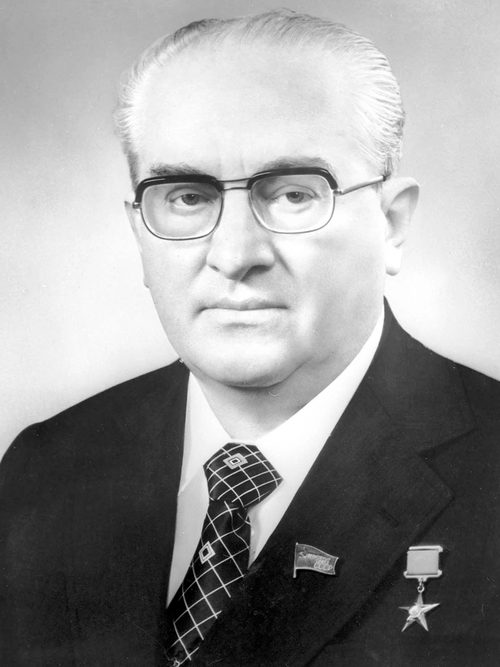 1914–1984
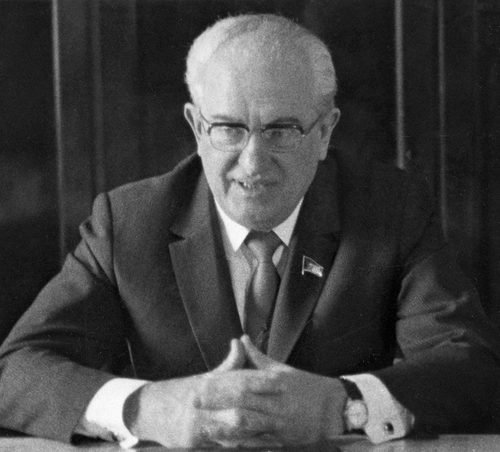
Yuri Andropov
Soviet ambassador in Budapest in 1956, KGB chairman for fifteen years and Soviet leader for fifteen months; the man who launched the RYAN war-scare alert and died in February 1984.
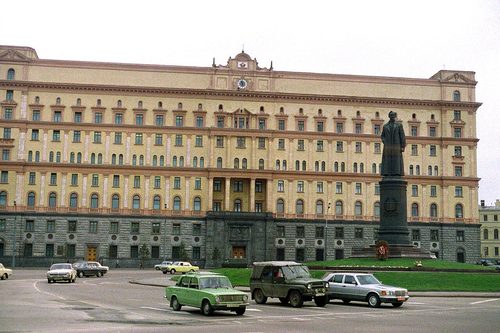 Soviet Union · 1954–1991
KGB
The Soviet Committee for State Security, 1954–1991: foreign intelligence, counter-intelligence, border troops and political police under one roof, from Khrushchev's reforms to the failed coup of August 1991.
 1914–1990s
Signals intelligence
Intelligence from intercepted communications and electronic emissions, from Room 40 and the Zimmermann telegram to Ultra, Venona, the Berlin tunnel and NSA's domestic programs exposed by the Church Committee.