
On 17 July 1983 the Indian daily Patriot printed an anonymous letter headlined "AIDS may invade India: Mystery disease caused by US experiments." Its author, described as a "well-known American scientist and anthropologist" in New York, claimed that AIDS was "believed to be the result of the Pentagon's experiments to develop new and dangerous biological weapons" and that the experiments were moving to Pakistan.2,1 Almost nobody noticed. Two years later the same letter became the seed of one of the most successful Soviet disinformation campaigns of the Cold War.
Building on an old charge
The letter did not come from nowhere. As a State Department study pointed out in 1987, it rehearsed long-standing Soviet accusations of American germ warfare that had no connection to AIDS, and it built on 1982 Soviet press claims that a University of Maryland–sponsored research laboratory in Lahore, Pakistan, was a bacteriological-warfare facility.1,2 Thomas Boghardt, writing in the CIA's journal Studies in Intelligence, concluded there could be "little doubt about the KGB's authorship" of the letter, though it was never signed; the State Department noted that the letter's existence as a genuine submission had not been confirmed.2,1
The campaign opens
The story was revived on 30 October 1985 in Literaturnaya Gazeta, which Boghardt calls the KGB's "prime conduit in the Soviet press for propaganda and disinformation." Valentin Zapevalov's article, "Panic in the West or What Is Hiding behind the Sensation Surrounding AIDS," repeated the Patriot charges, added a catalog of real US germ-warfare and drug-testing programs from the 1950s and 1960s, and pointed at Fort Detrick, Maryland.2 It cited the Patriot without mentioning that its source was an anonymous letter two years old. When a US diplomat in New Delhi asked the Patriot's editor about it, he could not recall publishing anything of the kind; the date was then supplied, the report notes, by the Soviet embassy in Bangladesh.1
Bulgarian security archives show what lay behind the revival. A KGB telegram to Bulgarian State Security dated 7 September 1985 asked for help spreading the thesis that AIDS was the product of Pentagon biological-weapons experiments.3
The East German contribution
The Stasi's foreign intelligence arm, the HVA, joined as the KGB's main partner.2 In August–September 1986 a pamphlet, AIDS: Its Nature and Origin, by the retired East Berlin biophysicist Jakob Segal and his wife Lilli, circulated at the Non-Aligned Movement summit in Harare. It argued that the virus had been synthesized at Fort Detrick in 1977 from two other retroviruses.3,1 The State Department report collected scientific rebuttals, including from the Soviet Union's own leading AIDS expert, Viktor Zhdanov, and noted that Soviet health officials were telling their own public that the disease had natural origins.1 The extent to which the Stasi shaped Segal's work is unclear; it kept him in a security file under the codename "Diagnosis."3
The 1987 State Department report summarized the Soviet aims:1
Discredit the United States and generate anti-American sentiment abroad
It listed three more: reinforcing old germ-warfare charges, undermining US bases abroad by linking AIDS to American servicemen, and discouraging Soviet citizens' contacts with Americans. The report counted at least 32 appearances in Soviet media between January and June 1987.1
Disowned, but not dropped
US officials protested repeatedly. In a meeting with Mikhail Gorbachev on 23 October 1987, Secretary of State George Shultz complained of Soviet "bum dope" on AIDS. Shortly afterward the Soviet Academy of Sciences disavowed the artificial-origin thesis in Izvestia.2 Soviet coverage declined in late 1987 and largely stopped by mid-1988, but the story kept reappearing in Third World papers with Soviet links, and as late as 1989 it surfaced in more than a dozen countries. In 1992 Yevgeny Primakov, then director of the Russian foreign intelligence service, confirmed the KGB's role.2
Checking the record
Dates and outcome compared in two independent sources: they agree.
- Other
- Patriot letter mid-1983; Literaturnaya Gazeta article 30 October 1985; at least 32 Soviet media replays January–June 1987. A sustained Soviet campaign, rejected by Western and Soviet scientists; ongoing as of the report's date (August 1987).
- Wikipedia
- Patriot letter July 1983; KGB telegram to Bulgaria 7 September 1985; Literaturnaya Gazeta October 1985; officially disowned August 1987; occasional replays to 1988; Primakov admission 1992. Story spread to more than 80 countries; Soviet coverage halted after 1987; KGB role later acknowledged.
Dates and course agree. The State Department report was written while the campaign was still running; the later chronology (disavowal in late 1987, fade-out in 1988) comes from Boghardt, whose account Wikipedia follows. Wikipedia now titles its article 'Operation Denver' after the archival finding on the codename.
Sources
- Other Soviet Influence Activities: A Report on Active Measures and Propaganda, 1986–87, US Department of State (digitized by Internet Archive) (1987-08).
- CIA Operation INFEKTION: Soviet Bloc Intelligence and Its AIDS Disinformation Campaign, by Thomas Boghardt (Studies in Intelligence 53, no. 4), Central Intelligence Agency, Center for the Study of Intelligence (2009-12).
- Other Operation 'Denver': KGB and Stasi Disinformation regarding AIDS, by Douglas Selvage and Christopher Nehring, Wilson Center (2019-07-22).
- Wikipedia Operation INFEKTION (Operation Denver), Wikipedia.
- Wikipedia English Wikipedia article (used for cross-checking).
Elsewhere in the files
Read next
 5 May 1964 – March 1965
Operation Neptune (1964)
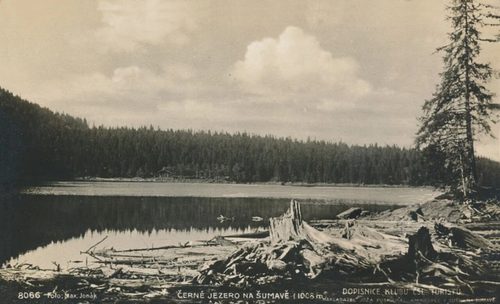
In 1964 Czechoslovak intelligence sank chests of blank paper in a Bohemian lake, staged their discovery for television, then filled the story with Nazi files from Moscow to press West Germany over war crimes.
1922–2004
Vasili Mitrokhin
KGB archivist who spent twelve years secretly copying foreign-intelligence files by hand, defected to Britain in 1992, and left the Mitrokhin Archive: hugely valuable to investigators, still debated by historians.
 Soviet Union · 1954–1991
KGB
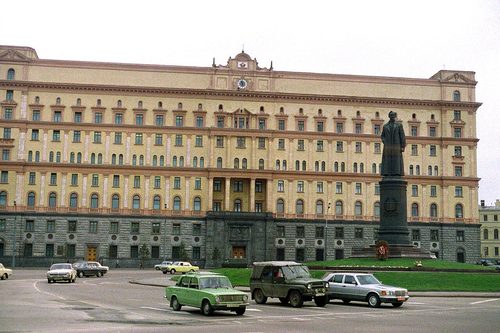
The Soviet Committee for State Security, 1954–1991: foreign intelligence, counter-intelligence, border troops and political police under one roof, from Khrushchev's reforms to the failed coup of August 1991.
 East Germany · 1950–1990
Stasi (Ministry for State Security)
East Germany's secret police and foreign intelligence service, 1950 to 1990: by the end 91,000 staff and 189,000 informers, answerable only to the ruling party, with a spy placed beside Willy Brandt.
 1923–2006
Markus Wolf
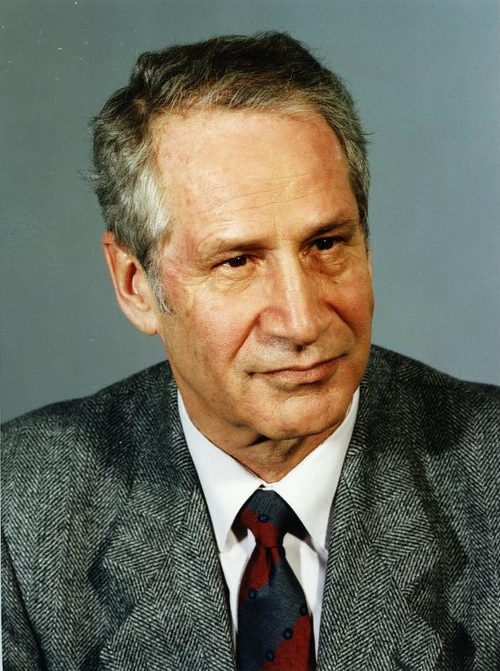
Head of East Germany's foreign intelligence service, the HV A, for more than three decades. The West had no usable photograph of him until 1978. After unification he was convicted of treason, a verdict later quashed.