
In September 1999 reporters reached an 87-year-old widow at her semi-detached house in Bexleyheath, south-east London, and she agreed that she had passed secrets to the Soviet Union for decades. Melita Norwood had been named in a book drawn from the notes of the former KGB archivist Vasili Mitrokhin. Within weeks the Home Secretary was explaining to Parliament why she had never been charged.1,4
A quiet career
She was born Melita Sirnis in Bournemouth on 25 March 1912, to an English mother and a Latvian father who had translated Tolstoy and Lenin and died when she was six.4 From 1932 she worked as a secretary at the British Non-Ferrous Metals Research Association in London, where she stayed for some forty years. She married a schoolteacher, Hilary Nussbaum, who later took the name Norwood, and joined the Communist Party.4
According to the Mitrokhin archive, she was recommended to Soviet intelligence in 1935 and became a full agent in 1937. Her early contacts were connected with the Woolwich Arsenal ring broken up in 1938, but she was not detained then.4
The atomic material
The Association did work for Britain's wartime atomic bomb project, known as Tube Alloys. As secretary to a department head who sat on a Tube Alloys advisory committee, Norwood was in a position to see and copy papers, which she passed to her Soviet handlers. Her last codename was HOLA.4 She was awarded the Soviet Order of the Red Banner of Labour in 1958 and retired in 1972.4 See Soviet atomic espionage (Enormoz).
What MI5 knew
The fullest official account is the statement the Home Secretary, Jack Straw, gave the Commons on 21 October 1999. He said Norwood was first vetted for access to government secrets in 1945; there were concerns, but not enough to withhold clearance. Further inquiries led to her clearance being revoked in 1951, and she had had no authorized access after 1949. An extensive Security Service investigation in the 1960s concluded that she had been a spy in the 1940s, but "that there was no usable evidence that could be used in court to support a prosecution against her."1
Mitrokhin's notes, brought to Britain by SIS in 1992, "further confirmed the suspicions." But Straw told the House the notes had no direct evidential value, and in 1992–93 the Security Service decided not to proceed, partly so as not to compromise leads to more recent espionage in allied countries. That decision, he said, was made within the Security Service and never went to the Law Officers.1 The Attorney-General, given the papers in 1999, concluded that 1992 had been the last opportunity for a criminal investigation.1
Straw also explained why she had been named at all. The government had agreed that people identified in the archive should not be publicly accused unless they agreed or had been convicted; his understanding was that the publishers did not name Norwood until she had made what amounted to a confession to the BBC and other reporters.1
Aftermath
Her statements prompted the prosecuting authorities to look at the case again, and the Intelligence and Security Committee was asked to inquire into how the agencies had handled Mitrokhin's material.1 Its report was published on 1 June 2000.2,3 Norwood was never charged.4
She told reporters she had acted not for money but to help a system that she believed had given ordinary people food, education and health care, and had refused Soviet offers of payment.4 She died on 2 June 2005, aged 93.4
Key dates
- 1932 Begins work as a secretary at the British Non-Ferrous Metals Research Association.
- 1937 Becomes a full Soviet agent, according to the Mitrokhin archive.
- 1945 First vetted for access to government secrets despite concerns.
- 1951 Security clearance revoked.
- 1992 Mitrokhin's notes reach British intelligence and confirm suspicions about her.
- September 1999 Publicly exposed; admits to the press that she helped the Soviet Union.
- 21 October 1999 Home Secretary Jack Straw sets out the history of her case to the Commons.
Sources
- Other Mitrokhin Archive, HC Deb 21 October 1999 vol 336 cc587–99, UK Parliament, Hansard (1999-10-21).
- Other Mitrokhin Inquiry Report (Intelligence and Security Committee), UK Parliament (2000-06-01).
- Other Mitrokhin Inquiry Report (publication record), UK Parliament, Committees (2000-06-01).
- Wikipedia Melita Norwood, Wikipedia.
- Wikipedia Lona Cohen, Wikipedia.
- Wikipedia English Wikipedia article (used for cross-checking).
Elsewhere in the files
Read next
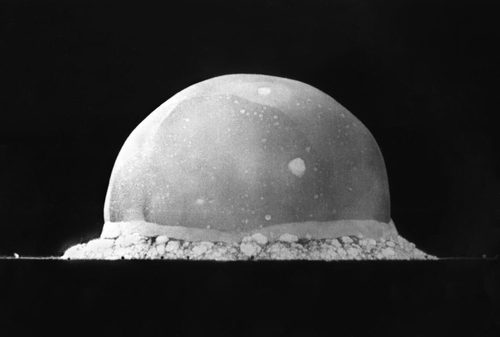 September 1941 – June 1950
Soviet atomic espionage (Enormoz)
How Soviet intelligence penetrated the Manhattan Project under the codename ENORMOZ, who its sources were, how Venona and confessions exposed them, and what the stolen secrets were worth.
1922–2004
Vasili Mitrokhin
KGB archivist who spent twelve years secretly copying foreign-intelligence files by hand, defected to Britain in 1992, and left the Mitrokhin Archive: hugely valuable to investigators, still debated by historians.
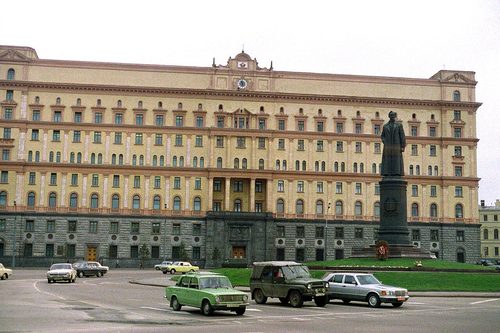 Soviet Union · 1954–1991
KGB
The Soviet Committee for State Security, 1954–1991: foreign intelligence, counter-intelligence, border troops and political police under one roof, from Khrushchev's reforms to the failed coup of August 1991.
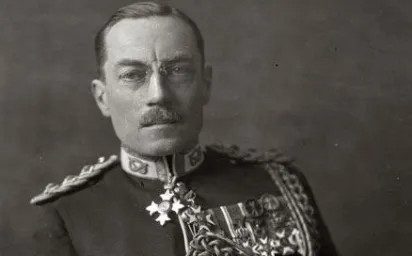 United Kingdom · 1909
Security Service (MI5)
Britain's domestic security service, founded in 1909 as the home section of the Secret Service Bureau: hunter of German spies in two world wars, runner of the Double-Cross System, and a target of Soviet penetration.
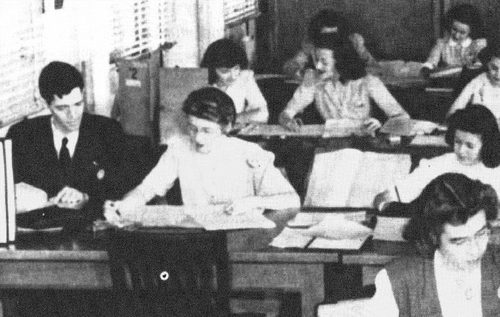 1 February 1943 – 1 October 1980
The Venona project
The US Army codebreaking program that, from 1943 to 1980, read parts of some 2,900 wartime Soviet intelligence cables and exposed Fuchs, the Rosenbergs and Donald Maclean.