
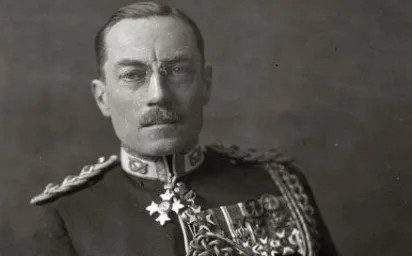

For most of its history the Security Service did not officially exist. It had no statute and no public address, and the name of its head was not made public until 1991. Its job was to find foreign agents working inside Britain and its empire. In two world wars it did that unusually well; in the Cold War it was penetrated itself.1,8
A bureau of two officers
In 1909 a sub-committee of the Committee of Imperial Defence, alarmed by reports of German espionage, recommended a Secret Service Bureau. It began work in October 1909 with two officers: Commander Mansfield Cumming of the Royal Navy and Captain Vernon Kell of the South Staffordshire Regiment. Cumming took intelligence gathering abroad and became the first chief of what is now the Secret Intelligence Service; Kell, known inside the bureau as "K", took counter-espionage at home.1,2
Most of the German spies in the newspapers were imaginary, but Kell found a real network run by German naval intelligence. Winston Churchill, Home Secretary in 1910–1911, asked chief constables to help him and introduced Home Office Warrants, which let all the mail of a named suspect be intercepted under one signature.2
First World War
When war came in August 1914, Kell had sixteen staff, caretaker included. Police acting on his lists arrested the agents of German naval intelligence across Britain, and none was left to report the sailing of the British Expeditionary Force. MI5's own account, drawing on German archives, puts the number of spies sent to Britain during the war at about 120, of whom 65 were caught.2,3
The bureau was absorbed into the War Office as MO5(g), and in January 1916 it became part of the new Directorate of Military Intelligence under the title MI5. By the end of the war its staff had grown nearly fiftyfold, to more than 800.1,3
Between the wars
Peace brought deep cuts. It was renamed the Defence Security Service in 1929 and, on 15 October 1931, the Security Service, with responsibility for most threats to national security other than Irish terrorism. The name MI5 stayed in use. Through the 1930s it watched both communists and fascists. What it missed was more important: Soviet intelligence had begun recruiting at Cambridge the group later known as the Cambridge Five. In early 1939 the Service had only about 30 officers.1,8
Second World War and the Double-Cross System
The first year of war overwhelmed it. MI5's in-house history later called its state at the fall of France "chaotic," and Churchill, now prime minister, removed Kell in 1940 after more than thirty years in charge. His successor, Jasper Harker, did not last; Sir David Petrie, formerly head of the Delhi Intelligence Bureau, was appointed early in 1941 as the first Director General and given resources to rebuild.1,4
Under Petrie the Service had its greatest success. German agents sent to Britain were caught and many were turned. From January 1941 the false information they sent home was coordinated by the Twenty Committee, chaired by the Oxford historian J. C. Masterman; the name punned on the Roman numeral XX, a double cross. The Double-Cross System ran agents such as Duško Popov (TRICYCLE) and, above all, Juan Pujol García (GARBO), whose invented network of sub-agents helped persuade the Germans that the Normandy landings were not the main blow, the core of Operation Fortitude. Four weeks after D-Day MI5 told Churchill that German divisions had been held back in the Pas de Calais. Bletchley Park decrypts (see GCHQ and Ultra and the breaking of Enigma) showed whether the Germans believed it.4
The same years brought the penetration that would haunt the Service. Anthony Blunt joined MI5 in June 1940 and passed large amounts of its material to Moscow.4
Cold War
After 1945 the main adversary was Soviet intelligence. US codebreakers working on Venona traffic narrowed the search for a source inside the Manhattan Project to Klaus Fuchs; because the decrypts could not be used in court, MI5's interviewer William Skardon worked on Fuchs for months until he confessed in early 1950. He was sentenced to fourteen years. In 1952 the Maxwell Fyfe Directive placed the Service under the Home Secretary, and it remained the Service's charter until 1989. In 1961 a long surveillance operation ended in the conviction of the Portland spy ring, including the Soviet illegal Konon Molody. In 1971 Operation FOOT expelled 105 Soviet intelligence officers from London, which MI5's history treats as the turning point of Cold War counter-espionage in Britain.1,5,6
The defections of Guy Burgess, Donald Maclean and later Kim Philby, and Blunt's secret confession nearly twenty years after he joined, set off a long internal hunt for a mole at the top of MI5 itself.4,8
From secret department to statute
From the 1970s the Service's priorities shifted toward counter-terrorism, and in 1992 it took the lead against Irish republican terrorism on the British mainland. An MI5 officer who offered the KGB secrets in 1983 was caught and sentenced to 23 years. The Security Service Act 1989 placed it on a statutory footing for the first time. Its first section gives the function as "the protection of national security," naming espionage, terrorism, sabotage, the agents of foreign powers and attempts to undermine parliamentary democracy. Stella Rimington became Director General in 1992, the first woman in the post, and in 1994 the Service returned to Thames House on Millbank. Many of its wartime and early Cold War files have since been released to The National Archives in series KV.1,3,5,7,8
Key dates
- October 1909 Secret Service Bureau begins work; Vernon Kell takes the home (counter-espionage) side, Mansfield Cumming the foreign side.
- August 1914 On the outbreak of war, police acting on MI5's lists arrest the German naval intelligence network in Britain.
- January 1916 Becomes section 5 of the new Directorate of Military Intelligence: the name MI5 is born.
- 15 October 1931 Renamed the Security Service and given responsibility for most threats to national security at home.
- June 1940 Kell removed by Churchill after the Service is overwhelmed in the first year of war.
- January 1941 First meeting of the Twenty (XX) Committee, which coordinates the deception fed through double agents.
- 1950 Klaus Fuchs confesses to MI5's interviewer and is sentenced to fourteen years.
- 1952 Maxwell Fyfe Directive puts the Service under the Home Secretary and defines its role.
- 1961 Portland spy ring tried and convicted after a long MI5 surveillance operation.
- 27 April 1989 Security Service Act 1989 receives Royal Assent, giving the Service a statutory basis for the first time.
Operations in these files
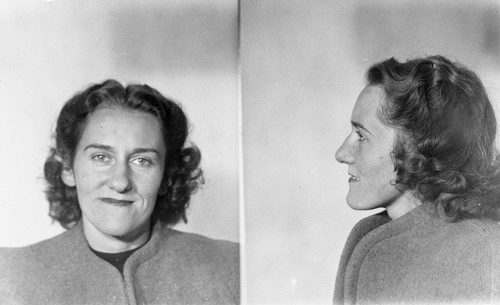 September 1939 – May 1945
The Double-Cross System
How MI5 caught or recruited Germany's wartime spies in Britain and ran them as double agents, steered by the Twenty Committee, until their reports could carry the D-Day deception.
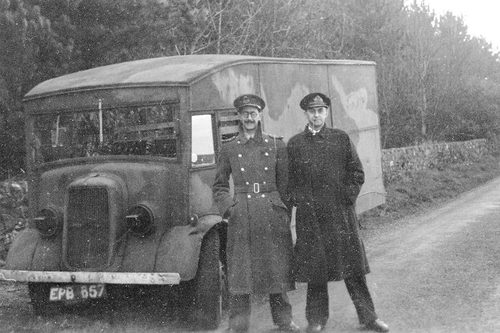 4 February – 14 May 1943
Operation Mincemeat
In 1943 British intelligence floated a dead man dressed as a Royal Marines officer ashore in Spain with forged letters pointing at Greece and Sardinia, to hide the coming invasion of Sicily.
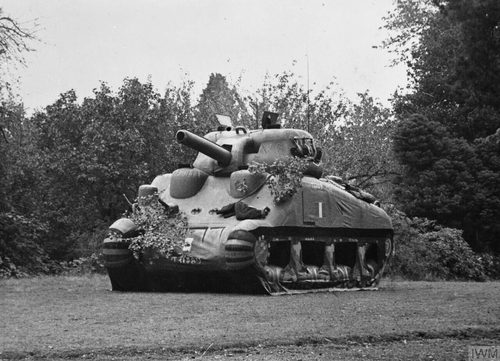 January – September 1944
Operation Fortitude
The Allied deception that invented armies in Scotland and southeast England in 1944 to make Germany expect landings in Norway and the Pas-de-Calais, and to see Normandy as a feint.
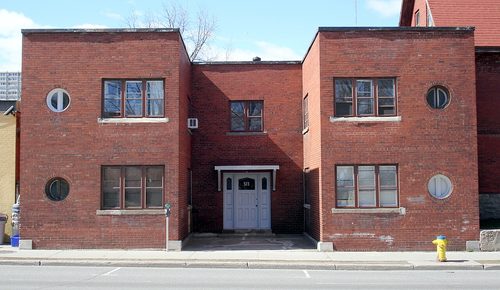 5 September 1945 – 27 June 1946
The Gouzenko affair
In September 1945 a GRU cipher clerk walked out of the Soviet embassy in Ottawa with over a hundred documents, exposing a Soviet spy network in Canada and a British atomic scientist.
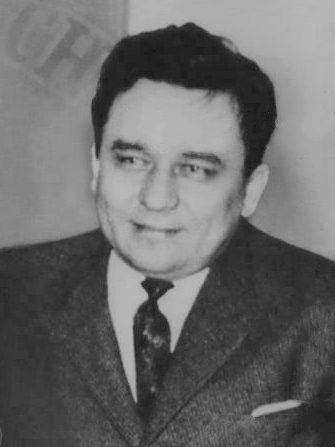 1951 – 22 March 1961
The Portland spy ring
A Soviet network that took naval secrets from the Admiralty's underwater research establishment at Portland, run by the KGB illegal 'Gordon Lonsdale' and broken up by MI5 in January 1961.
Operations against the MI5
People
Sources
- National Archives Records of the Security Service (KV): administrative history, The National Archives (UK) (2008).
- Official history The establishment of the Secret Service Bureau (Christopher Andrew), MI5 – The Security Service.
- Official history MI5 in World War I (Christopher Andrew), MI5 – The Security Service.
- Official history MI5 in World War II: from prison to palace (Christopher Andrew), MI5 – The Security Service.
- Official history The later Cold War: Operation FOOT and Michael Bettaney (Christopher Andrew), MI5 – The Security Service.
- Official history Klaus Fuchs, MI5 – The Security Service.
- Other Security Service Act 1989 (as enacted), legislation.gov.uk (1989-04-27).
- Wikipedia MI5, Wikipedia.
- Wikipedia English Wikipedia article (used for cross-checking).
Elsewhere in the files
- Agency Secret Intelligence Service (MI6)
- Operation Operation Fortitude
- Operation Operation Mincemeat
- Operation The Cambridge Five
- Operation The Double-Cross System
- Operation The Gouzenko affair
- Operation The Portland spy ring
- Operation Ultra and the breaking of Enigma
- Person Anthony Blunt
- Person Duško Popov (TRICYCLE)
- Person Guy Burgess
- Person Juan Pujol García (GARBO)
- Person Klaus Fuchs
- Person Melita Norwood
- Person Ruth Werner (SONYA)
- Tradecraft Concealment devices
- Tradecraft Double agents
- Tradecraft Illegals and legends
- Tradecraft Microdots
- Tradecraft Surveillance and countersurveillance