
For fifteen years after he confessed, Anthony Blunt went on as one of Britain's most respected art historians, director of the Courtauld Institute and adviser on the royal collection, while a small circle of officials knew he had been a Soviet agent inside MI5. The secret ended with a written parliamentary answer on 15 November 1979.1
Cambridge and the war
Blunt was born in Bournemouth on 26 September 1907, the son of a Church of England clergyman, and spent part of his childhood in Paris. He was educated at Marlborough College and Trinity College, Cambridge, where he became a fellow in 1932.5 MI5's catalogue summary says he was recruited by Soviet intelligence "to talent spot when he was a student and then a don at Cambridge University during the 1930s."2
He joined the Security Service in 1940. Margaret Thatcher's 1979 statement noted that inquiries were made before he was taken on: he was known to have held Marxist views at Cambridge, but the security authorities had no reason, then or during his service, to doubt his loyalty.1 The MI5 catalogue is direct about the result: "Between 1940 and 1945 he worked for MI5. During this time he passed significant quantities of secret intelligence to the RIS," the Russian intelligence services.2
Surveyor of the pictures
Blunt left MI5 in 1945 and returned to art history. He was appointed Surveyor of the King's Pictures in 1945 and Surveyor of the Queen's Pictures in 1952, was made a Knight Commander of the Royal Victorian Order in 1956, and served as an adviser on the royal pictures and drawings from 1972 until 1978.1 He directed the Courtauld Institute of Art, and his scholarship on Poussin and on French art and architecture made his reputation.5
He had not finished with Moscow. In 1951, by his own later admission, he used his old Soviet contact to help arrange the escape of Guy Burgess and Donald Maclean.1,2
Suspicion and confession
He came under suspicion after the 1951 defections, when the Security Service learned that Burgess had named him in 1937 as one of his sources. Blunt denied it. According to the 1979 statement he was interviewed on eleven occasions, persisted in his denial, and no evidence was found.1
New information "which directly implicated Blunt" arrived early in 1964 but did not provide a basis for charges. In April 1964 the Attorney-General, after consulting the Director of Public Prosecutions, authorized an offer of immunity in return for a confession, so as to learn about others "who might still be a danger." Blunt then admitted that, like Burgess, Maclean and Philby, he had become an agent of Russian intelligence and had talent-spotted at Cambridge, and that he had passed information regularly while in MI5.1 The Queen's Private Secretary was told of the confession and the immunity in April 1964.1
Thatcher's statement explained why no prosecution followed:
Successive Attorneys-General in 1972, in June 1974 and in June 1979 have agreed that, having regard to the immunity granted in order to obtain the confession which has always been and still is the only firm evidence against Blunt, there are no grounds on which criminal proceedings could be instituted.1
Exposure
The written answer of 15 November 1979 was given in reply to questions from two Labour MPs, after Andrew Boyle's book The Climate of Treason had described a fourth man under the pseudonym "Maurice."1,5 MPs protested in the Commons that afternoon that so serious a matter had been dealt with by written answer rather than an oral statement.3 A full Commons debate followed on 21 November.4 Blunt was stripped of his knighthood.5 He died in London on 26 March 1983.5
Blunt is usually called the "fourth man" of the The Cambridge Five, the fourth member to be discovered. See also MI5 and John Cairncross.5
Key dates
- 1940 Joins the Security Service (MI5).
- 1945 Leaves MI5; appointed Surveyor of the King's Pictures.
- 1951 Helps arrange the defection of Burgess and Maclean.
- 1956 Appointed KCVO.
- April 1964 Confesses to MI5 after an offer of immunity from prosecution.
- 15 November 1979 Named in the Commons by Prime Minister Margaret Thatcher; stripped of his knighthood.
Sources
- Other Security (Sir Anthony Blunt), written answer, HC Deb 15 November 1979 vol 973 cc679–81W, UK Parliament, Hansard (1979-11-15).
- Other KV 2/4700: Anthony BLUNT (catalogue description), The National Archives (UK), Discovery catalogue (1935–1951).
- Other Sir Anthony Blunt, HC Deb 15 November 1979 vol 973 cc1529–32, UK Parliament, Hansard (1979-11-15).
- Other Mr. Anthony Blunt, HC Deb 21 November 1979, UK Parliament, Hansard (1979-11-21).
- Wikipedia Anthony Blunt, Wikipedia.
- Wikipedia English Wikipedia article (used for cross-checking).
Elsewhere in the files
Read next
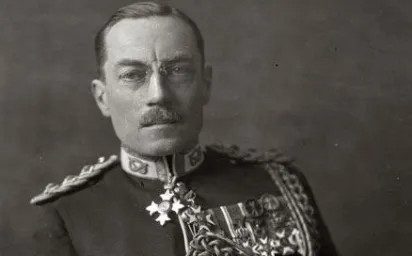 United Kingdom · 1909
Security Service (MI5)
Britain's domestic security service, founded in 1909 as the home section of the Secret Service Bureau: hunter of German spies in two world wars, runner of the Double-Cross System, and a target of Soviet penetration.
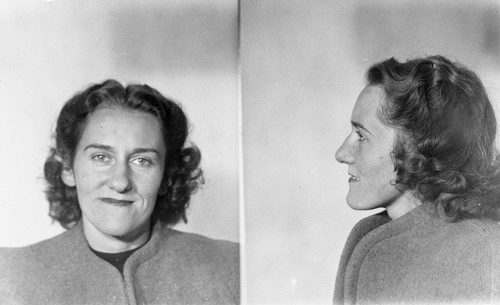 September 1939 – May 1945
The Double-Cross System
How MI5 caught or recruited Germany's wartime spies in Britain and ran them as double agents, steered by the Twenty Committee, until their reports could carry the D-Day deception.
1920s–1990s
Double agents
Agents who seem to serve one service while controlled by another. From the OGPU's Trust to MI5's Double Cross system and the FBI's Duquesne case, the best of them turned an enemy network into a channel for deception.