
The Cambridge Five were not a team that met, planned or worked together as one. They were five separate agents of Soviet intelligence, recruited at or through Cambridge University in the mid-1930s, who went on to careers inside the British state and who were run, sometimes in pairs, by a succession of Soviet controllers. What made them unusual was not their number but where they ended up: in the Secret Intelligence Service, in MI5, in the Foreign Office and at Bletchley Park, at the moment those institutions mattered most.1,5
Recruitment in the 1930s
The recruiter whose name runs through MI5's files is Arnold Deutsch, an Austrian of Czech origin who came to Britain as a Soviet "illegal" in 1934. MI5's catalogue entry on him says he took the lead role in recruiting the group, Philby in particular, by cultivating radical high-fliers at the university before they entered government service.5 Kim Philby, a committed communist by the time he left Trinity College, was recruited in 1934 and became, in MI5's words, "the first of the Cambridge Five ring of spies."1
The others followed through personal networks. Guy Burgess and Donald Maclean were both recruited in the mid-1930s, Maclean before he entered the Foreign Office in 1935.8 Anthony Blunt, then a Cambridge don, admitted in 1964 that he had been recruited and had acted as a talent-spotter before the war.4 John Cairncross was recruited while a student and joined the civil service in 1936.7 The parent service at the time was the NKVD (see Cheka, OGPU and NKVD); from 1954 its successor, the KGB, inherited the surviving cases.
Inside the British state
The five reached different parts of government. Philby joined SIS in 1940 and rose to a senior post, serving as its representative in Washington from 1949 to 1951.1 Blunt worked for MI5 from 1940 to 1945 and, by his own later admission, passed information regularly to the Russians throughout.4 Cairncross served in the Foreign Office, the Treasury, the Government Code and Cypher School, SIS and the Ministry of Supply.7 Maclean rose in the diplomatic service through Paris, Washington and Cairo to head the Foreign Office's American Department; Burgess moved between the BBC, wartime intelligence work and the Foreign Office.6,8
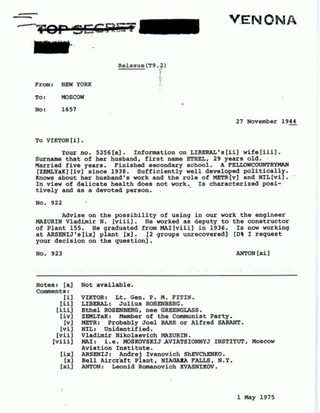
Their value to Moscow lay partly in overlap. In 1944 Philby moved into the SIS section working against Soviet espionage; in 1949 he went to Washington as liaison with American intelligence, where he learned of the search for a Soviet source in the wartime British embassy, the source later identified through the The Venona project decrypts as Maclean.1,6,8
The flight of 1951 and its aftermath
MI5's 2015 release of files describes how the search for the agent codenamed HOMER, following a Venona breakthrough, identified Maclean, and how surveillance spotted him meeting Burgess shortly before both fled.6 They left on the night of 25 May 1951.8 Blunt later admitted that in 1951 he used his old Soviet contact to help arrange their escape.4
Philby was asked to resign in July 1951. For years the government defended him. On 7 November 1955 Harold Macmillan, then Foreign Secretary, told the Commons:3
I have no reason to conclude that Mr. Philby has at any time betrayed the interests of this country, or to identify him with the so-called "third man," if, indeed, there was one.
That position collapsed in 1963. Philby vanished from Beirut on 23 January.8 On 1 July Edward Heath told the House that the security services now knew, "partly as a result of an admission by Mr. Philby himself," that he had worked for the Soviet authorities before 1946 and in 1951 had warned Maclean through Burgess.2
The fourth and fifth men
Blunt and Cairncross were never charged. Blunt confessed in April 1964 after the Attorney-General authorized an offer of immunity; the government kept this secret until Margaret Thatcher named him in a written answer on 15 November 1979. Her statement said the confession had always been "the only firm evidence against Blunt."4 Cairncross had come under suspicion in 1951, when papers in his handwriting were found in Burgess's flat; he resigned, moved abroad and made a partial confession in 1964.7 His role became public knowledge in stages, through journalists in 1979 and confirmation from the KGB defector Oleg Gordievsky in 1990.8
What the record shows, and what it does not
The released KV 2 files at The National Archives are MI5's own case papers, and they are frank about the investigators' difficulty. MI5 had suspicions of Philby from 1951 but, as the catalogue puts it, no conclusive evidence until 1963.1 What the five actually passed is known mainly from Soviet-side material made available after 1991 and from the agents' own partial accounts, both of which serve their authors' purposes.
The ring's lasting effect was on trust. The 1951 flight, the 1955 exoneration and the 1963 defection damaged Anglo-American intelligence relations and led to a long internal hunt for further moles inside MI5 and SIS.2,6
The documents
Declassified records of this operation, with the scans and their full text hosted here.
Checking the record
Dates and outcome compared in two independent sources: they agree.
- Other
- Philby recruited by Arnold Deutsch in 1934; Burgess and Maclean defected in 1951; conclusive evidence against Philby only in 1963, after which he defected. Philby made a partial confession and, with Soviet help, defected to the Soviet Union.
- Wikipedia
- Recruitment from 1934; Burgess and Maclean fled 25 May 1951; Philby vanished from Beirut 23 January 1963; Blunt exposed November 1979; Cairncross confirmed as the fifth man in 1990. All five were exposed; three defected to Moscow and none was prosecuted.
The National Archives catalogue and Wikipedia agree on the main dates. The catalogue describes Philby's 1963 admission as a partial confession, which this page follows; the Heath statement of 1 July 1963 likewise says the new information came only partly from Philby himself.
Sources
- Other KV 2/4723: Harold Adrian Russell (Kim) PHILBY (catalogue description), The National Archives (UK), Discovery catalogue (1933–1951).
- Other Mr. Harold Philby, HC Deb 1 July 1963 vol 680 cc33–5, UK Parliament, Hansard (1963-07-01).
- Other Former Foreign Office Officials, HC Deb 7 November 1955 vol 545 cc1483–611, UK Parliament, Hansard (1955-11-07).
- Other Security (Sir Anthony Blunt), written answer, HC Deb 15 November 1979 vol 973 cc679–81W, UK Parliament, Hansard (1979-11-15).
- Other KV 2/4428: Arnold DEUTSCH (catalogue description), The National Archives (UK), Discovery catalogue (1940–1967).
- Official history October 2015 release of historical MI5 files, MI5 (Security Service), archived by the Internet Archive (2015-10).
- Other KV 2/4678: John CAIRNCROSS (catalogue description), The National Archives (UK), Discovery catalogue (1939–1951).
- Wikipedia Cambridge Five, Wikipedia.
- Wikipedia English Wikipedia article (used for cross-checking).
Elsewhere in the files
- Agency KGB
- Agency Secret Intelligence Service (MI6)
- Agency Security Service (MI5)
- Operation Operation Redsox
- Operation Operation Valuable (Albania)
- Operation Soviet atomic espionage (Enormoz)
- Operation The Venona project
- Person Anthony Blunt
- Person Donald Maclean
- Person George Blake
- Person Guy Burgess
- Person James Jesus Angleton
- Person John Cairncross
- Person Kim Philby
- Person Vasili Mitrokhin
Read next
 1 February 1943 – 1 October 1980
The Venona project
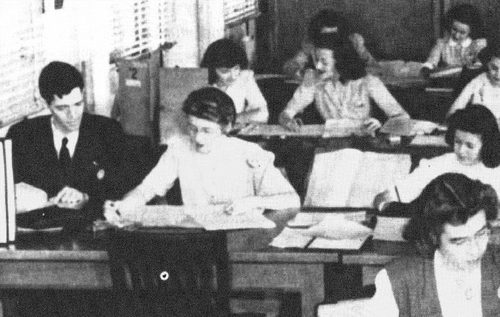
The US Army codebreaking program that, from 1943 to 1980, read parts of some 2,900 wartime Soviet intelligence cables and exposed Fuchs, the Rosenbergs and Donald Maclean.
22 June 1949 – 1954
Operation Valuable (Albania)
The joint British and American attempt, from 1949 into the early 1950s, to undermine Enver Hoxha's regime by infiltrating Albanian émigré agents. Most teams were caught, and Hoxha stayed in power.
 United Kingdom · 1909
Secret Intelligence Service (MI6)
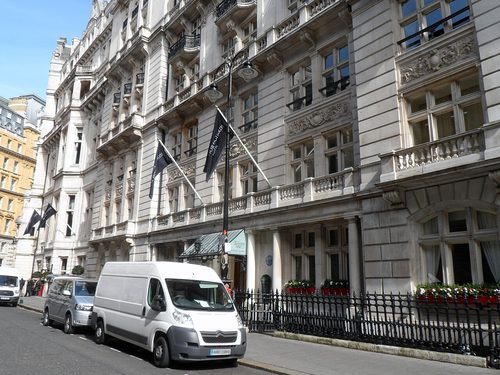
Britain's foreign intelligence service, founded in 1909 as the foreign section of the Secret Service Bureau, run by a chief known as 'C', and not placed on a statutory footing until the Intelligence Services Act 1994.
 United Kingdom · 1909
Security Service (MI5)
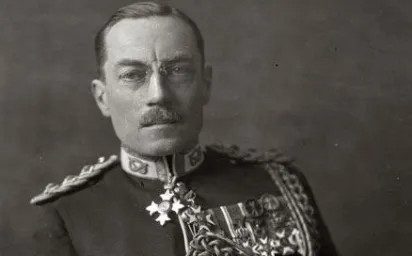
Britain's domestic security service, founded in 1909 as the home section of the Secret Service Bureau: hunter of German spies in two world wars, runner of the Double-Cross System, and a target of Soviet penetration.
1920s–1990s
Double agents
Agents who seem to serve one service while controlled by another. From the OGPU's Trust to MI5's Double Cross system and the FBI's Duquesne case, the best of them turned an enemy network into a channel for deception.
1922–2004
Vasili Mitrokhin
KGB archivist who spent twelve years secretly copying foreign-intelligence files by hand, defected to Britain in 1992, and left the Mitrokhin Archive: hugely valuable to investigators, still debated by historians.