
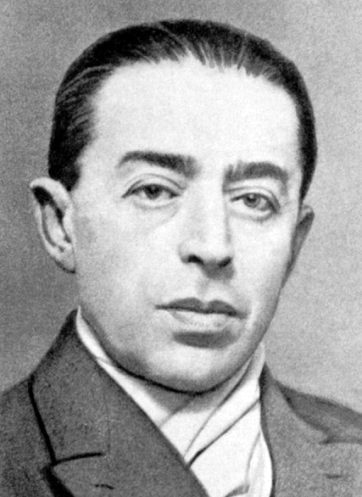
Portrait: Felix Dzerzhinsky, founder of the Cheka, before 1926. Unknown photographer. Wikimedia Commons, Public domain.

Felix Dzerzhinsky was born on 11 September 1877 into a family of Polish minor nobility on the Dzierżynowo estate near Ivyanets, in what is now Belarus. He spent most of his adult life before 1917 as a professional revolutionary in the Social Democracy of the Kingdom of Poland and Lithuania: arrested repeatedly, exiled to Siberia and escaping each time, and imprisoned continuously from his last arrest in 1912 until the February Revolution freed him from Moscow's Butyrka prison5.
He joined Lenin's Bolsheviks only in 1917, was elected to their Central Committee that summer and worked with the Military Revolutionary Committee during the October seizure of power5.
Founder of the Cheka
On 20 December 1917 the Council of People's Commissars created the All-Russian Extraordinary Commission for Combating Counter-Revolution and Sabotage, the Cheka, with Dzerzhinsky at its head5,6. The Library of Congress, in its 1992 exhibition of documents from the Soviet archives, notes that the Cheka was meant to be temporary and was empowered only to investigate, but "soon acquired powers of summary justice and began a campaign of terror against the propertied classes and enemies of Bolshevism"1.
Dzerzhinsky stepped aside on 7 July 1918, after the assassination of the German ambassador and the Left Socialist Revolutionary uprising in Moscow, and resumed the chairmanship on 22 August7. Days later, after the murder of the Petrograd Cheka chief Moisei Uritsky and the shooting of Lenin on 30 August, the regime proclaimed the Red Terror. An appeal drafted by Dzerzhinsky and his deputy Jēkabs Peterss appeared in Izvestia on 3 September6,7.
American diplomats watched it happen. The US consul in Moscow, DeWitt Clinton Poole, relayed the interior commissar's order of 2 September demanding "Not the slightest hesitation or the slightest indecision in using mass terror"2. A week later he reported shootings in Moscow of "about 150 nightly" and wrote that the foreign commissariat had "no control and but small influence over extraordinary commission which is carrying on the carnage"3.
The GPU, the OGPU and the émigrés
When the Cheka was dissolved on 6 February 1922 its functions passed to the State Political Directorate (GPU), and in November 1923 to the all-Union OGPU, both under Dzerzhinsky. He held other posts at the same time, including people's commissar for internal affairs and for transport, and from 1924 chairman of the Supreme Council of the National Economy5,6.
Under his chairmanship the OGPU turned to the enemies abroad. According to a US Naval Postgraduate School study, Lenin directed Dzerzhinsky in December 1920 to devise plans to neutralize the émigré threat; one result was the Trust, the fake monarchist underground that ran from 1921 to 19274. A parallel deception, Sindikat-2, brought Boris Savinkov back to Moscow in 1924, and the Trust lured Sidney Reilly across the Finnish border in 19254. When the imprisoned Savinkov wrote to him in May 1925 asking why he was neither shot nor given work, Dzerzhinsky sent back word only that it was too early to talk of freedom4,5.
Death and afterlife
Dzerzhinsky died of a heart attack in Moscow on 20 July 1926, shortly after a two-hour speech to the party Central Committee attacking the opposition led by Trotsky, Zinoviev and Kamenev. He was buried by the Kremlin wall and succeeded at the OGPU by Vyacheslav Menzhinsky5.
The Soviet security service kept his name and image for the rest of its existence; its officers were still known as Chekists. A 15-ton statue of "Iron Felix" stood in front of the security service headquarters on Lubyanka Square until the Moscow city council had it removed after the failed coup of August 19915.
Key dates
- 20 December 1917 Appointed head of the new All-Russian Extraordinary Commission, the Cheka.
- 7 July 1918 Steps aside after the Left SR uprising; Jēkabs Peterss acts as chairman.
- 22 August 1918 Resumes the chairmanship of the Cheka.
- 3 September 1918 Izvestia publishes the Cheka's appeal for mass terror, drafted by Dzerzhinsky and Peterss.
- 6 February 1922 Cheka dissolved; he heads its successor, the GPU.
- 15 November 1923 GPU reorganized as the all-Union OGPU, with Dzerzhinsky as chairman.
- August 1924 OGPU captures Boris Savinkov through Operation Sindikat-2.
- 20 July 1926 Dies of a heart attack in Moscow after a speech to the party Central Committee.
Sources
- Other Revelations from the Russian Archives: Internal Workings of the Soviet System (Secret Police), Library of Congress (1992).
- FRUS Foreign Relations of the United States, 1918, Russia, Volume I, Document 627 (Consul Poole to the Secretary of State, 5 September 1918), US Department of State, Office of the Historian (1918-09-05).
- FRUS Foreign Relations of the United States, 1918, Russia, Volume I, Document 611 (Consul Poole to the Secretary of State, 9 September 1918), US Department of State, Office of the Historian (1918-09-09).
- Official history The Trust: The Classic Example of Soviet Manipulation (thesis, Stephen A. Harris), Naval Postgraduate School, Monterey (via Internet Archive) (1985-09).
- Wikipedia Felix Dzerzhinsky, Wikipedia.
- Wikipedia Cheka, Wikipedia.
- Wikipedia Jēkabs Peterss, Wikipedia.
- Wikipedia English Wikipedia article (used for cross-checking).
Elsewhere in the files
Read next
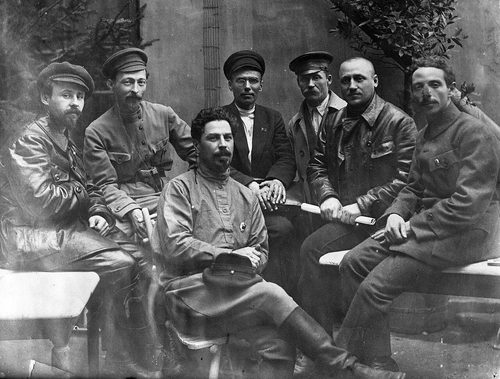 Soviet Union · 1917–1946
Cheka, OGPU and NKVD
The Soviet political police from 1917 to 1946 under its successive names: Cheka, GPU, OGPU and NKVD. It ran the Red Terror, the Trust deception, the Great Terror, Katyn and Stalin's killings abroad.
1921 – 13 April 1927
Operation Trust
For six years the Soviet secret police ran a fake monarchist underground, the 'Trust', that fed émigrés and Western services disinformation and lured Boris Savinkov and Sidney Reilly to their deaths.
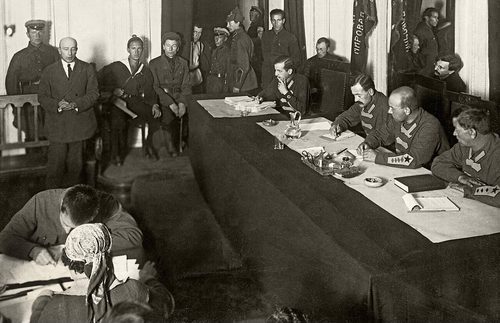 12 May 1922 – 29 August 1924
Operation Sindikat-2
An OGPU deception of 1922–1924 that invented an underground party inside Soviet Russia to draw the old terrorist Boris Savinkov home. He crossed the border in August 1924 and walked into a trap.
 1874–1925
Sidney Reilly
Russian-born British agent whose 1918 plot against Lenin made him famous and whose 1925 return to Soviet Russia, lured by the OGPU's Trust, ended in his execution. Much of his legend is invention.
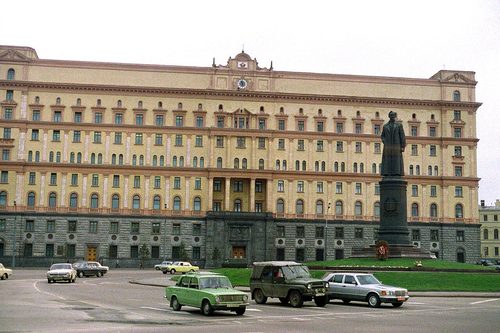 Soviet Union · 1954–1991
KGB
The Soviet Committee for State Security, 1954–1991: foreign intelligence, counter-intelligence, border troops and political police under one roof, from Khrushchev's reforms to the failed coup of August 1991.