
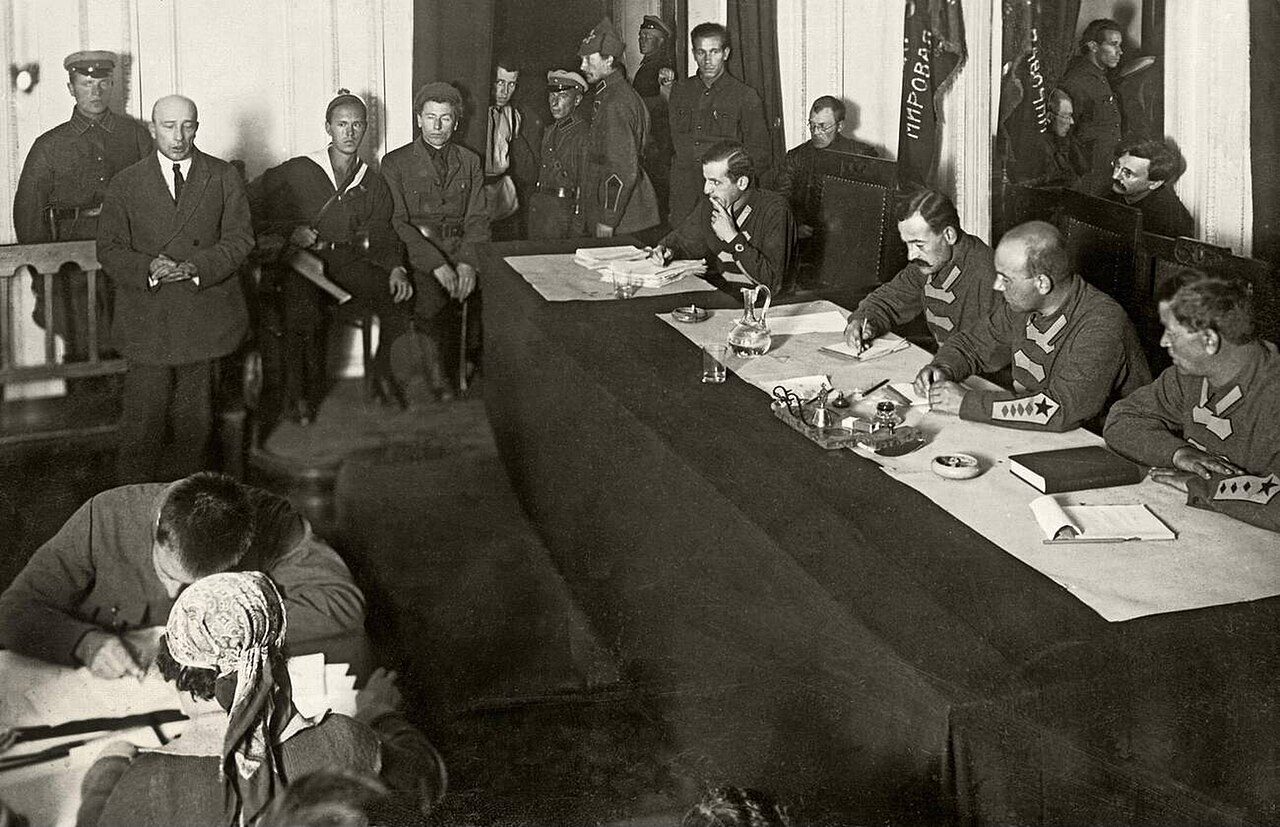
Boris Savinkov had spent his life organizing conspiracies. Before the revolution he helped plan the assassinations of the interior minister Vyacheslav von Plehve and Grand Duke Sergei. In 1917 he was deputy war minister in the Provisional Government, and after October he raised armed revolts against the Bolsheviks, including the seizure of towns on the Volga in 19181,5. By the early 1920s he was in exile in Warsaw and Paris, running a network called the People's Union for the Defense of the Motherland and Freedom. Sindikat-2 was the Soviet secret police's answer: a conspiracy built to fit his expectations4,5.
Building the bait
The operation came out of the counterintelligence department of the GPU, headed by Artur Artuzov, the same office that ran the Trust. A circular "On the Savinkov Organization," dated 12 May 1922, set out the method: rather than simply arresting enemies, create "legendary" organizations that the enemy would trust4.
The first opening came in the summer of 1922, when one of Savinkov's men, Leonid Sheshenya, was caught crossing the Polish frontier. Facing execution, he agreed to cooperate, and his contacts led the GPU to other members of the network4. The GPU then invented a party: a group of "Liberal Democrats" inside Soviet Russia, anti-Bolshevik but sober, seeking a leader. An experienced officer, Andrei Fedorov, went abroad posing as one of its central committee members, met Savinkov's resident in Warsaw, Dmitry Filosofov, and in 1923 reached Savinkov himself in Paris3,4.
Savinkov was suspicious and sent his trusted aide Sergei Pavlovsky to Russia to check. Pavlovsky crossed the frontier in August 1923 and was arrested in Moscow in September. Under pressure he wrote to Paris as if all were well. According to the Russian account, he tried to slip a prearranged warning into his letter and the GPU caught it, forcing him to rewrite it4.
Into the trap
Through 1923 and 1924 the GPU fed Savinkov's emissaries meetings with invented resistance leaders. The CIA reviewer of 1970 described the message the Soviet legends carried: the regime was weakening and the underground needed a leader of stature to take command when it fell1,3. Sidney Reilly, Savinkov's friend and backer, came from New York to Paris in the summer of 1924; by some accounts he urged him not to go2,3.
On 15 August 1924 Savinkov crossed into the Byelorussian SSR with Alexander Dikhoff-Derental, his wife Lyubov, and Savinkov's emissary Ivan Fomichev, through a "window" on the frontier prepared by the OGPU. He was arrested in Minsk in mid-August and taken to the Lubyanka2,4.
Trial and death
The OGPU did not conceal this catch. Savinkov was tried by the Military Collegium of the Supreme Court in Moscow from 27 to 29 August 1924. He confessed, declared his struggle against the Soviet government a mistake and told the court a version of his return that hid the operation. He was sentenced to death, with a recommendation for mercy, and the sentence was commuted to ten years2,4,5.
He was held in the Lubyanka in unusual comfort and was allowed to write and publish. On the morning of 7 May 1925 he wrote to Felix Dzerzhinsky asking why he was kept in prison rather than shot or put to work for the Soviet state; Dzerzhinsky's only answer, passed on orally, was that it was too early to talk of freedom4. That evening, after an outing with OGPU officers, he fell from a window on an upper floor of the building and died. Pravda announced a suicide on 13 May2,4,5.
Results
According to Russian accounts, the operation broke up the People's Union's remaining cells inside the USSR, in Smolensk, Bryansk, Vitebsk, Gomel and other provinces, and produced several group trials. Its officers were decorated; almost all were later shot in the purges of 1937–1939, among them Artuzov and Fedorov4.
The operation proved a model for the OGPU. Within a year the Trust used similar methods to draw Reilly across the Finnish border, and the technique of the controlled "legend" organization became a fixture of Soviet counterintelligence1,2.
The documents
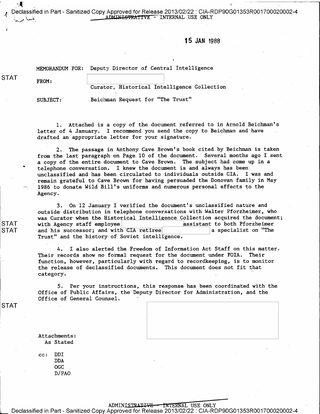
Declassified records of this operation, with the scans and their full text hosted here.

Checking the record
Dates and outcome compared in two independent sources: they differ.
- Official history
- Savinkov arrested in Minsk on 20 August 1924; trial ended 29 August; died 7 May 1925. Sentenced to death with a recommendation for mercy, commuted to ten years; died after a fall from a window of the Lubyanka.
- Wikipedia
- Operation set out in a circular of 12 May 1922; Savinkov crossed the border on 15 August 1924 and was arrested in Minsk on 16 August; sentenced 29 August 1924; died 7 May 1925. Death sentence commuted to ten years; official version suicide, disputed; People's Union cells liquidated.
The outcome and the trial and death dates agree, but the arrest date differs (20 August in the Naval Postgraduate School thesis and the Wikipedia article on Savinkov, 16 August in the Wikipedia article on the operation, which follows Russian archival histories). This page gives 'mid-August 1924'. The CIA reviewer folds the operation into the Trust; this page treats it as a parallel operation, as the Russian sources do.
Sources
- CIA Book review of The Secret Road to World War Two: Soviet Versus Western Intelligence, 1921–1939, by Paul W. Blackstock (Studies in Intelligence, vol. 14, no. 1), Central Intelligence Agency, Center for the Study of Intelligence (1970).
- Official history The Trust: The Classic Example of Soviet Manipulation (thesis, Stephen A. Harris), Naval Postgraduate School, Monterey (via Internet Archive) (1985-09).
- Other The Trust (Intelligencer: Journal of U.S. Intelligence Studies, vol. 30, no. 1), Association of Former Intelligence Officers (2025).
- Wikipedia Syndicate–2, Wikipedia.
- Wikipedia Boris Savinkov, Wikipedia.
- Wikipedia English Wikipedia article (used for cross-checking).
Elsewhere in the files
Read next
 Soviet Union · 1917–1946
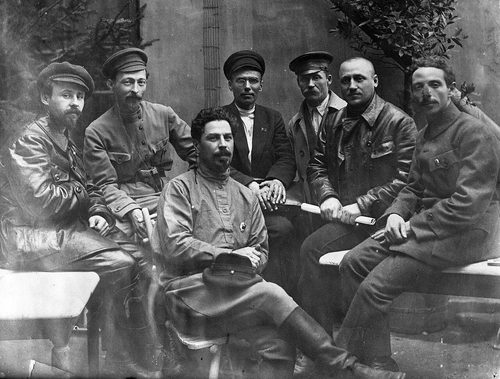
Cheka, OGPU and NKVD
The Soviet political police from 1917 to 1946 under its successive names: Cheka, GPU, OGPU and NKVD. It ran the Red Terror, the Trust deception, the Great Terror, Katyn and Stalin's killings abroad.
 1877–1926
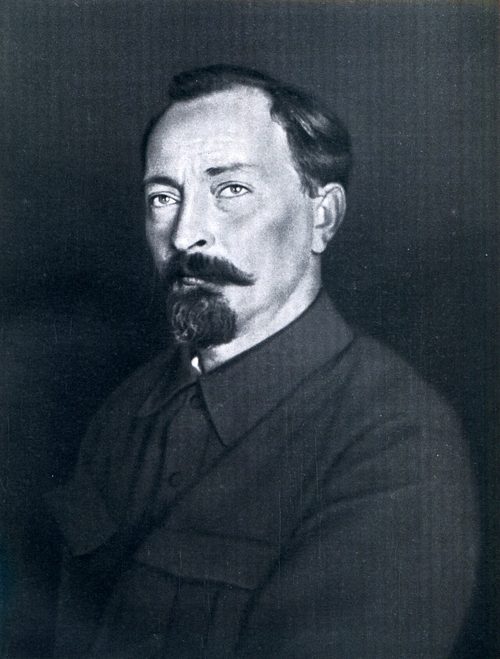
Felix Dzerzhinsky
Polish-born revolutionary who founded and ran the Cheka and its successors, the GPU and OGPU, from 1917 until his death in 1926, presiding over the Red Terror and the Trust deception.
 1874–1925
Sidney Reilly
Russian-born British agent whose 1918 plot against Lenin made him famous and whose 1925 return to Soviet Russia, lured by the OGPU's Trust, ended in his execution. Much of his legend is invention.
1920s–1990s
Double agents
Agents who seem to serve one service while controlled by another. From the OGPU's Trust to MI5's Double Cross system and the FBI's Duquesne case, the best of them turned an enemy network into a channel for deception.