
In January 1950 Alaska was a lightly defended American territory a few dozen miles from Soviet soil across the Bering Strait. The military's planners did not think they could stop a determined landing. One FBI memo summarized the expected threat as an airborne invasion with bombing and paratroopers, aimed most likely at Nome, Fairbanks, Anchorage and Seward3. Operation Washtub was their answer: a network of ordinary Alaskans who would stay put if the Soviets came, hide, and report what they saw.
A plan born at Fort Richardson
Reamer, working from the declassified files, dates the scheme to a meeting on 27 January 1950 in the Fort Richardson office of Navy Captain Minor Heine, director of intelligence for the Alaskan Command. Heine proposed placing private citizens around the territory as "stay behind agents," dormant unless Alaska was occupied, who would also keep open escape routes for stranded American airmen. The proposal went to the Joint Chiefs of Staff in March 1950 and became a working plan that summer, while the Korean War made a wider Soviet move look plausible4,3.
The Air Force gave the code word WASHTUB to its new Office of Special Investigations (OSI), headed by Major General Joseph F. Carroll, a former FBI official1,3. The FBI called the project STAGE, and an official OSI history lists still more names: Corpuscle, Stigmatic and Catboat3. It had two halves. The first was the stay-behind agents. The second was a pool of civilians who would quietly arrange the escape of downed air crews, a part coordinated with the CIA3.
Choosing the agents
The planning papers wanted people who lived locally, moved around for a living and would not be obvious internees: fishermen, bush pilots, trappers, prospectors, a postmaster, a hotel manager3,4. The FBI's Anchorage office asked trusted contacts, including federal judges and a local physician, for names, then quietly ran background checks on every candidate3,4.
The planners also wrote down whom they would not trust. The released Air Force file states that "the selection of agents from the Eskimo, Indian, and Aleut groups in the Territory should be avoided," citing supposed drinking and political indifference1. Alaska Natives, many of whom had served in the Alaska Territorial Guard, were shut out on those grounds4.
Recruits were offered retainers of up to $3,000 a year, to be doubled once an invasion began, though the records do not show what was actually paid3,4. Planners also proposed a reserve pool of agents held outside Alaska and flown in later, noting dryly in the file that some recruits "might not be too enthusiastic" about being left behind in occupied territory for an indefinite time1,3.
Training at first took place in Washington and covered codes, radio, cover stories and survival. One document judged that mastering the codes in 15 hours of instruction was "an almost impossible task for backwoodsmen." The Air Force laid caches of food, fuel, radios, clothing and coding material for the agents to retreat to3,4.
Hoover gets out
The FBI's senior officials had doubted the plan from the start, and the Bureau was slow to produce candidates. By early September 1951, Reamer found, it had identified 69 possible agents and only 18 had reported for training4. On a memo dated 6 September 1951, J. Edgar Hoover wrote in the margin that in a crisis the Bureau "would be in the midst of another 'Pearl Harbor' and get part of the blame," and ordered: "Get out at once"3. FBI letters of 8 and 17 September 1951 to General Carroll announced the Bureau's withdrawal from the stay-behind program, leaving OSI in sole charge, though the FBI kept running background checks1,4.
The Bureau was pulled back in once. In October 1954 an Anchorage woman handed agents a misaddressed letter containing a coded message. FBI codebreakers never broke it, but the scare ended when the Bureau concluded it was a practice message sent in error by one of the Washtub agents3.
How it ended
According to Deborah Kidwell, the OSI's official historian, Washtub ran from 1951 to 1959, and OSI trained 89 stay-behind agents. "The survival caches served peacetime purposes for many years to come," she wrote3. Reamer describes the program as wound down in 1959 as too costly for its uncertain value, with the caches later repurposed or looted4.
How it came out
Almost everything known comes from FOIA. A request filed in February 2010 produced an Air Force release on 4 August 2014 of FBI-originated papers, heavily redacted, which Government Attic posted on 1 September 20141. The Associated Press built its account on those records, and the FBI has since published its own files on the "Stay-Behind Special Agent Program in Alaska" in its online Vault3,2. Most agents' names remain blacked out3.
The program was a domestic cousin of the European stay-behind networks such as Gladio, with one difference: its agents were to report from American soil. It should not be confused with the CIA's unrelated 1954 Operation WASHTUB in Nicaragua, a plan to plant a fake Soviet arms cache before the PBSUCCESS coup in Guatemala6.
The documents
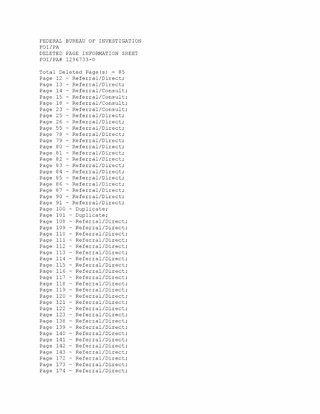
Declassified records of this operation, with the scans and their full text hosted here.
Checking the record
Dates and outcome compared in two independent sources: they agree.
- Other
- Code word WASHTUB assigned to the Air Force Office of Special Investigations for the stay-behind program; FBI letters of 8 and 17 September 1951 announce its withdrawal; file runs to 1954. Program continued under OSI after the FBI pulled out; agents recruited and trained for an invasion that never came.
- Wikipedia
- 1 July 1951 to 3 January 1959; FBI withdrew in September 1951. Operation terminated; 89 agents in place; caches converted to survival use.
Both agree on the September 1951 FBI withdrawal and the Air Force carrying on. The released file stops in 1954, so the 1951–1959 span and the figure of 89 agents rest on the OSI historian quoted by the AP; Wikipedia's exact start and end days are uncited and this page does not use them.
Sources
- Other Proposed Plan for Intelligence Coverage in Alaska in the Event of an Invasion (Stay-Behind Agent Program), 1947–1954 (AFOSI FOIA release), US Air Force Office of Special Investigations, via Government Attic (2014-08-04).
- FBI Stay-Behind Special Agent Program in Alaska, Federal Bureau of Investigation, The Vault.
- Other US trained Alaskans as secret 'stay-behind agents' (Associated Press), Fox News (2014-08-31).
- Other A Cold War mission to maintain sleeper agents in Alaska in case of a Soviet attack, Operation Washtub, never materialized, Anchorage Daily News (David Reamer) (2022-12-11).
- Wikipedia Operation Washtub (United States), Wikipedia.
- Wikipedia Operation Washtub (Nicaragua), Wikipedia.
- Wikipedia English Wikipedia article (used for cross-checking).
Elsewhere in the files
Read next
 United States · 1908
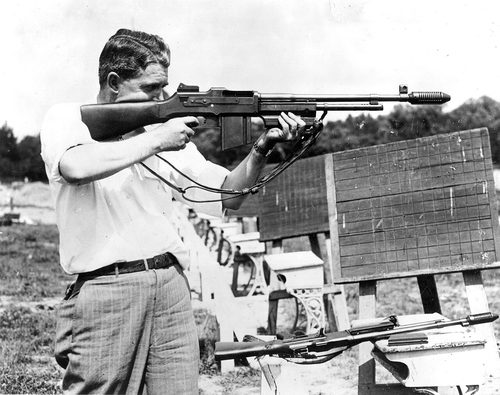
Federal Bureau of Investigation (FBI)
The US Justice Department's investigative service, founded in 1908: chief hunter of foreign spies at home from the 1930s, and under J. Edgar Hoover the author of secret domestic programs exposed in the 1970s.
 1895–1972
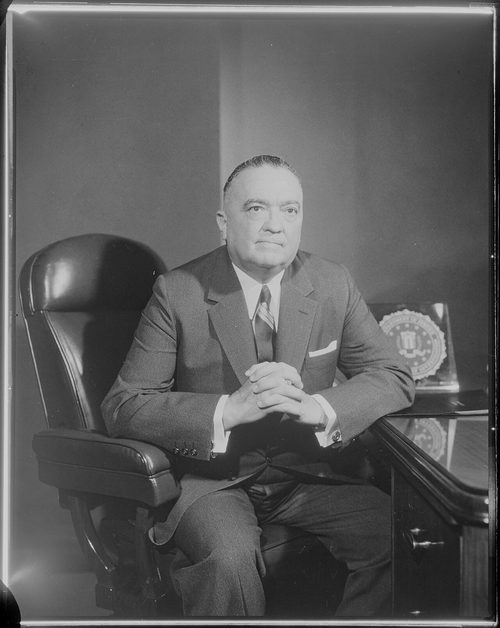
J. Edgar Hoover
Director of the Bureau of Investigation and then the FBI for 48 years, from 1924 until his death in 1972. He built a modern police agency and a secret domestic intelligence apparatus that the Senate later condemned.
 12 August 1953 – 27 June 1954
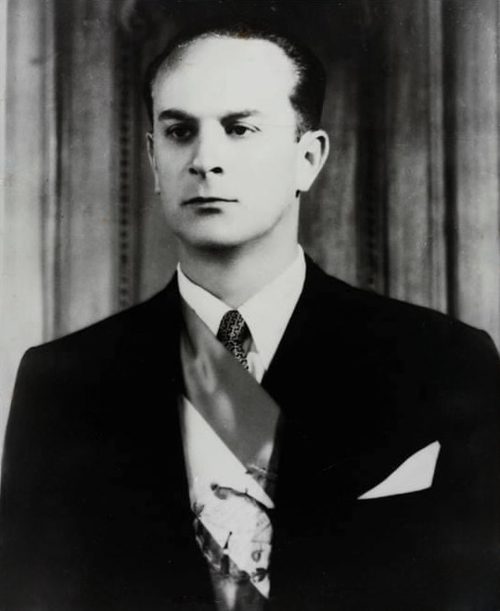
Operation PBSuccess
The CIA's 1953–54 campaign of propaganda, pressure and a small proxy invasion that forced Guatemala's elected president Jacobo Árbenz to resign on 27 June 1954.
 United States · 1947
Central Intelligence Agency (CIA)
The US civilian intelligence service, created by the National Security Act of 1947 to coordinate foreign intelligence, which within a year also became Washington's instrument for covert action.