
On 24 October 1990 Prime Minister Giulio Andreotti told Italy's Chamber of Deputies that for more than three decades the country had kept a secret organization of reservists, with hidden arms caches, to resist a Soviet occupation. It was called Gladio, Italian for "sword." Six days earlier he had sent a written report on it to the parliamentary commission investigating terrorism6,8.
Stay-behind armies
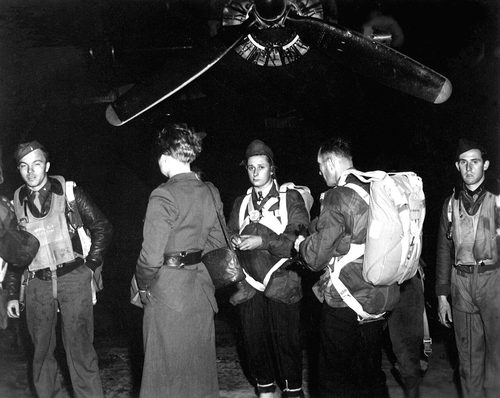
The idea came out of the Second World War, when the British Special Operations Executive and the American OSS had armed resistance movements by night flights and parachute drops. After the war Western governments decided to have the resistance ready in advance. William Colby, later director of the CIA, described in his 1978 memoir how in 1951 he helped build "stay-behind nets" in Scandinavia: leaders, radios and caches of equipment, secretly in place before any invasion2.
Colby stressed that the host governments built and controlled their own networks, coordinated with NATO plans. A State Department statement in 2006 quoted his account at length to make the same point2.
Gladio in Italy
According to the Italian government's documents, Gladio's founding act was an agreement between Italy's military intelligence service, SIFAR, and the CIA dated 28 November 1956. A training center was built at Capo Marrargiu on the coast of Sardinia. The network passed to SIFAR's successor services and continued until the government dissolved it in November 19901,6.
Andreotti told parliament the structure had been for "information, response and safeguard." He gave the commission a list of 622 members and said that 127 weapons caches had been dismantled, and he denied that Gladio had been involved in any of the bombings that had struck Italy since the 1960s8.
The disclosure followed an investigation by a Venice magistrate, Felice Casson, into a 1972 bombing, which led him to ask for access to the intelligence archives. A convicted neo-fascist terrorist had already spoken at a 1984 trial of a secret structure parallel to the security services and dependent on NATO6.
The inquiries
The Italian parliament's commission on terrorism, set up by law in 1988 under Senator Libero Gualtieri, was formally given the Gladio question by a Chamber of Deputies resolution of 2 August 1990. In July 1991 Gualtieri sent Parliament an interim report on Gladio, which the commission debated but did not vote on1.
The commission's later progress report, dated December 1991, shows what it could not see. The government lifted state secrecy on the 1956 founding act but invoked NATO's rules of inviolability for the records of the Allied Clandestine Committee and the Clandestine Planning Committee, the bodies that coordinated stay-behind networks and were linked to NATO's military headquarters, SHAPE. On 1 August 1991 the Senate committed the government to hand over every Gladio document. By December the committee records still had not arrived1.
On 22 November 1990 the European Parliament adopted a resolution on the affair. It condemned the clandestine creation of these networks, protested "vigorously" at the assumption by certain US military personnel at SHAPE and in NATO of the right to encourage them, called for full investigations, and asked member states to "dismantle all clandestine military and paramilitary networks." One of its recitals stated that in certain member states military secret services, or uncontrolled branches of them, had been involved in serious cases of terrorism and crime3,7.
Belgium and Switzerland held their own inquiries. The Swiss government's 1991 report, based on an investigation by the magistrate Pierre Cornu, concluded that the Swiss resistance organization P-26 had not belonged to Gladio or any other international network, but had close links with British services, which knew more about it than the Swiss government did4.
Allegations of terrorism
What the record does not show
The released Italian, Swiss and American documents establish the network, its American partnership and its coordination through committees connected to NATO, and they show that the NATO committee records were withheld from the Italian inquiry1,2,4. They do not show that the network as such was used for the bombings that Italy suffered in those years5,6.
Checking the record
Dates and outcome compared in two independent sources: they agree.
- Other
- Founding act of Gladio dated 28 November 1956; Chamber of Deputies order of 2 August 1990 gives the commission the matter; interim report sent to Parliament 9 July 1991. Commission investigation hampered by NATO-classified records; the Senate on 1 August 1991 committed the government to hand over all Gladio documents.
- Wikipedia
- Set up under Defense Minister Paolo Taviani (1953–1958); revealed by Andreotti on 24 October 1990. Network acknowledged; parliamentary investigations in Italy, Belgium and Switzerland; allegations of links to terrorism disputed.
The sources agree in substance. The founding agreement between Italy's military intelligence service (SIFAR) and the CIA is dated 28 November 1956 in the parliamentary report and 26 November 1956 by Il Post; this page follows the parliamentary document.
Sources
- Other Commissione parlamentare d'inchiesta sul terrorismo in Italia e sulle cause della mancata individuazione dei responsabili delle stragi: Relazione semestrale sullo stato dei lavori (Doc. XXIII n. 42), Senato della Repubblica / Camera dei deputati, X legislatura (1991-12-04).
- Other Misinformation about 'Gladio/Stay Behind' Networks Resurfaces (archived), US Department of State, USINFO (2006-01-20).
- Other Resolution on the Gladio affair (joint resolution replacing B3-2021, 2058, 2068, 2078 and 2087/90), OJ C 324, 24.12.1990, p. 201, European Parliament, Official Journal of the European Communities (EUR-Lex) (1990-11-22).
- Other 91.067 P-26 und Auslandbeziehungen. Bericht des Bundesrates (Rückblick auf die 44. Legislaturperiode), Swiss Federal Assembly, Parliamentary Services.
- CIA The Intelligence Officer's Bookshelf (Studies in Intelligence 49, no. 3), review of NATO's Secret Armies, Central Intelligence Agency, Center for the Study of Intelligence (2005).
- Other La storia di Gladio, Il Post (2020-10-24).
- Other European Parliament resolution on Gladio (transcription), Wikisource.
- Wikipedia Operation Gladio, Wikipedia.
- Wikipedia English Wikipedia article (used for cross-checking).
Elsewhere in the files
Read next
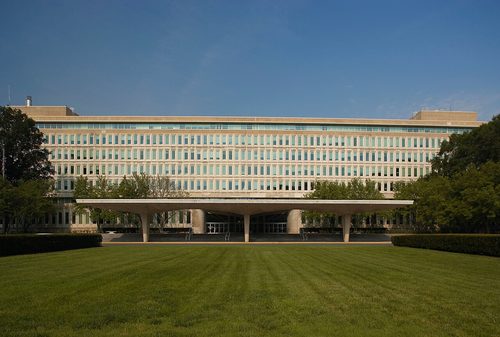 United States · 1947
Central Intelligence Agency (CIA)
The US civilian intelligence service, created by the National Security Act of 1947 to coordinate foreign intelligence, which within a year also became Washington's instrument for covert action.
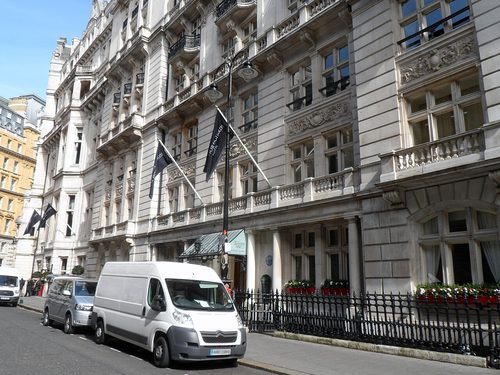 United Kingdom · 1909
Secret Intelligence Service (MI6)
Britain's foreign intelligence service, founded in 1909 as the foreign section of the Secret Service Bureau, run by a chief known as 'C', and not placed on a statutory footing until the Intelligence Services Act 1994.
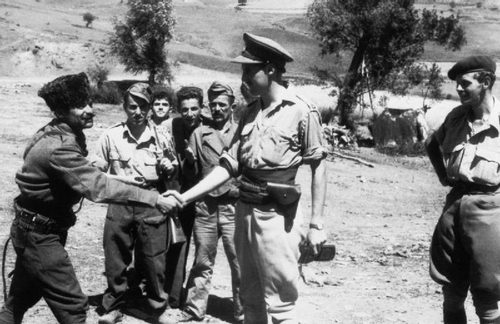 United Kingdom · 1940–1946
Special Operations Executive (SOE)
Britain's wartime sabotage and subversion service, created in July 1940 to arm resistance movements in occupied Europe and Asia. It ran Anthropoid and Gunnerside, suffered the Englandspiel, and was wound up in 1946.
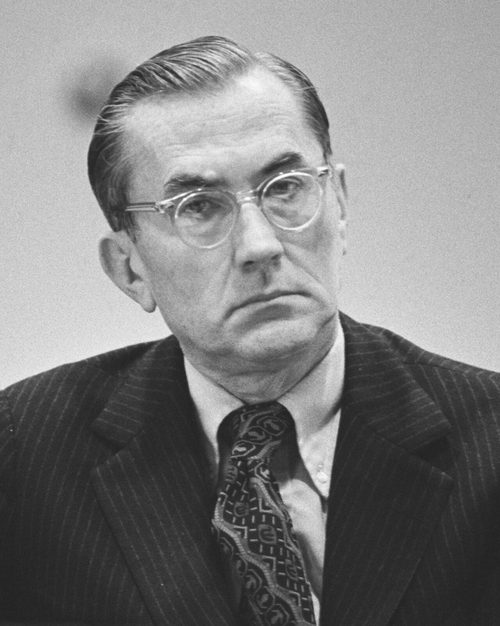 1920–1996
William Colby
OSS parachutist, CIA station chief in Saigon and head of the Phoenix program, Colby became Director of Central Intelligence in 1973 and chose to open the Agency's files to the investigations of 1975.
 5 June 1944 – April 1945
Operation Jedburgh
From June 1944 Allied three-man teams in uniform, drawn from SOE, the OSS and the Free French, parachuted into France and the Low Countries to arm and lead resistance fighters behind German lines.