
Operation Monastery was the NKVD's longest-running deception against German military intelligence. For more than two years the Abwehr believed it had a reliable agent in Moscow at the center of a monarchist underground with contacts in the Red Army General Staff. The agent was Alexander Demyanov, code name "Heine," a Soviet security service informant of more than a decade's standing, and the underground was a Lubyanka invention1,3.
The legend
The idea drew on the methods of the 1920s, when the OGPU's Trust had invented a monarchist organization to deceive the emigration. Pavel Sudoplatov, whose Fourth Directorate ran the case, wrote that the planning began in July 1941 together with the NKVD's secret political directorate and military intelligence3.
Demyanov, born in 1910, came from a Cossack officer family with connections in the old aristocracy. According to Sudoplatov he had been arrested in Leningrad in 1929 on a planted weapons charge and recruited as an informant; a 1942 NKVD reference sheet quoted by FSB archivists records an OGPU arrest in 1932 and release without charge1,3,5. By the 1930s he moved among actors, film people and foreign diplomats in Moscow, and German representatives had shown interest in him before the war3,5.
The NKVD built a fictitious pro-German monarchist group, called "Prestol" (Throne), around a real figure. In the archivists' account this was the elderly, paralysed writer Boris Sadovskoy, who lived in the Novodevichy Convent and had been under observation since the early 1930s; Demyanov was introduced to him on 11 January 1942. Sudoplatov's memoir names the old aristocrat as "Glebov"1,3.
Into the Abwehr and back
Demyanov crossed the front line presenting himself as the group's emissary, in December 1941 by most accounts or in February 1942 according to the NKVD documents the FSB archivists quote. German officers took him to Gzhatsk and questioned him for days; by his own report they staged a mock execution to test him before accepting his story1,4. After an Abwehr training course he was parachuted back into Soviet territory on 15 March 1942 together with a second German agent who carried a radio set, reported to the NKVD in Yaroslavl region the next day, and on 19 March handed Sudoplatov an 85-page account of his journey1,4.
The radio game began on 9 April 1942. The Abwehr's intelligence center for Army Group Center, known as "Saturn," asked for troop formations, transport movements and dates. In the archivists' account, the answers were written by the NKVD with the Red Army's intelligence directorate and General Staff1,4. In the Russian accounts, the NKVD gave Demyanov a cover post as a junior signals officer in the General Staff to explain his access4,5.
Germany rewarded him. On 18 December 1942, in the FSB archivists' account, Admiral Canaris congratulated his Moscow agent, and a radio message informed "Heine" that he had been awarded the War Merit Cross with Swords; the NKVD reported the award to Beria the same day1. The Soviet government later gave Demyanov the Order of the Red Star1,5.
Couriers, money and disinformation
The game paid for itself. German couriers sent to Moscow with radios and cash were watched, then arrested or turned; one report of October 1942 recorded 57,005 rubles taken from four captured agents. As the courier traffic grew, part of the case was split off under the name "Couriers"1,4. Russian accounts credit the operation with between twenty and fifty captured agents4,5.
Soviet radio counterintelligence also decrypted an Abwehr message, sent from Smolensk to a forward office, in which a "reliable agent" reported troop trains from the east being routed around Moscow and on to the south. On 27 November 1942 Sudoplatov told Beria that the report was NKVD disinformation passed at the General Staff's request, and that the reliable agent was Heine1.
Berezino
In the summer of 1944 the legend moved Demyanov to a railway posting in Byelorussia, and Monastery gave way to a larger piece of theater, Operation Berezino. From 18 August 1944 he reported a German force under Lieutenant Colonel Heinrich Scherhorn, a prisoner taken on 9 July, cut off in the Byelorussian forests. Russian accounts name William Fisher, later known in the United States as Rudolf Abel, among the officers involved. The Germans sent supply flights, men and radios into the trap until the spring of 19454,5,6.
The whole story stayed inside Soviet files until Sudoplatov's memoir of 1994 and the documents FSB archivists published in 2005. Russian accounts say the Germans never uncovered the game1,3,4.
The documents
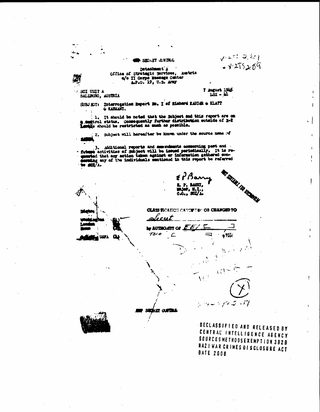
Declassified records of this operation, with the scans and their full text hosted here.
Checking the record
Dates and outcome compared in two independent sources: they differ.
- Official history
- Demyanov met the writer Boris Sadovskoy on 11 January 1942, crossed the front in February 1942, was dropped back by the Germans on 15 March 1942; first radio contact 9 April 1942; German award announced 18 December 1942. German couriers arrested or turned; German money confiscated; disinformation prepared with the General Staff reached the Abwehr; the case was split into 'Couriers' and 'Berezino'.
- Wikipedia
- 1941–1944; Demyanov crossed the front at the end of 1941 and was sent back in March 1942; operation ended in summer 1944. About fifty saboteurs captured and seven accomplices arrested; large volume of disinformation passed; continued as Operation Berezino.
The sources agree on the March 1942 return, the method and the outcome but disagree on when Demyanov first crossed the front (end of 1941 in Wikipedia, February 1942 in the documents quoted by the FSB archivists) and on how many agents were caught. This page follows the archival documents for dates and gives the range for numbers.
Sources
- Official history Poyedinok Lubyanki s Abverom (The Lubyanka's duel with the Abwehr), by Andrei Tyurin and Vladimir Makarov of the FSB Central Archive, Nezavisimoye Voyennoye Obozreniye, 22 April 2005, Nezavisimaya Gazeta (2005-04-22).
- Other Security Service file on Richard Kauder, alias Klatt (KV 2/1498), catalogue description, The National Archives (UK).
- Book Pavel Sudoplatov, Spetsoperatsii: Lubyanka i Kreml 1930–1950 gody, chapter 6 (Russian edition of Special Tasks), Militera (online text).
- Wikipedia Operatsiya 'Monastyr', Wikipedia (Russian).
- Wikipedia Demyanov, Alexander Petrovich, Wikipedia (Russian).
- Wikipedia Operation Scherhorn, Wikipedia.
- Wikipedia Operation Mars, Wikipedia.
Elsewhere in the files
Read next
 Germany · 1920–1944
Abwehr
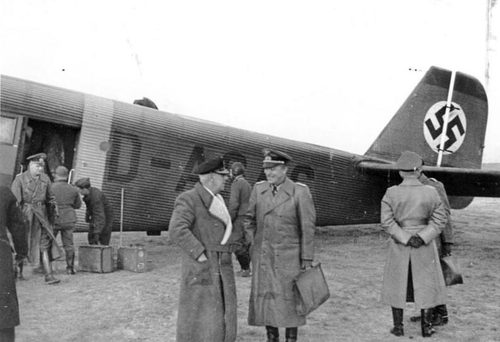
The German armed forces' intelligence service from 1920 to 1944: spies, saboteurs and counterintelligence under Admiral Canaris, outplayed by the FBI and MI5 and finally absorbed by the SS.
1921 – 13 April 1927
Operation Trust
For six years the Soviet secret police ran a fake monarchist underground, the 'Trust', that fed émigrés and Western services disinformation and lured Boris Savinkov and Sidney Reilly to their deaths.
1920s–1990s
Double agents
Agents who seem to serve one service while controlled by another. From the OGPU's Trust to MI5's Double Cross system and the FBI's Duquesne case, the best of them turned an enemy network into a channel for deception.
 September 1939 – May 1945
The Double-Cross System
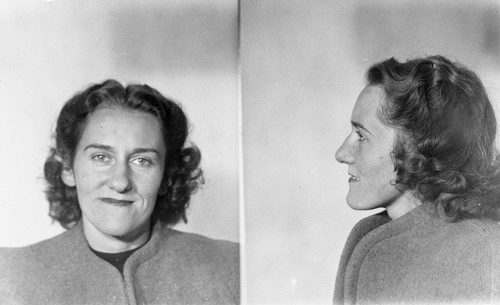
How MI5 caught or recruited Germany's wartime spies in Britain and ran them as double agents, steered by the Twenty Committee, until their reports could carry the D-Day deception.
 1887–1945
Wilhelm Canaris
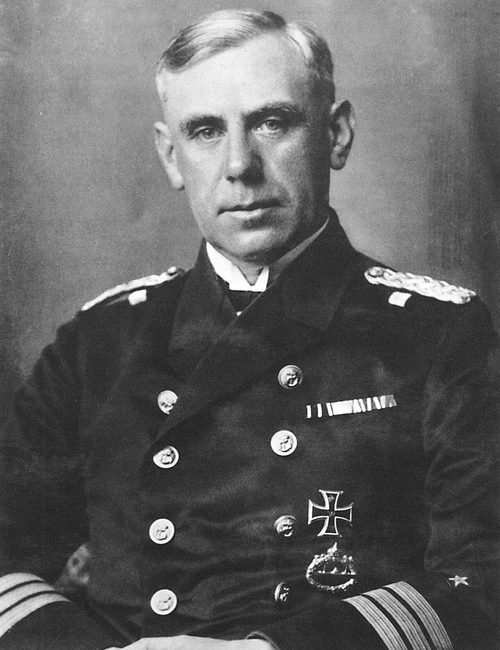
Admiral who ran the Abwehr, Germany's military intelligence service, from 1935 to 1944. Early supporter of Hitler, later a protector of the military opposition, hanged at Flossenbürg in April 1945.
 1902–1979
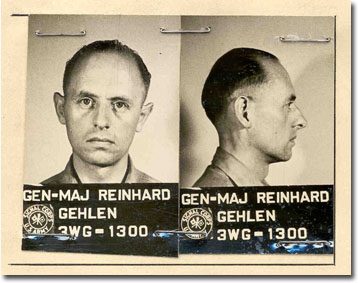
Reinhard Gehlen
Hitler's chief of army intelligence on the Eastern Front, who sold his files and staff to the Americans in 1945, ran a spy network for the US Army and the CIA, and became the first president of West Germany's BND.