
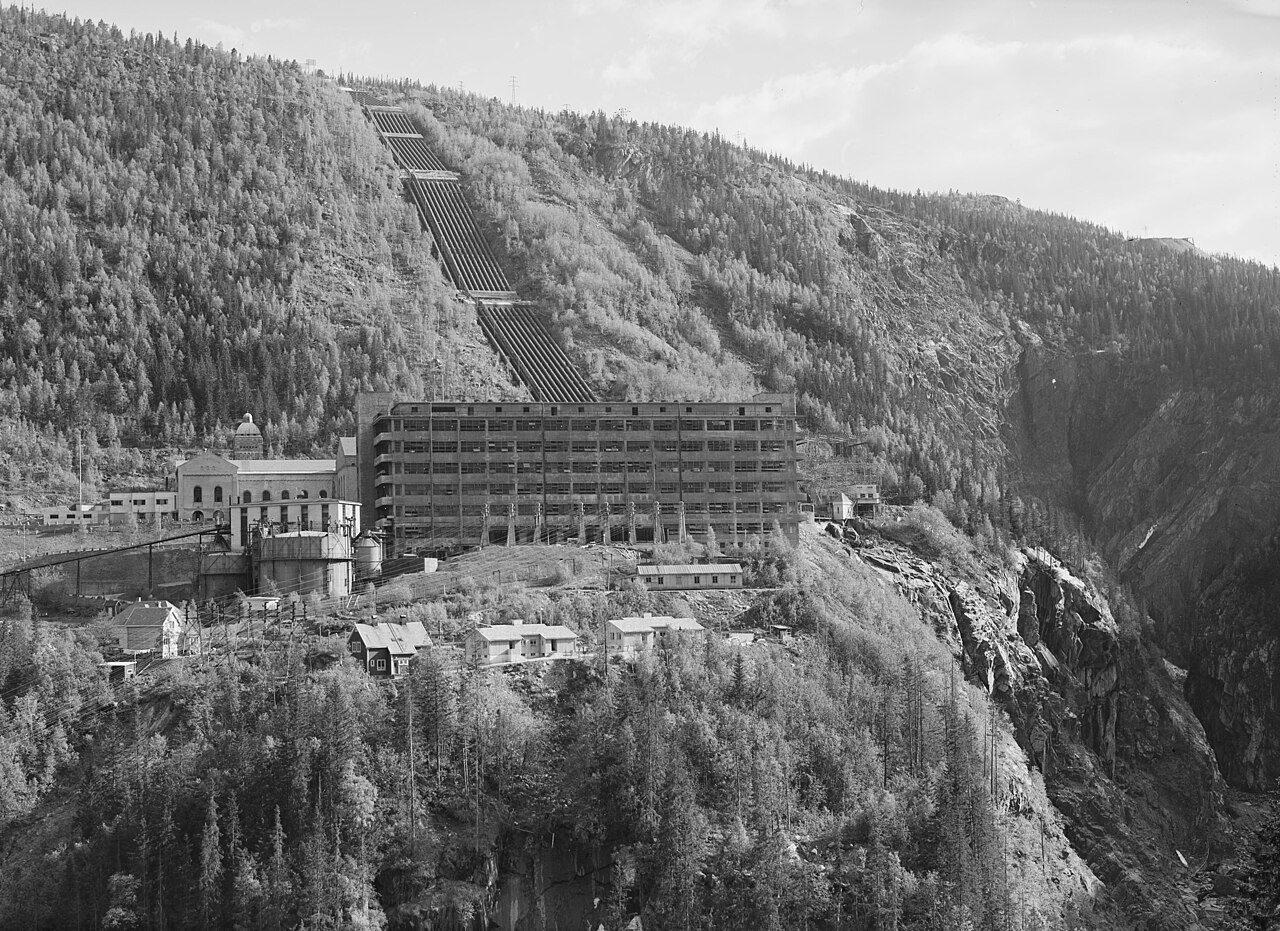

An SOE report on operations in Norway, preserved in the British Air Ministry's files, records the decision in July 1942 that destroying the heavy water stocks at Vemork, and the plant that made them, was "of the highest importance"1. It took three attempts and two operations by the Special Operations Executive to do it. The decisive one, Gunnerside, was carried out by nine Norwegian soldiers who did not fire a shot.
Why Vemork
Norsk Hydro's hydrogen plant at Vemork, above the town of Rjukan in Telemark, contained the largest electrolysis installation in the world. It produced heavy water (deuterium oxide) as a by-product, and before the war it was Europe's only regular source3. Heavy water can slow neutrons in a nuclear reactor, and German researchers had chosen it as the moderator for their reactor experiments5. In 1940 French intelligence removed the plant's entire existing stock, about 180 kg, and it reached Britain by ship from Bordeaux1. Once Norway was occupied, the Germans ordered production increased, and the Allies treated German control of Vemork as a serious threat3.
Grouse and Freshman
On 18 October 1942 four Norwegians of SOE's Norwegian Independent Company (Kompani Linge), all from the Rjukan area, were dropped on the Hardanger plateau as an advance party code-named Grouse1,3. They were to guide in Operation Freshman, two gliders carrying British airborne engineers who would land on a frozen lake and destroy the plant1.
Freshman ended in disaster on the night of 19–20 November 1942. One tug aircraft and both gliders crashed in southern Norway. All the survivors were captured, and the Germans killed them under Hitler's order on commandos1,3. The Norwegian encyclopedia Store norske leksikon puts the total dead from the operation at 413. The failure also told the Germans that Vemork was a target, and they added mines, floodlights and guards5. The Grouse party, renamed Swallow, stayed on the plateau through the winter, short of food and living partly on moss and lichen, and kept reporting by radio1,3.
The raid
SOE decided to try again with Norwegians alone. Six men under Joachim Rønneberg (the Gunnerside party) parachuted onto the plateau on the night of 16–17 February 1943 and, after several days of searching, found the Swallow team on 23 February1,3. The nine men split into a covering party and a demolition party, and wore British uniform so that the Germans would not blame the people of Rjukan3.
On the night of 27–28 February they climbed down into the gorge below the plant, crossed the frozen river and climbed the far side, avoiding the guarded suspension bridge3,4. They followed a railway line to the factory, cut the chain on a gate and got into the basement through a cable duct. There they placed charges on the electrolysis cells3,5. A report sent from Stockholm soon afterward, now in the Air Ministry files, described men in British uniform who spoke perfect Norwegian, told the workers to move away, and destroyed all the vital machinery1. According to the Norwegian account, the whole action lasted about half an hour. The fuses were shortened to make sure the charges went off, and the saboteurs were out of the building before the explosion3.
The Germans searched the area in force without catching anyone. Five of the men skied about two weeks to Sweden, crossing the border on 18 March 1943. The others stayed in Norway, including the radio operator who kept transmitting to London1,3. He reported that the German commander in Norway, General Nikolaus von Falkenhorst, had inspected the damage and praised it as the finest coup he had seen in the war1.
Afterward: bombs and a ferry
SOE estimated that Vemork would be out of action for eight to twelve months. It was working again within months: by August 1943 according to the SOE records, by April according to other accounts1,5. With another commando raid judged impractical, the Americans were asked to bomb the plant. US Army Air Forces heavy bombers attacked on 16 and 18 November 19431. The Germans then decided to move the plant and its remaining stock to Germany3,5.
On 20 February 1944 Knut Haukelid, one of the Gunnerside men, and two local helpers sank the railway ferry Hydro on Lake Tinn with a time bomb while it carried the heavy-water drums. Fourteen Norwegians and four Germans died3,5. Later tests on a recovered drum confirmed that the cargo was genuine, though much of it was of low concentration3,5.
The record
SOE's files on Grouse, Freshman and Gunnerside, including HS 2/184–190, are at The National Archives at Kew1,2. The surviving saboteurs received high Norwegian and British decorations, and several of them played themselves in a 1948 Norwegian film of the raid3. Rønneberg, the last of them, died in 20185.
Checking the record
Dates and outcome compared in two independent sources: they agree.
- Official history
- Gunnerside party parachuted in February 1943, joined the Swallow party on 23 February, attacked on the night of 27/28 February 1943. Vital machinery destroyed; five men reached Sweden and five stayed in Norway; plant repaired by August 1943 and later bombed by the USAAF on 16 and 18 November 1943.
- Wikipedia
- Dropped on the night of 16 February 1943; attack on the night of 27–28 February 1943. Electrolysis chambers and over 500 kg of heavy water destroyed; all saboteurs escaped; plant repaired by April 1943.
Dates and the immediate outcome agree. They differ on when production resumed (August in the SOE material, April in Wikipedia); this page says 'within months' and flags the difference.
Sources
- Official history The battle for heavy water (Juliette Desplat), The National Archives (UK) blog (2017-12-14).
- Official history HS 2/185: Operation GUNNERSIDE, The National Archives (UK), Discovery catalogue (1942-1943).
- Other Tungtvannsaksjonene, Store norske leksikon.
- Other Kompani Linge, Forestry and Land Scotland.
- Wikipedia Norwegian heavy water sabotage, Wikipedia.
- Wikipedia English Wikipedia article (used for cross-checking).
Elsewhere in the files
Read next
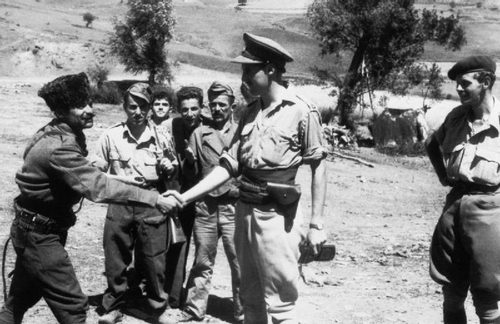 United Kingdom · 1940–1946
Special Operations Executive (SOE)
Britain's wartime sabotage and subversion service, created in July 1940 to arm resistance movements in occupied Europe and Asia. It ran Anthropoid and Gunnerside, suffered the Englandspiel, and was wound up in 1946.
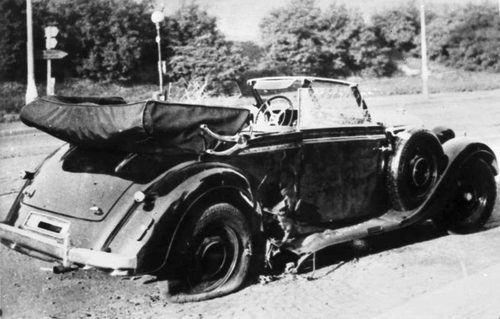 October 1941 – 18 June 1942
Operation Anthropoid
The 1942 assassination of Reinhard Heydrich in Prague by two Czechoslovak soldiers trained and dropped by SOE, and the German reprisals that destroyed Lidice and Ležáky.
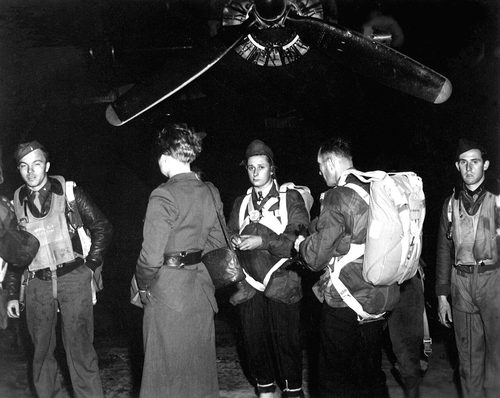 5 June 1944 – April 1945
Operation Jedburgh
From June 1944 Allied three-man teams in uniform, drawn from SOE, the OSS and the Free French, parachuted into France and the Low Countries to arm and lead resistance fighters behind German lines.