
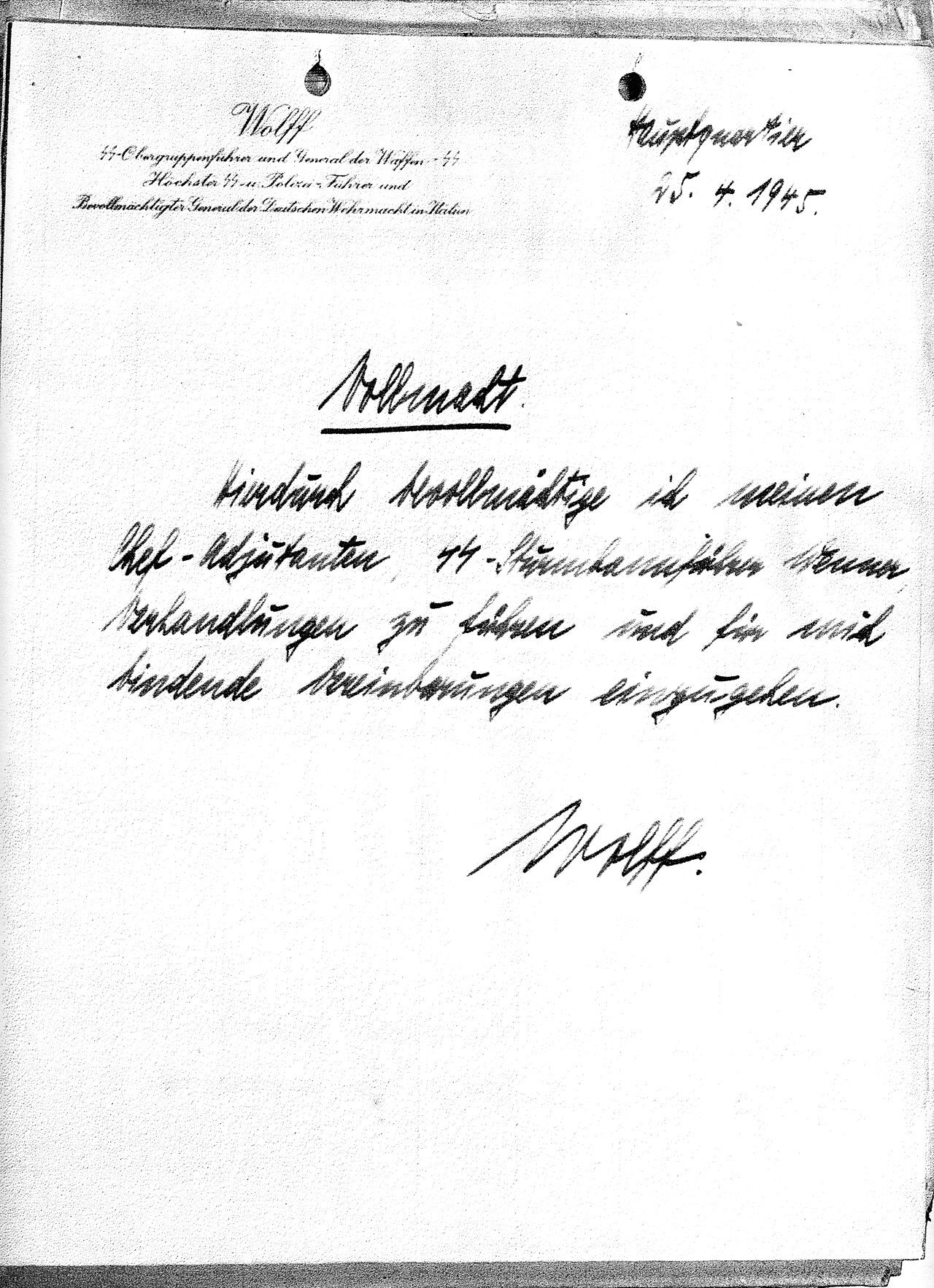

In the last spring of the war the strongest German force still intact was Army Group C in northern Italy, close to a million men. Its surrender came out of an intelligence operation, not a battle. For about ten weeks Allen Dulles, who ran the OSS station in Bern, dealt secretly with Karl Wolff, the senior SS and police commander in Italy. The talks produced the first large German capitulation in the west. They also produced one of the bitterest quarrels between Washington and Moscow before the Cold War began.6,1
How the contact began
The approach came from the German side. A CIA name file released in the 2000s holds the notebooks of SS officer Guido Zimmer, who was based in Milan. They show that SD officers in Italy, with backing from Walter Rauff and other regional security chiefs, decided in late 1944 to send a feeler to the Allies in Switzerland. Their go-between was an Italian businessman, Baron Luigi Parrilli. Wolff gave his support in mid-February 1945, and Parrilli crossed into Switzerland soon afterward.5 Swiss intelligence officers, above all Major Max Waibel, arranged the meetings. Dulles's office dated the start of the affair to 23 February 1945.6
On 8 March Wolff came to Switzerland with his aide Eugen Dollmann and Zimmer. Dulles cabled that he agreed to see only Wolff, who came to his Zurich apartment that evening.6 As proof of good faith Wolff had already released two prisoners, Ferruccio Parri, a captured leader of the Italian resistance, and Antonio Usmiani. They were handed over in Switzerland.6
Bern, Ascona and the Soviet protest
Field Marshal Alexander sent two staff officers, the American General Lyman Lemnitzer and the British General Terence Airey. They crossed into Switzerland under false names and met Wolff on 19 March at a villa in Ascona, near Locarno. Wolff agreed to try to bring in Field Marshal Kesselring. Kesselring, however, had just been moved to the Western Front, and his successor, General Heinrich von Vietinghoff, was reluctant.6
Washington had told Moscow about the contact on 12 March. Molotov replied that the Soviet Union would not object if Soviet officers took part. When the Americans and British refused, Molotov wrote on 16 March that the Soviet government found the refusal "utterly unexpected and incomprehensible" and "insists that the negotiations already begun in Bern be broken off."2
The quarrel moved up to heads of government. On 3 April Stalin told Roosevelt that his "military colleagues" believed a deal had been struck under which Kesselring would open the front to the Anglo-Americans in return for easier peace terms. Roosevelt answered on 4 April "with astonishment." He repeated that no negotiations had been held in Bern and that the meeting "had no political implications whatever."3 On 12 April, the day he died, Roosevelt sent a last short note. It called the "Bern incident" something that had "faded into the past without having accomplished any useful purpose."4
The surrender
The talks nearly ended several times. On 20 April the Joint Chiefs of Staff ordered OSS to break off all contact with the German emissaries.6 Days later Wolff's representatives arrived in Switzerland with authority to sign: Lieutenant Colonel Viktor von Schweinitz for Vietinghoff and SS Major Eugen Wenner for Wolff. Alexander's headquarters obtained permission to receive them, and they were flown to Caserta. A Soviet officer, Major General A. P. Kislenko, was present.6
The instrument was signed on 29 April. The State Department's record gives the territory covered: all of Italy except Venezia Giulia east of the Isonzo, and all of western and parts of central Austria. Hostilities were to end on 2 May.1 In the last days Kesselring, now commanding in the south, relieved Vietinghoff and ordered the arrest of officers who had backed the surrender. He gave way only on 2 May. Throughout, an OSS radio operator in Wolff's Bolzano headquarters, the Czech Václav Hradecký ("Little Wally"), kept Dulles in touch.6
Assessment
OSS celebrated Sunrise at once. On 15 May 1945 William Donovan wrote that it had ended the war in Europe "much earlier than would have otherwise been possible."6 A National Archives historian notes that the 1947 magazine series which first told the story helped Dulles's rise to Director of Central Intelligence.5
The documents
Declassified records of this operation.
Checking the record
Dates and outcome compared in two independent sources: they agree.
- FRUS
- Local surrender signed at Caserta on 29 April 1945 (8 a.m. Washington time), effective 2 May 1945. Unconditional surrender of all German forces in Italy except Venezia Giulia east of the Isonzo, and of western and part of central Austria.
- Wikipedia
- Negotiations February to May 1945; surrender signed 29 April 1945, hostilities ceasing 2 May. Local surrender of German forces in northern Italy after Vietinghoff stalled; Wolff escaped prosecution at Nuremberg.
Both give the same dates and outcome. Wikipedia places the 8 March meeting at Lucerne. Dulles's own cables, quoted by Halbrook, put it in his Zurich apartment. A FRUS footnote (vol. III, d525) puts the 19 March meeting at Bern, where the OSS cables say Ascona. This page follows the OSS cables.
Sources
- FRUS Foreign Relations of the United States, Diplomatic Papers, 1945, vol. III, Document 558 (Kirk to Acting Secretary of State, 29 April 1945), US Department of State, Office of the Historian (1945-04-29).
- FRUS Foreign Relations of the United States, Diplomatic Papers, 1945, vol. III, Document 522 (Molotov letter forwarded by Harriman, 16 March 1945), US Department of State, Office of the Historian (1945-03-16).
- FRUS Foreign Relations of the United States, Diplomatic Papers, 1945, vol. III, Document 534 (Roosevelt to Stalin, 4 April 1945), US Department of State, Office of the Historian (1945-04-04).
- FRUS Foreign Relations of the United States, Diplomatic Papers, 1945, vol. III, Document 543 (Roosevelt to Stalin, 12 April 1945), US Department of State, Office of the Historian (1945-04-12).
- National Archives Analysis of the Name File of Guido Zimmer (Richard Breitman), National Archives and Records Administration, Nazi War Crimes and Japanese Imperial Government Records Interagency Working Group.
- Other Operation Sunrise: America's OSS, Swiss Intelligence, and the German Surrender 1945 (Stephen P. Halbrook), Swiss American Historical Society Review (2015-02).
- Wikipedia Operation Sunrise (World War II), Wikipedia.
- Wikipedia Karl Wolff, Wikipedia.
- Wikipedia English Wikipedia article (used for cross-checking).
Elsewhere in the files
Read next
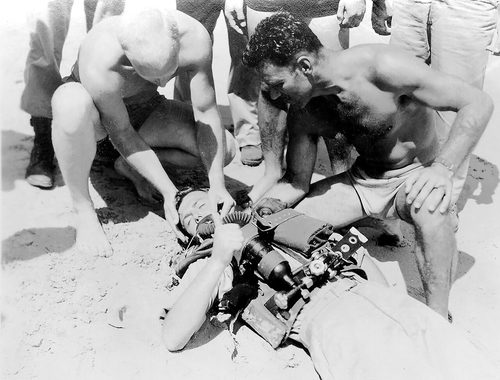 United States · 1942–1945
Office of Strategic Services (OSS)
America's wartime intelligence service, 1942–1945: William Donovan's mix of scholars, spies, saboteurs and propagandists, abolished by Truman and reborn in parts as the CIA.
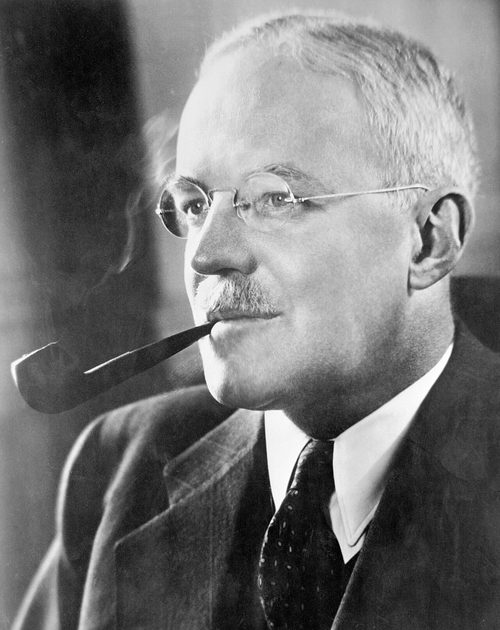 1893–1969
Allen Dulles
OSS spymaster in wartime Switzerland and Director of Central Intelligence from 1953 to 1961, Allen Dulles presided over the CIA's era of coups and covert wars until the Bay of Pigs ended his tenure.
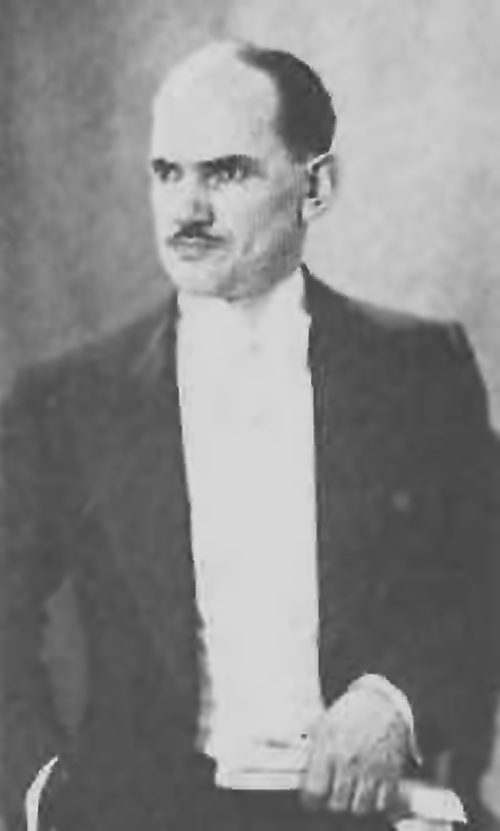 26 October 1943 – April 1944
The Cicero affair
In 1943–44 the British ambassador's valet in Ankara photographed secret papers and sold them to the SD as "Cicero." An OSS source in Berlin exposed the leak; Berlin doubted the goods; much of his pay was forged.
 20 July 1945 – 1962
Operation Paperclip
The US program, first called Overcast, that brought more than 1,500 German scientists and engineers to America after 1945, among them Wernher von Braun's rocket team and men with Nazi pasts.
 1883–1959
William J. Donovan
Buffalo lawyer, Medal of Honor soldier and founder of the OSS, who argued for a central US intelligence service and lost the fight to lead it when Truman abolished his agency in 1945.