

In the early 1950s the United States knew remarkably little about the interior of the Soviet Union. Agents were few, borders were closed, and the questions that mattered most, how many bombers and missiles Moscow had and where they were, could not be answered from Western capitals. The answer that emerged in the next decade was to look from above: from balloons, then from aircraft flying higher than Soviet fighters could reach, and finally from orbit.1
Balloons and the U-2
The first attempt was crude. Under the program known as Genetrix, the Air Force launched camera-carrying balloons to drift across the Soviet Union on the winds. The first of 516 went up on 10 January 1956; President Eisenhower cancelled the program about a month later, after the Soviets shot one down, displayed its payload and lodged a formal protest.1
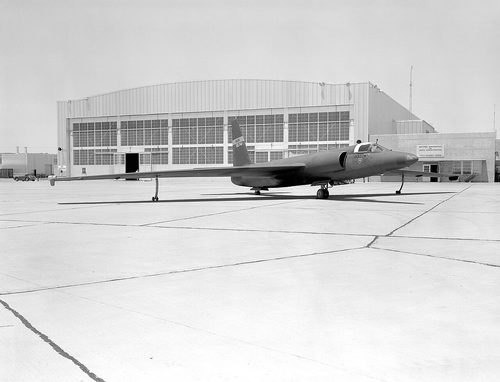
The serious effort was an aircraft. In 1954 a presidential panel recommended that the government accept a Lockheed proposal for a reconnaissance plane designed to fly above Soviet air defenses, and Eisenhower approved it in November. It became the U-2. To move quickly and keep the work secret, the project was run by the CIA under Richard Bissell, with the Air Force as partner, and paid for with the CIA's "unvouchered funds." Eisenhower insisted on a civilian operation, writing that if "uniformed personnel of the armed services of the United States fly over Russia, it is an act of war, legally."1
Lockheed built the first aircraft in eight months. The first overflight of the Soviet Union took place on 4 July 1956, and 24 successful missions were flown before 1 May 1960, when the CIA pilot Francis Gary Powers was shot down near Sverdlovsk by an SA-2 missile (see The U-2 program and the 1960 shoot-down).1 The U-2 continued to fly elsewhere. On 14 October 1962, after weeks of delay caused by political restrictions and weather, a U-2 over western Cuba took 928 photographs in six minutes and found the Soviet missile sites that opened the Cuban missile crisis.4 The CIA credits Oleg Penkovsky's documents with helping analysts identify what the photographs showed.6
The A-12
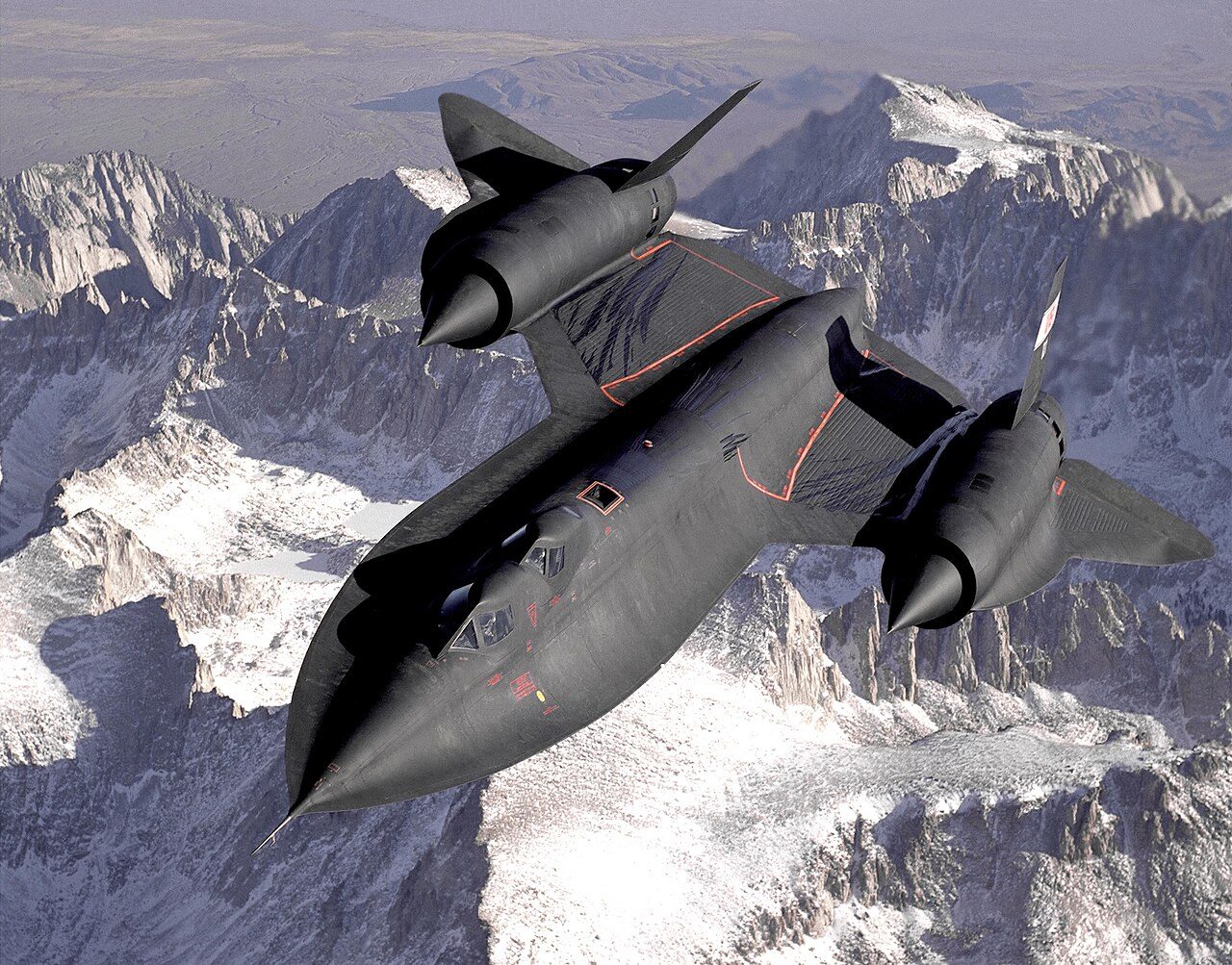
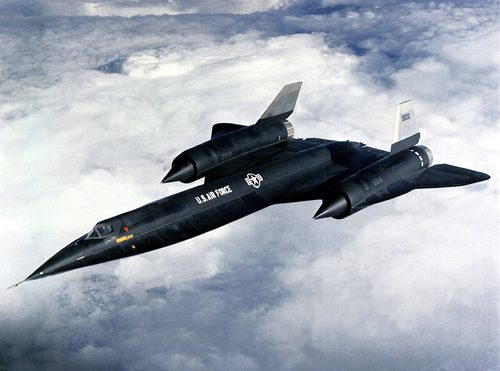
Even before Powers was lost, the CIA expected Soviet air defenses to catch up with the U-2. Lockheed's answer, under its chief engineer Clarence "Kelly" Johnson, was a titanium aircraft designed to cruise at more than three times the speed of sound: the A-12, CIA project OXCART (see Project Oxcart).1,3 Its first, unofficial flight on 25 April 1962 nearly ended in a crash.3
The A-12 never flew over the Soviet Union. Its operational career, under the name BLACK SHIELD, began over North Vietnam on 31 May 1967. Flying from Okinawa, A-12 pilots flew 29 missions before the last flight on 6 May 1968, and the aircraft was retired that year; the Air Force's two-seat derivative, the SR-71, carried on the role.1,3
CORONA and the satellites
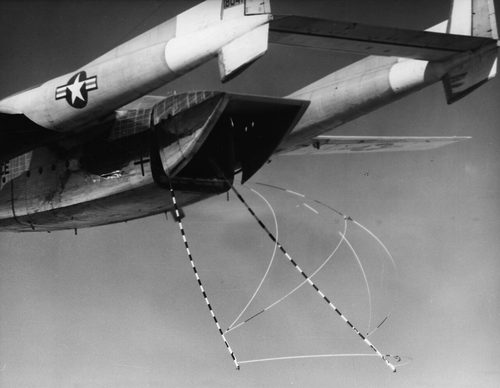
The decisive step was into space. Eisenhower approved a crash program to return film from orbit, codenamed CORONA, on 8 February 1958, again placing it under the CIA and Bissell, with the Air Force publicly appearing to cancel the work.1 Twelve missions failed. On 10 August 1960 Discoverer 13 brought back the first capsule ever recovered from orbit, though it carried no film.1,5 The first fully successful mission, launched on 18 August 1960, returned more film than the entire U-2 program had produced to that point, covering 1.65 million square miles of Soviet territory.1
CORONA flew 145 missions until 25 May 1972, with camera resolution improving from about 40 feet to 5–7 feet. Its pictures showed that the Soviet Union had far fewer strategic missiles than feared, ending talk of a "missile gap."1 To manage satellite and aircraft reconnaissance together, the Secretary of Defense and Director of Central Intelligence Allen Dulles agreed on 6 September 1961 to establish the National Reconnaissance Office.1 Later systems included GAMBIT, a high-resolution surveillance satellite first launched in 1963, and HEXAGON (KH-9), a wide-area search system first launched in 1971.2
Coming out of the shadows
For decades none of this could be acknowledged. The existence of the NRO itself was declassified on 18 September 1992.1 On 22 February 1995 an executive order signed by President Clinton declassified CORONA and most of its imagery, along with two related early programs.1,5 GAMBIT and HEXAGON followed, with their declassification announced on 17 September 2011.2 (See CORONA.)
Sources
- Official history The National Reconnaissance Office at 50 Years: A Brief History (Bruce Berkowitz), National Reconnaissance Office, Center for the Study of National Reconnaissance (archived by the Internet Archive) (2011-09).
- Official history The Gambit and Hexagon Programs, National Reconnaissance Office (archived by the Internet Archive) (2011).
- CIA Archangel: CIA's Supersonic A-12 Reconnaissance Aircraft (David Robarge), Central Intelligence Agency, Center for the Study of Intelligence (archived by the Internet Archive).
- CIA The "Photo Gap" that Delayed Discovery of Missiles (Max Holland), Studies in Intelligence 49, no. 4, Central Intelligence Agency, Center for the Study of Intelligence (archived by the Internet Archive) (2005).
- Wikipedia CORONA (satellite), Wikipedia.
- CIA The Capture and Execution of Colonel Penkovsky, 1963, Central Intelligence Agency, Featured Story Archive (archived by the Internet Archive) (2010-03-05).
- Wikipedia English Wikipedia article (used for cross-checking).
Elsewhere in the files
- Agency National Reconnaissance Office (NRO)
- Document 16 October 1962: the first White House meeting on the missile sites
- Document After the U-2: the President and his advisers (May 1960)
- Document CORONA: the CIA's 1995 documentary history of its first spy satellite
- Document Cuba 1962: Khrushchev's Miscalculated Risk (CIA staff study, 1964)
- Document Francis Gary Powers before the CIA Board of Inquiry (22 February 1962)
- Document SNIE 85-3-62: the estimate that ruled out missiles in Cuba (1962)
- Document The CIA's history of OXCART: 'The U-2's Intended Successor' (1992)
- Operation CORONA
- Operation Operation Anadyr
- Operation Project Oxcart
- Operation The Stargate Project
- Operation The U-2 program and the 1960 shoot-down
- Person Francis Gary Powers
Read next
 24 November 1954 – 16 May 1960
The U-2 program and the 1960 shoot-down
From 1956 the CIA's U-2 photographed the Soviet Union from 70,000 feet. On 1 May 1960 a missile brought down Francis Gary Powers near Sverdlovsk, the cover story collapsed and the Paris summit failed.
 February 1958 – 31 May 1972
CORONA
America's first photographic reconnaissance satellite, run by the CIA and Air Force from 1958 to 1972. Its film buckets, caught in midair, ended the missile-gap guesswork and stayed secret until 1995.
 29 August 1959 – 21 June 1968
Project Oxcart
The CIA's Mach 3 titanium spy plane, the Lockheed A-12, was built to replace the U-2 over the Soviet Union. It never flew there; its only operation, BLACK SHIELD, covered Vietnam and North Korea in 1967–68.
 10 August – 20 November 1962
Intelligence in the Cuban Missile Crisis
How US intelligence missed, then found, Soviet missiles in Cuba in 1962: a wrong estimate, a five-week gap in U-2 coverage, the 14 October flight over San Cristóbal, and what the photographs never showed.
 1914–1990s
Signals intelligence
Intelligence from intercepted communications and electronic emissions, from Room 40 and the Zimmermann telegram to Ultra, Venona, the Berlin tunnel and NSA's domestic programs exposed by the Church Committee.