
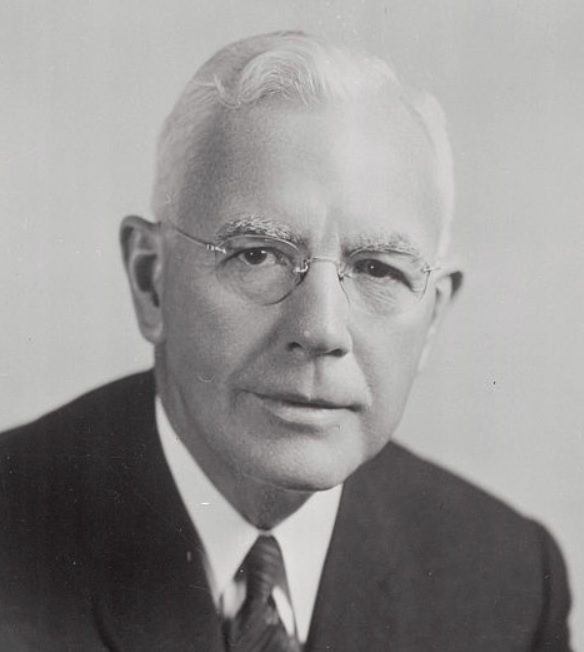
On 16 May 1973 Howard Osborn, the CIA's Director of Security, sent the Agency's new management committee a short list of past activities that he thought conflicted with the National Security Act. The list was part of the compilation that became known as the "Family Jewels." Item three read:
Project MOCKINGBIRD -- During the period from 12 March 1963 to 15 June 1963, this Office installed telephone taps on two Washington-based newsmen who were suspected of disclosing classified information obtained from a variety of governmental and congressional sources.
That passage is from1. It is the only Mockingbird in the declassified record1,7.
The columnists and the leaks
The targets were the veteran Washington columnist Robert S. Allen and his writing partner, whose jointly signed column appeared in as many as three hundred newspapers. According to the Office of Security's account, the two had been "publishing news articles based on, and frequently quoting, classified materials of this Agency and others, including Top Secret and Special Intelligence"1,6.
The authority came from the top. The summary says the Director of Security at the time, Colonel Sheffield Edwards, acted for Director of Central Intelligence John McCone, who "conducted the activity in coordination with the Attorney General (Mr. Robert Kennedy), the Secretary of Defense (Mr. Robert McNamara), and the Director of the Defense Intelligence Agency (Gen. Joseph Carroll)." Apart from the Office of Security staff doing the work, only three other CIA officials were recorded as knowing: the Deputy Director, General Marshall Carter; the Inspector General, Lyman Kirkpatrick; and the General Counsel, Lawrence Houston1.
Three lines and a long list of sources
A telephone company official, responding to a personal request from Edwards, helped connect three intercepts: one at the columnists' office and one at each man's home. No court order is mentioned1.
By the Agency's account the taps were "particularly productive." In three months they showed the columnists receiving information from 13 other newsmen, 12 senators and 6 members of Congress, 21 congressional staff members and 16 government employees, among them a White House staff member, people in the Vice President's office and an Assistant Attorney General. The analysts concluded that the pair "actually received more classified and official data than they could use" and passed some to other reporters, so that many leaks under other bylines came from the same sources1.
Whose idea, and when
A second memorandum in the same file, written for William Colby by a former assistant to McCone, gives a sharper version. It says that "on 7 March 1962, DCI McCone, under pressure from Attorney General Robert F. Kennedy, agreed to tap the telephones of columnists Robert S. Allen" and his partner, and that McCone had him brief DIA's director orally because the main leak seemed to be in the Defense Department. The writer added that he had "managed to avoid gaining any knowledge" of what was done1.
Coming to light
Colby listed the wiretap on the two columnists among the questionable activities he described to the Justice Department on 31 December 19748. The Rockefeller Commission reported in June 1975 that it had found two cases, in 1959 and 1962, in which the telephones of three newsmen were tapped to find their sources, and three later cases in which reporters were followed. It blamed pressure from successive White Houses and the FBI's refusal to take leak cases without a promise of prosecution, and ruled: "The CIA has no authority to investigate newsmen simply because they have published leaked classified information"3.
The full Office of Security entry, with the Mockingbird name, stayed classified until the CIA released the Family Jewels on 25 June 20072,5.
The other "Mockingbird"
The name has since been attached to something much larger. A 1979 biography of the Washington Post publisher Katharine Graham claimed that the CIA ran an "Operation Mockingbird" from the late 1940s, recruiting leading American journalists into a propaganda network. That claim is separate from the 1963 wiretap7.
The documents
Declassified records of this operation, with the scans and their full text hosted here.

Checking the record
Dates and outcome compared in two independent sources: they agree.
- CIA
- 12 March 1963 to 15 June 1963. Taps on the office and two homes of two Washington newsmen; sources identified included 12 senators, 6 representatives and 16 government employees.
- Wikipedia
- 12 March to 15 June 1963. Warrantless wiretap ordered by McCone in coordination with Robert Kennedy, McNamara and DIA's director; made public with the Family Jewels in 2007.
Both follow the Office of Security summary. The Rockefeller Commission and a separate memorandum in the Family Jewels file place the decision in 1962; this page gives the 1963 dates for the taps themselves and marks the discrepancy.
Sources
- CIA 'Family Jewels' compilation, Office of Security memorandum of 16 May 1973 and attachments (MORI DocID 1451843), Central Intelligence Agency, full text posted by the National Security Archive (1973-05-16).
- CIA Family Jewels collection, Central Intelligence Agency, FOIA Reading Room (2007-06-25).
- Official history Report to the President by the Commission on CIA Activities Within the United States (chapter 13, 'Other Investigations by the Office of Security'), Rockefeller Commission, digitized by the Internet Archive (1975-06).
- Congress Final Report of the Select Committee to Study Governmental Operations with Respect to Intelligence Activities, Book I: Foreign and Military Intelligence (S. Rep. 94-755), US Senate, digitized by the Internet Archive (1976-04).
- National Security Archive The CIA's Family Jewels (Electronic Briefing Book 222), National Security Archive (2007-06-26).
- Wikipedia Project Mockingbird, Wikipedia.
- Wikipedia Operation Mockingbird, Wikipedia.
- Wikipedia Family Jewels (Central Intelligence Agency), Wikipedia.
- Wikipedia English Wikipedia article (used for cross-checking).
Elsewhere in the files
Read next
 May 1973
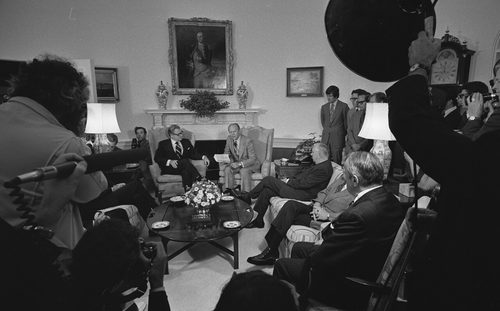
The "Family Jewels" (1973)
The CIA's own 1973 inventory of activities that might have broken its charter, from mail opening and wiretaps on reporters to plots against Castro. Kept secret for 34 years, it was released in June 2007.
 15 August 1967 – 5 March 1974
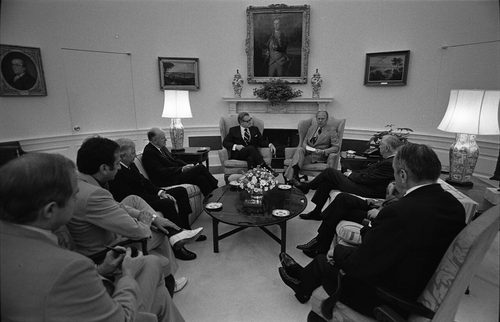
Operation CHAOS
Pressed by two presidents to prove that foreign communists were behind the antiwar movement, the CIA built files on 7,200 Americans from 1967 to 1974 and kept finding no such proof.
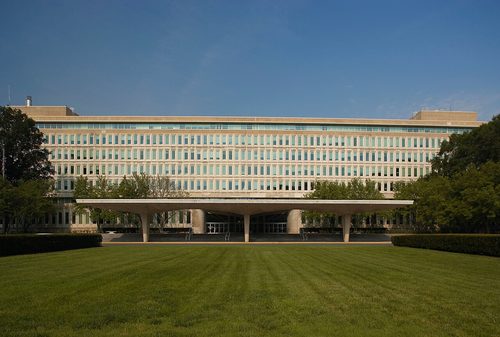 United States · 1947
Central Intelligence Agency (CIA)
The US civilian intelligence service, created by the National Security Act of 1947 to coordinate foreign intelligence, which within a year also became Washington's instrument for covert action.
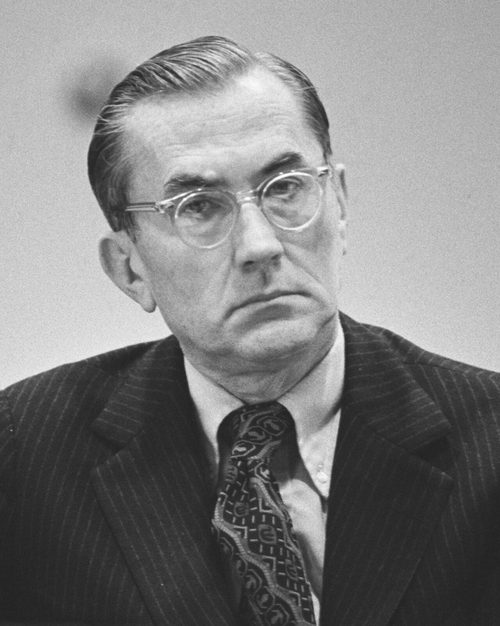 1920–1996
William Colby
OSS parachutist, CIA station chief in Saigon and head of the Phoenix program, Colby became Director of Central Intelligence in 1973 and chose to open the Agency's files to the investigations of 1975.
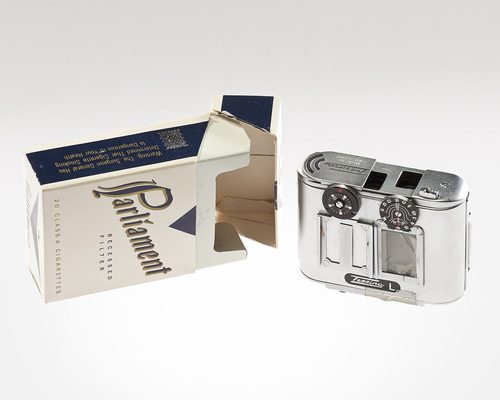 1940s–1990s
Surveillance and countersurveillance
Watching people was the core of Cold War counterintelligence, from MI5's watchers in the Portland case to KGB teams trailing CIA officers in Moscow, and the Church Committee exposed its abuse at home.