
Portrait: Ethel Rosenberg's arrest photograph, August 1950. Unknown authorUnknown author or not provided. Wikimedia Commons, Public domain.

Ethel Greenglass was born in Manhattan to immigrant parents and grew up on the Lower East Side with her younger brothers, among them David2. She hoped at first to sing and act, took a secretarial job with a shipping company, became involved in labor disputes and joined the Young Communist League, where she met Julius Rosenberg5. They married on 18 June 1939 and had two sons, born in 1943 and 19472. The FBI's own summary of her background lists Communist Party petitions she signed in 1939 and a 1940 appointment at the Census Bureau2.
What the cables say
The one contemporary Soviet document about her is a KGB cable from New York to Moscow of 27 November 1944, decrypted by the Venona codebreakers and released in 1995. Answering Moscow's request for information on LIBERAL's wife, it reads:
Surname that of her husband, first name ETHEL, 29 years old. Married five years. Finished secondary school. A FELLOWCOUNTRYMAN [ZEMLYaK] since 1938. Sufficiently well developed politically. Knows about her husband's work and the role of METR and NIL. In view of delicate health does not work. Is characterized positively and as a devoted person.1
"Fellowcountryman" was KGB jargon for a Communist Party member1. The CIA and NSA editors say two messages implicated Ethel4. She had no covername of her own5.
Arrest as leverage
David Greenglass confessed on 15 June 1950 and named Julius; Julius was arrested in July. Ethel testified before a grand jury on 7 August, invoking her right not to answer, and was arrested on 11 August2,5. Accounts drawing on government records show that officials discussed charging her partly to pressure her husband. A prosecutor called the case against her "not too strong", and J. Edgar Hoover wrote that proceeding against the wife "will serve as a lever"5.
The typing testimony
At the trial in March 1951 the evidence against Ethel rested on the Greenglasses. Ruth Greenglass testified that in November 1944 Ethel urged her to ask David to spy2. David testified that in September 1945, at the Rosenbergs' apartment, Julius said his notes on the bomb should be typed at once, and that Ethel typed them on a portable typewriter while Julius burned the handwritten pages2. The Second Circuit, affirming in 1952, acknowledged that without the Greenglasses' testimony "the conviction could not stand", but held that their credibility was for the jury3.
Execution
Judge Irving Kaufman sentenced both Rosenbergs to death on 5 April 19512. The government let it be known that their lives could be spared if they confessed and named others; they refused, calling the offer a demand to "bear false witness"5. After the Supreme Court vacated a last stay in special session on 19 June 1953 and President Eisenhower again denied clemency, Ethel Rosenberg was executed at Sing Sing at 8:15 that evening, ten minutes after her husband2. The Rosenbergs were the first American civilians executed on such charges5.
Key dates
- 18 June 1939 Marries Julius Rosenberg in New York.
- 27 November 1944 KGB cable from New York describes 'LIBERAL's wife', first name Ethel.
- 7 August 1950 Appears before a federal grand jury and declines to answer questions.
- 11 August 1950 Arrested by the FBI.
- 29 March 1951 Convicted with her husband and Morton Sobell.
- 19 June 1953 Executed at Sing Sing prison.
Sources
- NSA Venona, Part II: Selected Messages (New York 1657 to Moscow, 27 November 1944), Central Intelligence Agency and National Security Agency (1944-11-27).
- FBI Atom Spy Case/Rosenbergs, Federal Bureau of Investigation (archived copy).
- Court record United States v. Rosenberg, 195 F.2d 583 (2d Cir. 1952), Caselaw Access Project, Harvard Law School (1952-02-25).
- CIA Venona: Soviet Espionage and the American Response, 1939–1957 (Introduction), Central Intelligence Agency and National Security Agency (1996).
- Wikipedia Julius and Ethel Rosenberg, Wikipedia.
- Wikipedia English Wikipedia article (used for cross-checking).
Elsewhere in the files
Read next
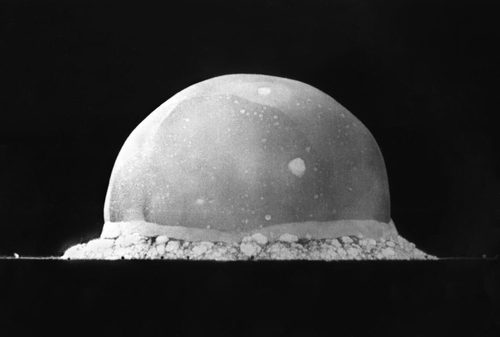 September 1941 – June 1950
Soviet atomic espionage (Enormoz)
How Soviet intelligence penetrated the Manhattan Project under the codename ENORMOZ, who its sources were, how Venona and confessions exposed them, and what the stolen secrets were worth.
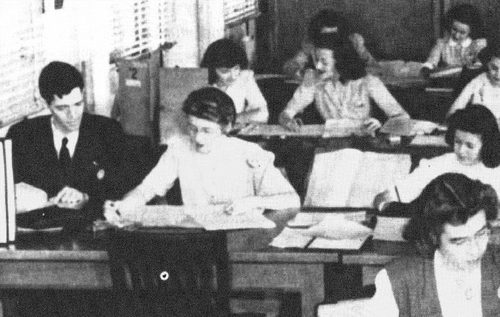 1 February 1943 – 1 October 1980
The Venona project
The US Army codebreaking program that, from 1943 to 1980, read parts of some 2,900 wartime Soviet intelligence cables and exposed Fuchs, the Rosenbergs and Donald Maclean.
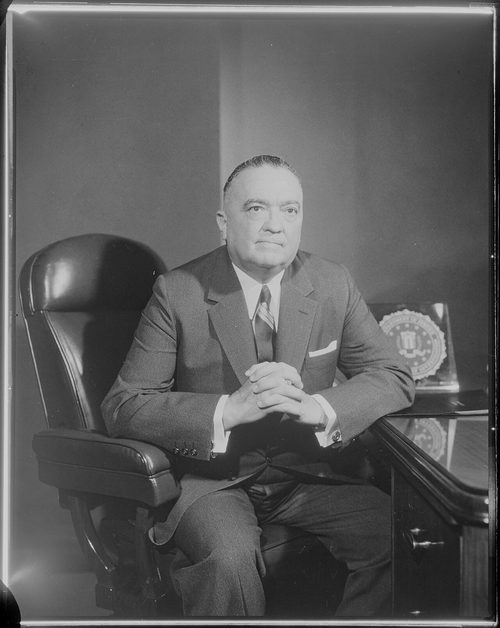 1895–1972
J. Edgar Hoover
Director of the Bureau of Investigation and then the FBI for 48 years, from 1924 until his death in 1972. He built a modern police agency and a secret domestic intelligence apparatus that the Senate later condemned.