
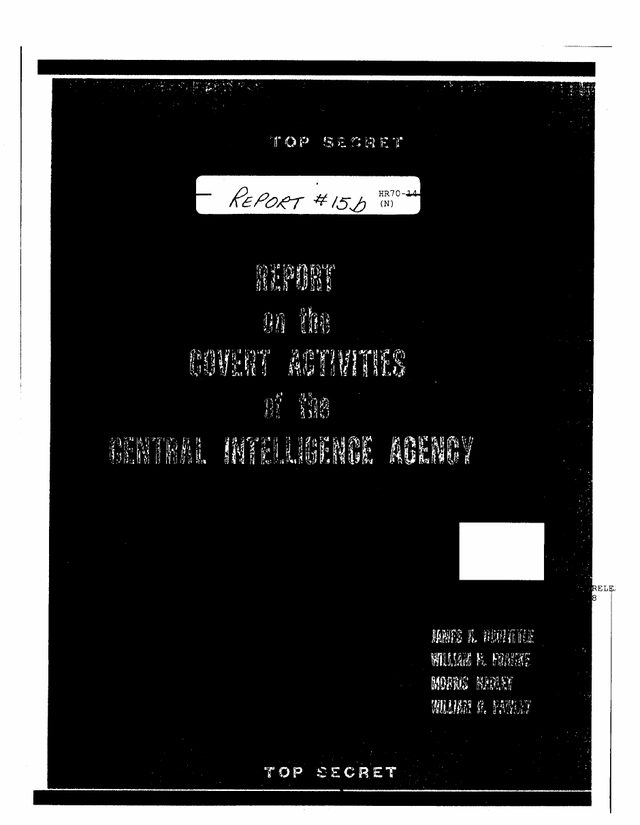
 Page 1 of 78

From the document
There are no rules in such a game. Hitherto acceptable norms of human conduct do not apply. If the United States is to survive, long-standing American concepts of "fair play" must be reconsidered.
It may become necessary that the American people be made acquainted with, understand and support this fundamentally repugnant philosophy.
The information we have obtained by this method of acquisition has been negligible and the cost in effort, dollars and human lives prohibitive.
There is no place in C.I.A. for mediocrity.
Excerpts are passages from a US government work (public domain), quoted exactly and checked against the text on history.state.gov on every rebuild.
By the summer of 1954 the CIA had helped overthrow governments in Iran and Guatemala, and some members of Congress were talking about a committee to watch over it5. The Hoover Commission on government organization was about to send a task force under General Mark Clark to study the agency4. President Eisenhower wanted his own look at the most sensitive part of the CIA, and he wanted it kept to himself.
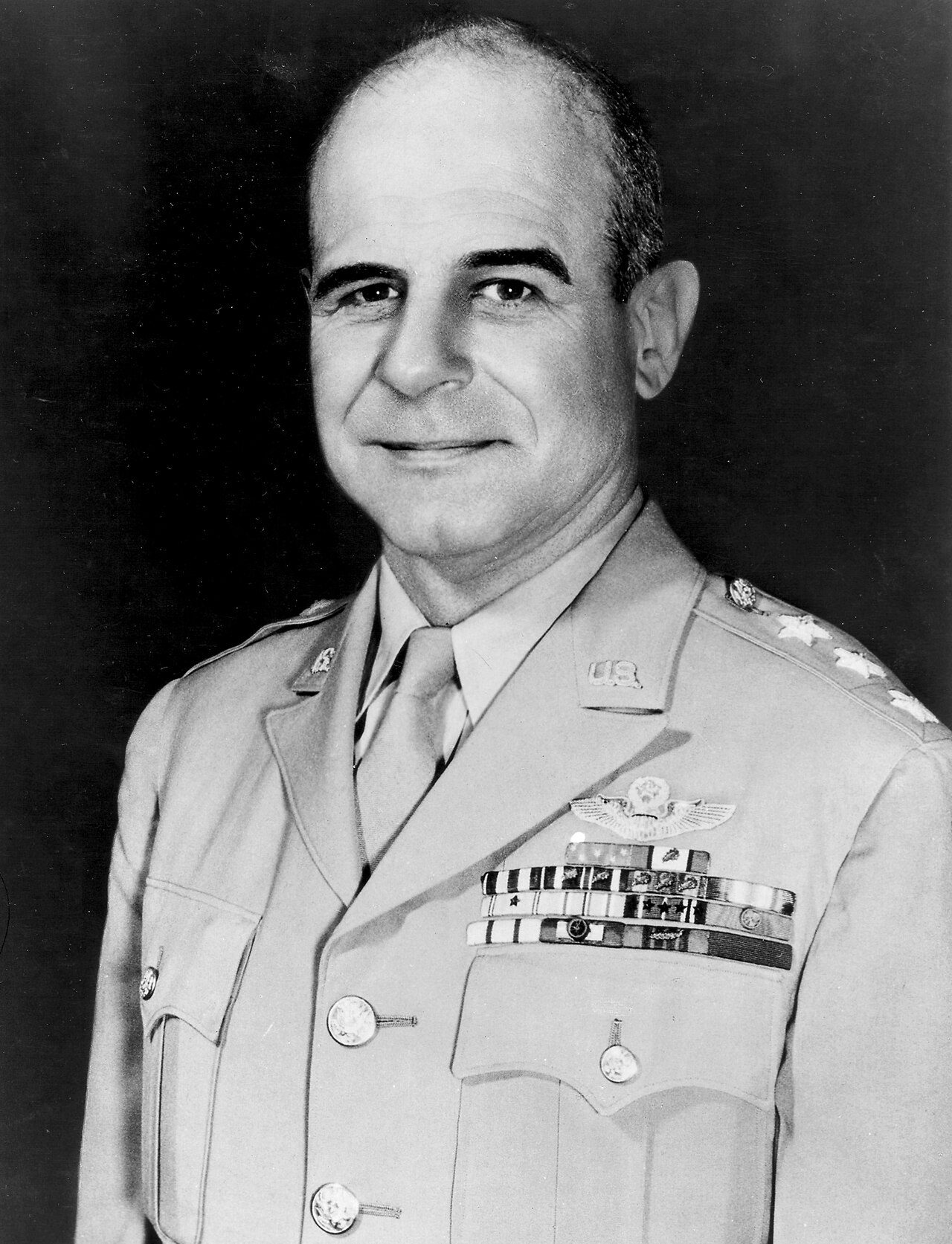
On 26 July 1954 he wrote to Lieutenant General James H. Doolittle, the who had led the 1942 air raid on Japan, asking him to chair a panel on "the covert activities of the Central Intelligence Agency." The other members were William B. Franke, Morris Hadley and William Pawley2,5. The panel was to study the operations carried out under the directives then governing the CIA's clandestine work, NSCID 5 of 1951 and NSC 5412 of March 1954. It was to weigh "the personnel factors, the security, the adequacy, the efficacy and the relative costs" and, as far as possible, compare cost with results. The report was to go to the President personally, classified Top Secret, by 1 October2.
What the report says
The FRUS editors note that the report was sent to Eisenhower under a covering letter of 30 September 1954. The covering letter, table of contents and three appendices are not printed1.
The opening pages give the report its reputation. The panel wrote that the country faced "an implacable enemy whose avowed objective is world domination." It called for a covert organization "more effective, more unique and, if necessary, more ruthless than that employed by the enemy," and said that American ideas of fair play had to be reconsidered1. The panel also said the public might one day have to be told about this "fundamentally repugnant philosophy" and support it1.
The introduction is just as frank about results. Sending human agents into the Soviet bloc had produced almost nothing at a "prohibitive" cost in lives and money. Defectors were useful but "sporadic." The real promise, the panel argued, lay in communications intelligence and in technical collection, including "high altitude visual, photographic and radar reconnaissance with manned or unmanned vehicles"1.
Most of the report is a management audit, under five headings1:
- Personnel. Cut people who could not reach a high standard, recruit better, train more, and keep the Director "above political considerations."
- Security. Speed up clearances, polygraph all staff periodically, tighten "need-to-know," and impose severe penalties for breaches.
- Coordination and operations. Implement NSC 5412, settle long-running disputes with the armed services, and plant agents "under very deep cover."
- Organization. Simplify the overlapping staffs of the Deputy Director for Plans and give the Inspector General agency-wide authority. The panel noted that headquarters was spread across 43 buildings in Washington.
- Cost. Bring covert projects under proper review and give the Comptroller enough information to account for them.
The panel judged that the agency was "doing a creditable job" given its youth and fast growth. It also described the history behind its problems: a mixed inheritance from the OSS and the State Department's covert office, and rapid expansion that had "ballooned" it with people "of doubtful competence"1.
The meeting with Eisenhower
On 19 October 1954 Doolittle and the panel presented the report to the President. The record of that meeting is blunter than the report3. Doolittle praised Allen Dulles's knowledge, honesty and devotion. He also said Dulles surrounded himself with loyal rather than competent people, that the agency lacked discipline and "security consciousness," and that Dulles was "highly emotional." He raised the fact that the Director's brother was Secretary of State and said that relationship would be better not to exist. Eisenhower disagreed. He said that he had appointed Dulles knowing about it and that it might be useful3.
Release and use
The "no rules" line has become shorthand for the early CIA's mindset5. The full report, with staff numbers and some passages still withheld, was published in the 2007 Foreign Relations volume on the intelligence community1,5. Read alongside NSC 10/2: covert action authorized (1948) and NSC 68 (1950), it shows the period's covert-action thinking at its most uninhibited. Read in full, though, it is mostly about mediocre staff, leaky security and unaccounted money1. For later reviews of the agency, see the The Inspector General's survey of the Cuban operation (1961) and the Alleged Assassination Plots Involving Foreign Leaders (1975).
Sources
- FRUS Foreign Relations of the United States, 1950–1955, The Intelligence Community, 1950–1955, Document 192 (Report by the Special Study Group), US Department of State, Office of the Historian (2007).
- FRUS Foreign Relations of the United States, 1950–1955, The Intelligence Community, Document 185 (Eisenhower to Doolittle, 26 July 1954), US Department of State, Office of the Historian (2007).
- FRUS Foreign Relations of the United States, 1950–1955, The Intelligence Community, Document 193 (Memorandum of Conversation, 19 October 1954), US Department of State, Office of the Historian (2007).
- FRUS Foreign Relations of the United States, 1950–1955, The Intelligence Community, Document 184 (Editorial Note), US Department of State, Office of the Historian (2007).
- Wikipedia Doolittle Report, 1954, Wikipedia.
- Wikipedia English Wikipedia article (used for cross-checking).